May 8th 2007
There is not much more to be added
to the pages as to new plants, bulbs etc, but there are all kinds of
interesting events to be mentioned. I saw e.g. - for the very first
time - a baby praying mantis today. It looks like a biggish ant but
when you take the trouble, if you ever come across one, of looking a
little close you see its heart shaped head and tiny folded front
legs, quite endearing. When long ago I lived in Nigeria I once had
the joy of watching an egg capsule hatch: 80 or so babies coming out
and run away!!
There are rather few birds this year. I see but three swallows
flying around in the valley down there, I hardly heard the hoopoe
yet, but the bee eaters are there again with their peculiar call 'kwarrak,
kwarrak'. Last week when I went to visit a friend nearby an oriole
flew across in front of the car, starling sized, bright yellow with
black wings.
Concerning the plants: convolvulus sabaticus has
grown enormously and takes over a square meter by now. Cuttings are easy and
it grows in awkward places.
Another thing is that the oleanders are full of buds already. Just a few
more days and the first flower will be there. My first to have flowers will
be 'Angiolo
Pucci' , lovely, warm, salmon/orange in colour, but no smell. At
the moment it looks clean, but there are odd, black warts on it from time to
time. *)The yellow, single flowered species which I obtained by taking a
cutting somewhere is going to flower as well. When it is oleander time I
bring a pair of scissors in the car: you never know what you will meet!
Cuttings soon root in water. Take the flowers out before you do that and or
take a cutting from a non flowering branch. Careful when you finally put the
cutting into a pot: the new roots break off easily!
*) I wonder whether this could be a form of some cancer.
|
 |
Today, 10th May, the weather is lovely, it is only 12
and it is over 20° already. Just a bit of wind, bright blue sky!
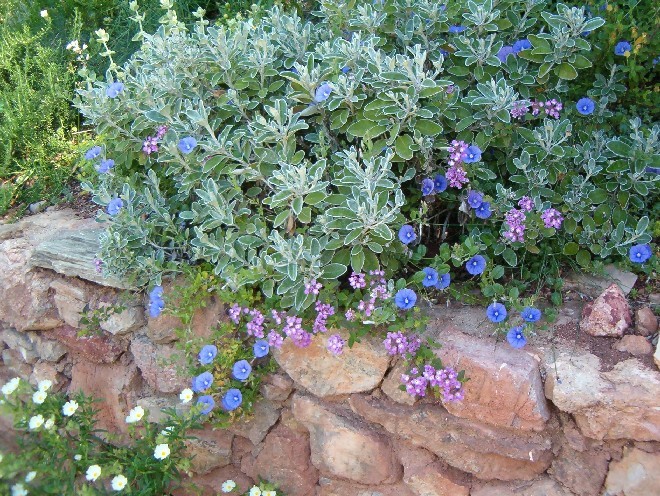
Just as blue as convolvulus
sabaticus (used to be mauretanicus), a
lilac coloured lila lantana growing through door brachyglottis.
Both convolvulus and brachyglottis are easy to grow from cuttings. |
|
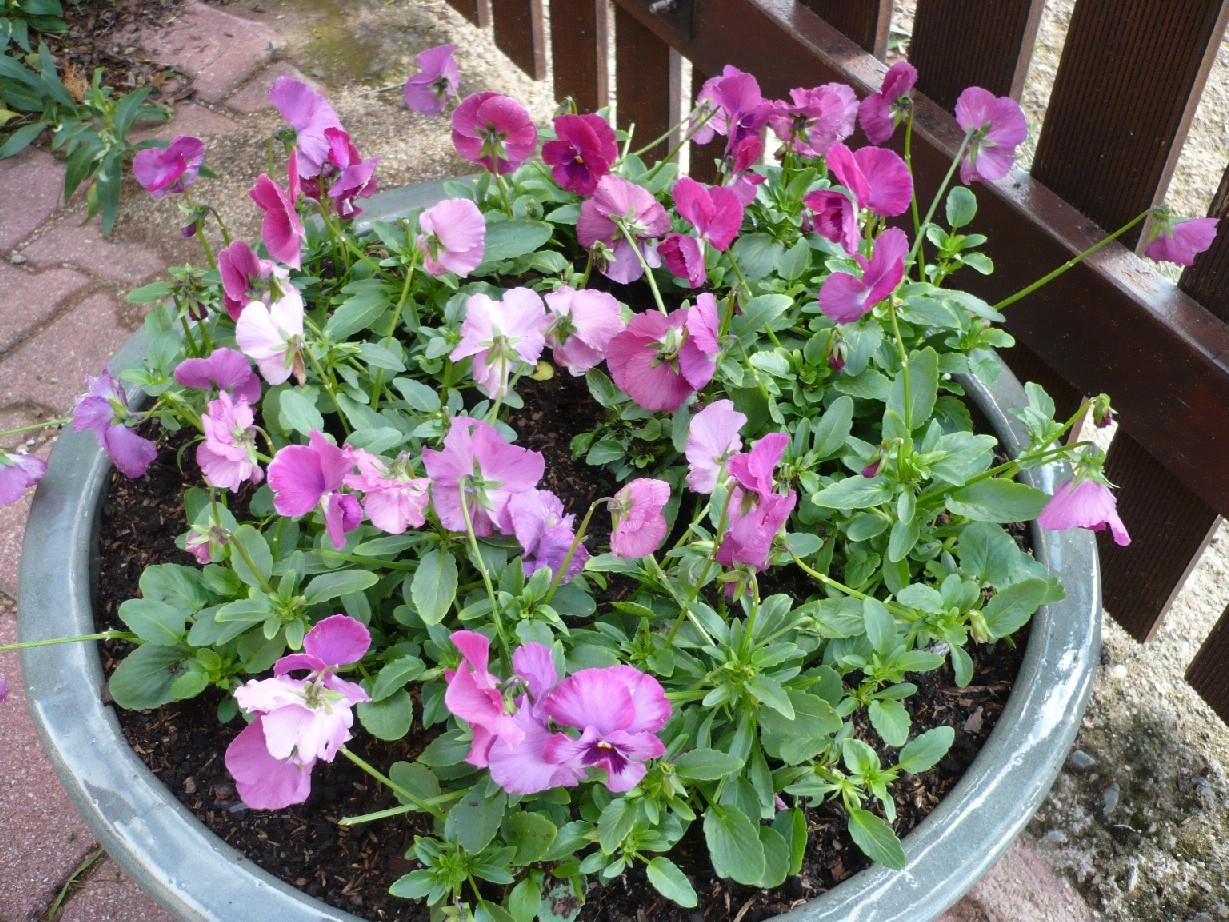
| These red pansies were a real good buy: I had
them for something like 10 euros last November and they
flowered straight through the winter. Now they are of course
larger and a bit floppier as they are nearing the end of their
time. This orangey red is an excellent colour, I also had rosy
reds one year. To be on the look-out for coming November!! |

|
|
1st September 2007
This year not much is to be said about the garden. We were not here from
the beginning of June till end July and when we came back it was the
summer rest period for the garden. It was very, very dry with only a
few 'pipi de chat'. The garden suffered and things have died that I
did not know could do so! Like the brachyglottis, withered! I shall
prune it back in spring and see what happens. (It revived marvelously,
March 2008) There are hardly any praying mantises, I miss them! But
last week there were a lot of unusual birds in the terebinth like white
throat fly catcher, eating its berries.
It is nearly time for the second spring though. The first sternbergia
has been seen. Quite late! The cyclamen are not flowering yet. Cyclamen
graecum which I finally found in the Netherlands, had one flower!
Well done and rejoice! All the other unusual cyclamens I bought died
untimely deaths. One might still be alive. Taking photos is no use: they
just look like any other cyclamen ... Good news in the spring of 2008
though: for the first time ever I had flowers on cyclamen coum.
Today I had a real surprise: I got a cutting from duranta repens from
a friend. Heaven only knows why it is called repens as it
does not creep at all. It is a small thorny bush, not resistant to frost, so in needs
to be
stored in the conservatory during winter. Awkward! But it has lovely
sky blue flowers followed by orange berries. In tropical countries the
bushes are
always flowering and always producing berries which causes a nice show in
blue and orange. When I lived in
Nigeria I had it in my garden and loved it. Today I thought I saw buds and
on a second look I found flowers ... Still too small to be photographed..
Leucojum autumnale comes under another name now: acis!
It has spread all over the garden. The bulbs started flowering at the end of May
and are still going on. They are even growing among the stones. Whoever
wants seed, let me know. Takes two years only!
|
|
|
12th September Hieke
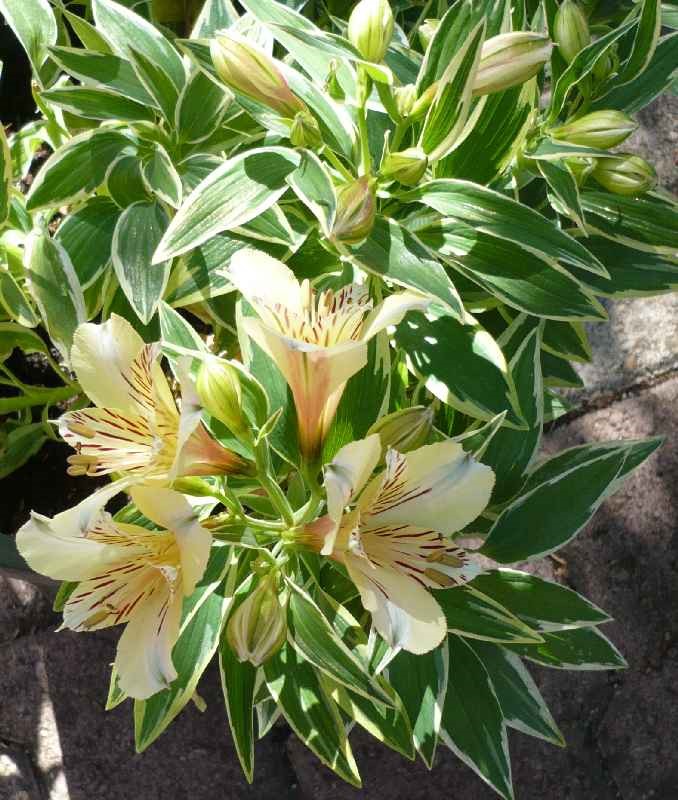
has brought a superior, unfortunately nameless alstromeria *)
from the Netherlands. It is in a bigger pot already so that it may
be divided in spring. She is coming to live here permanently then. Slowly but surely signs of
the second season are appearing: podreana has longer shoots
than ever before and is full of buds, there is one colchium
and some cyclamens. We may have rain on Friday ... Sternbergia is
still not flowering: they should be! *) It is called 'Fabiana'
|
|
13th September This
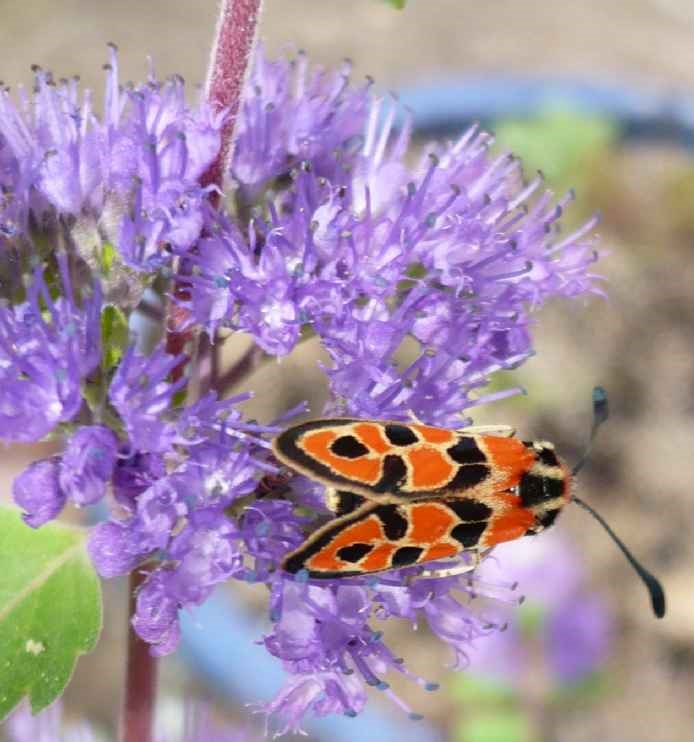
morning I saved just such a beauty from drowning. I never saw one before and this is the second one today. I am quite sure as the
first had part of one antenna missing. This little
butterfly is only one and a half cms. *) On a dark blue caryopteris,
which self seeds. It flowers in its second year.
*) it is called: la zygène de la coronille or zygaena fausta. Its
caterpillar feeds on coronilla which is OK with me!15th
September Podreana flowers. And one sternbergia.
Some oxalis start to appear and one - melanostica - is
in flower. Have a look on the oxalis page.
|
|
|
 |
26th September To
take good photos of blue flowers there should not be any sun and
preferably no wind either. There is a little wind today, so the
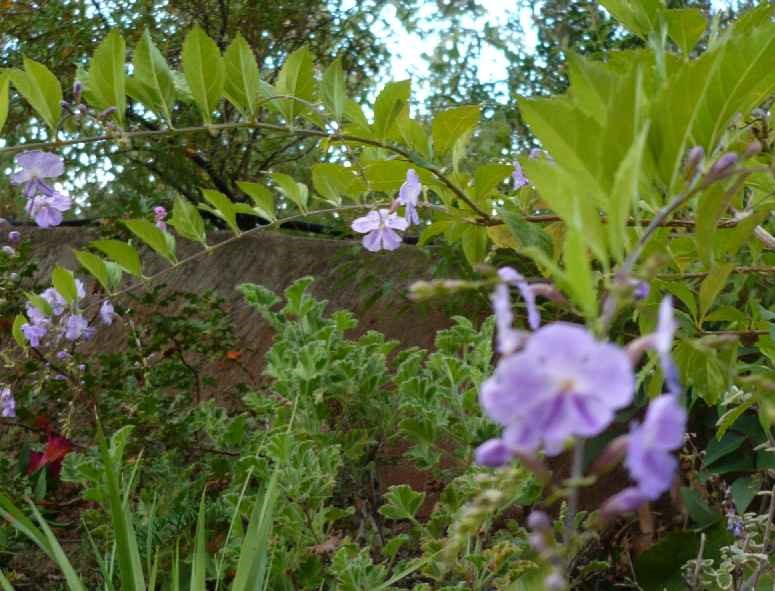
photograph is not sharp enough. This is duranta repens, -
which I mentioned before - a lovely conservatory plant. I am quite
pleased that it is flowering at last (after 5 years) |
|
2nd October The
day before yesterday I sowed zephyrantes alba seeds,
today they are germinating! No seed is so fast. Or is an ordinary
bean? As they are so quick to respond to being sown I had thought they
might flower soon as well, but this is not the case. Two year olds
don't flower yet!
Oxalis flava flowers. This is a surprise indeed as it
has the reputation of being difficult. Following someone's
advice I planted it in a deep pot,
so that was a useful idea.
After a seemingly endless drought it has finally become moist for
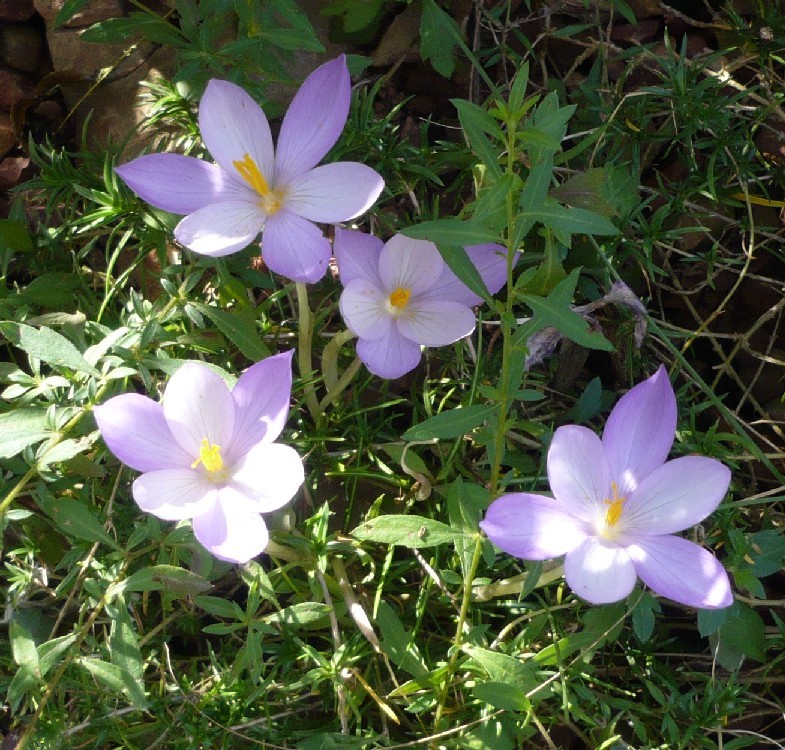
the last few days. The autumn crocuses are in flower but have been
flattened by the rain!.
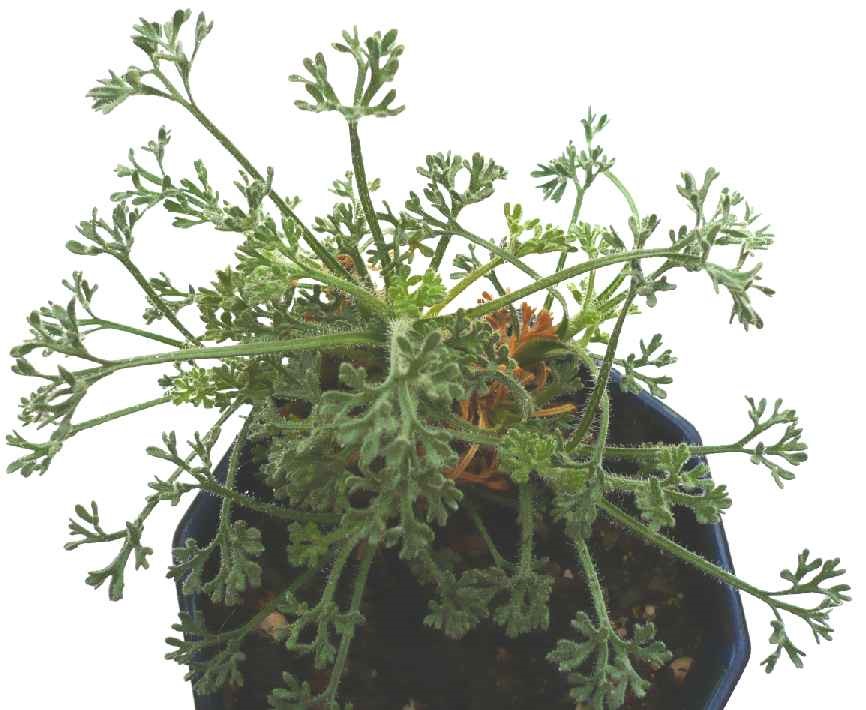
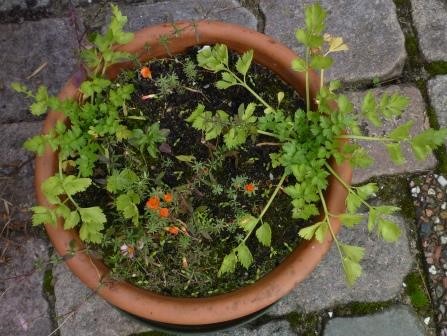
Who knows what the small bush on the photo on the right is? It looks
like eschscholzia as far as its leaves are concerned, but is is a little hairy. By now it is
two years old, but has never flowered so far. |
|
|
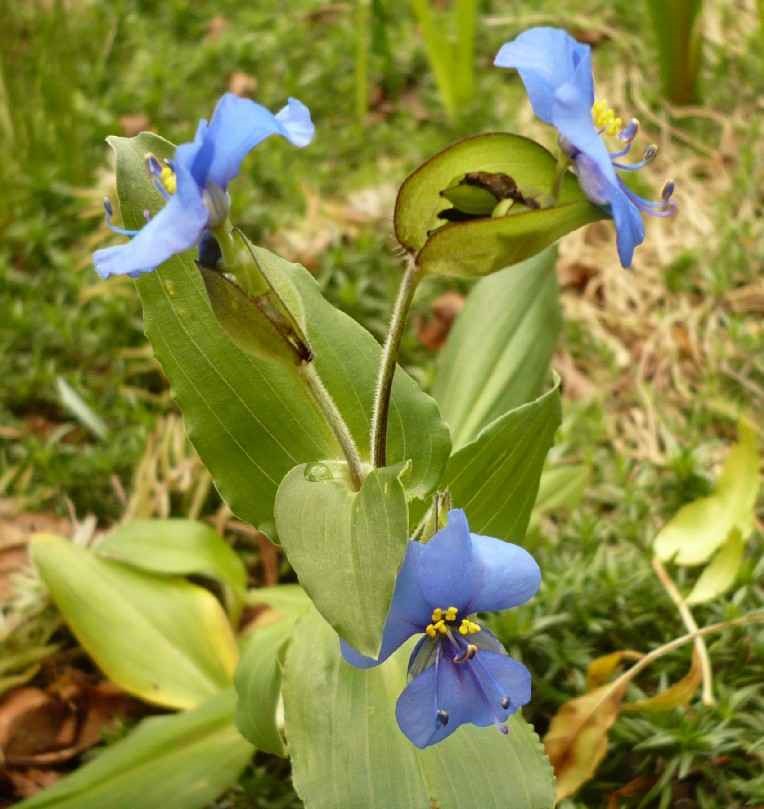 |
7th October Finally
we had quite a bit of rain and how welcome it was. Good for a few
surprises: commelina tuberosa is not a plant you
expect to do well here. It looks watery! But one of mine is very
resilient. Every year it manages to produce a few flowers. And what
a lovely colour they are. Three at the same time is quite unusual
though. Today is lovely weather: T-shirts, sandals
|
|
| October Wintertime
starts officially today. The weather is gorgeous, sun, no wind, 22
degrees. In the garden below a row of oxalis in pots are in full
bloom: the white one in front is o. versicolor, on the left and
behind o. dentata, the yellow one in the bigger pot is o. flava, a
bit to the left o. massoniana, blast! it is white instead of orange!
and left of that o.rosea (though it sports a large, white flower)
which has already flowered in spring. So has o. dentata, by the way. |
|
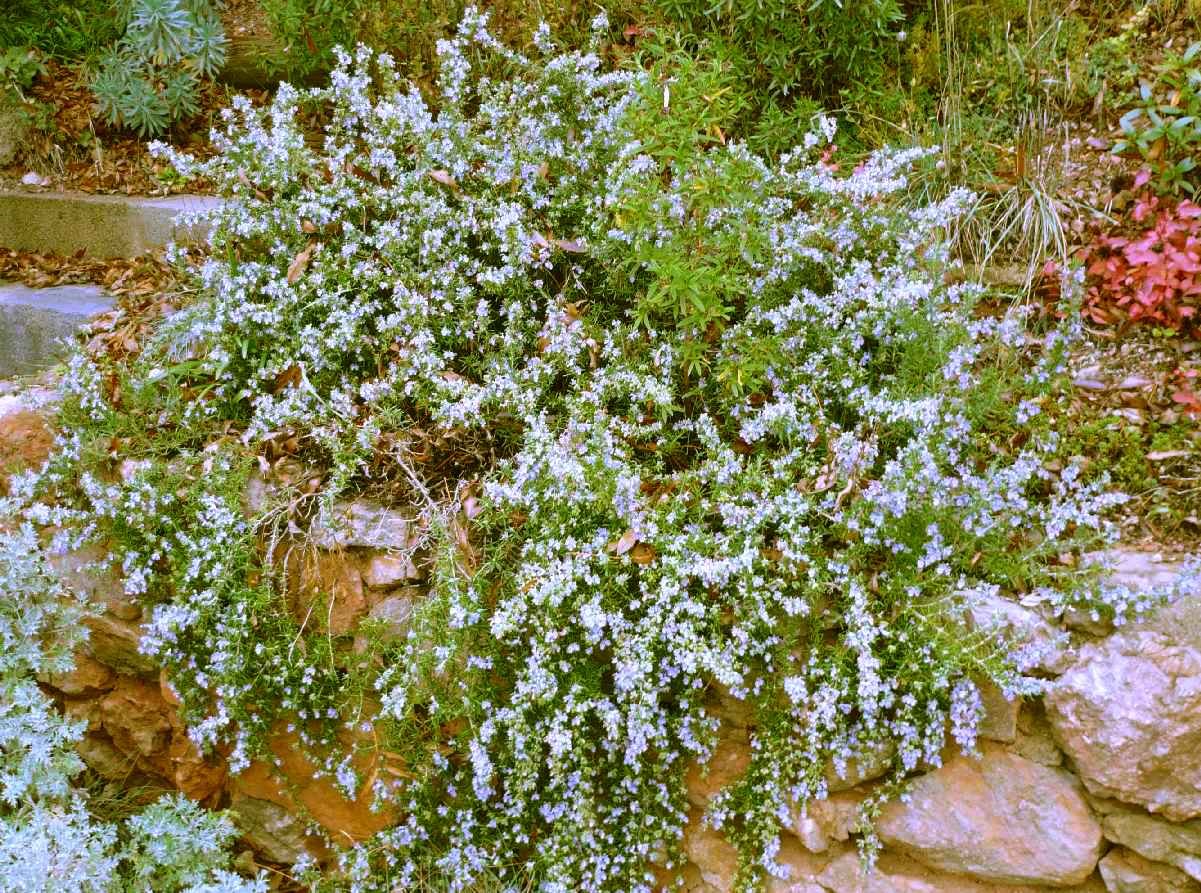 |
I took this picture on 22nd
November. Completely covered in flowers, but it is
too cold for bees and such. This creeping one grows very
fast. I bought it only three years ago as a tiny plant.
It does not need any care apart from a little pruning
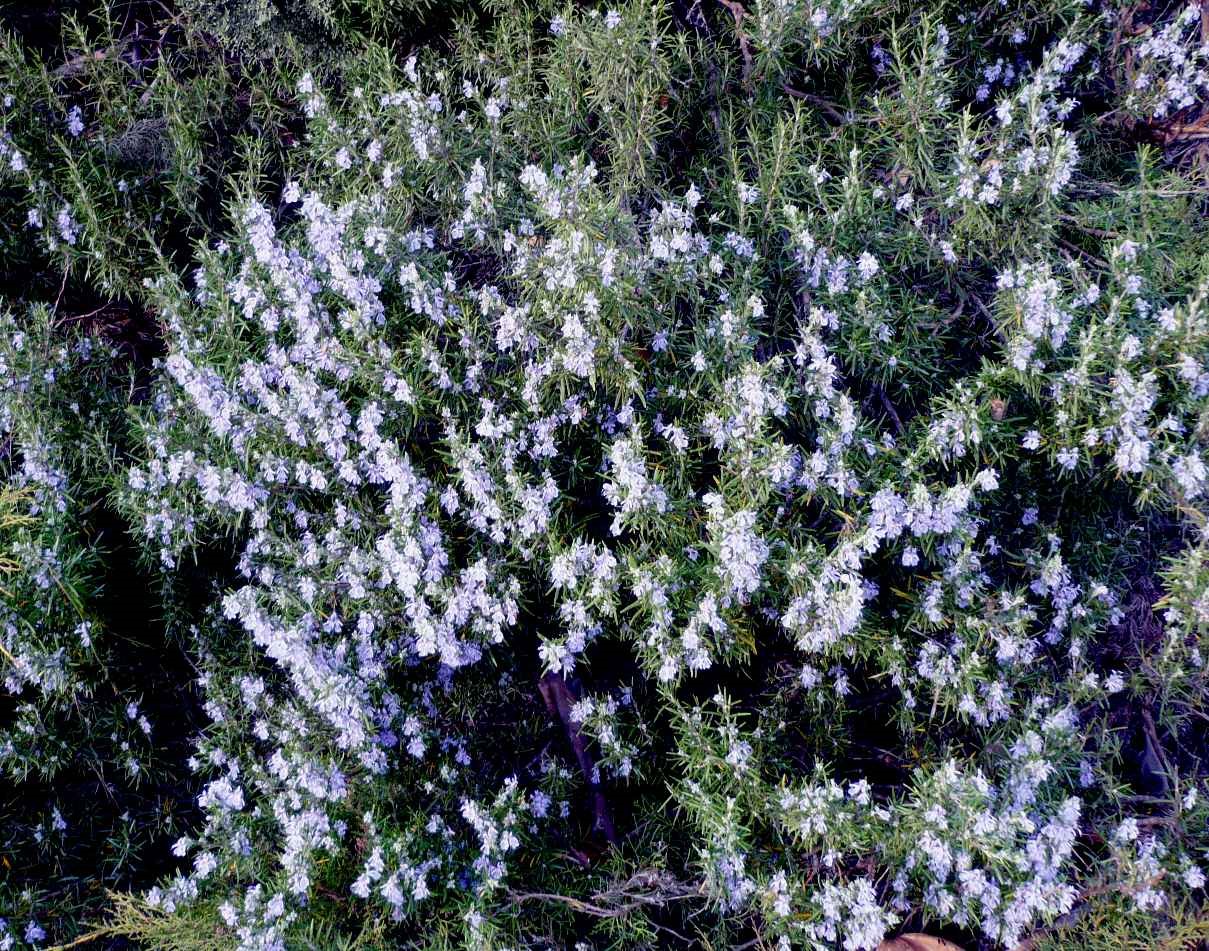
now and then. The one on the photo below was taken in
Hieke's garden on
7th December! |
 |
|
|
|
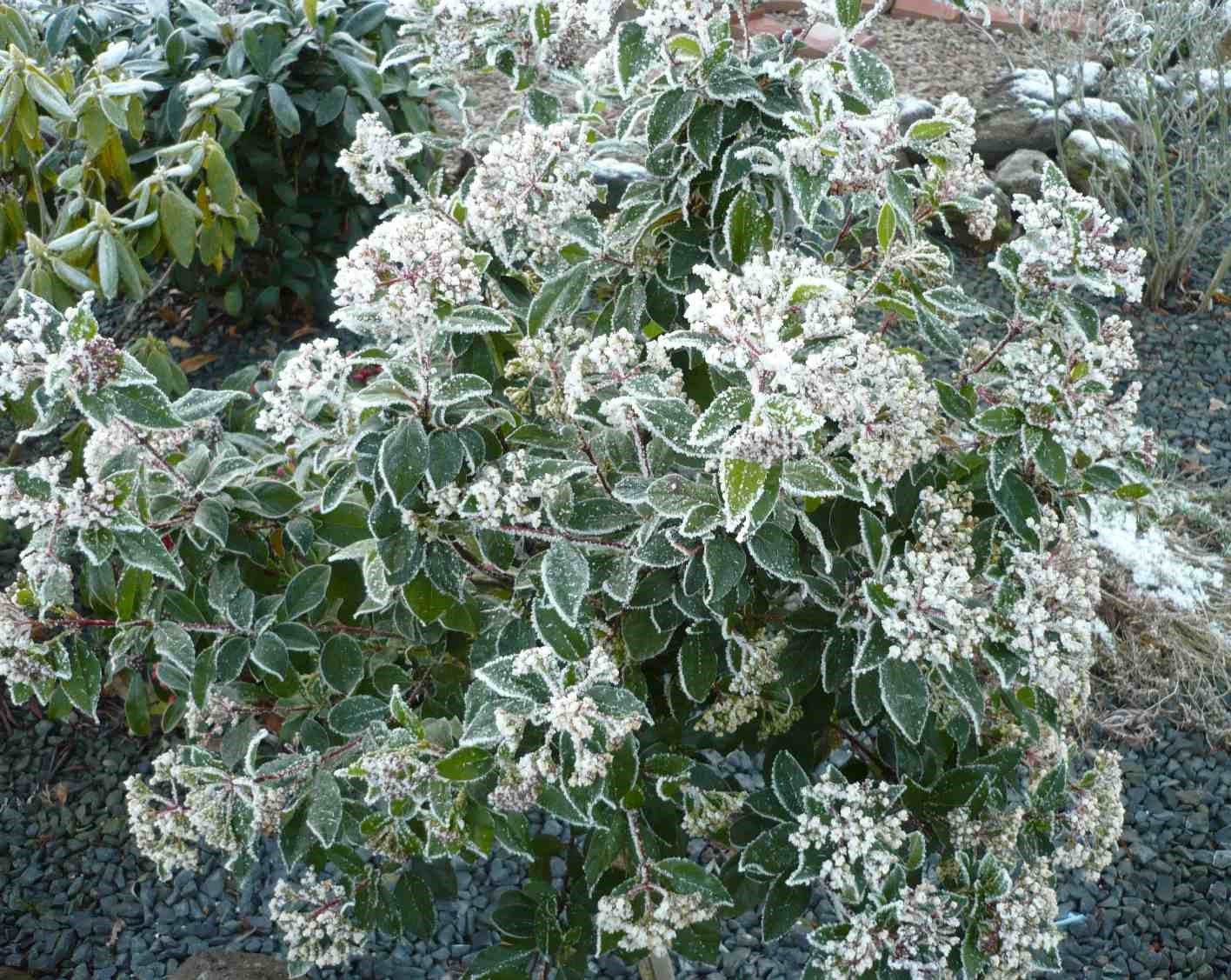
22nd December 2007. I am
in Holland and I see viburnum 'Tinus' flowering,
but white with hoary frost on it. In France it usually flowers in March. |
|
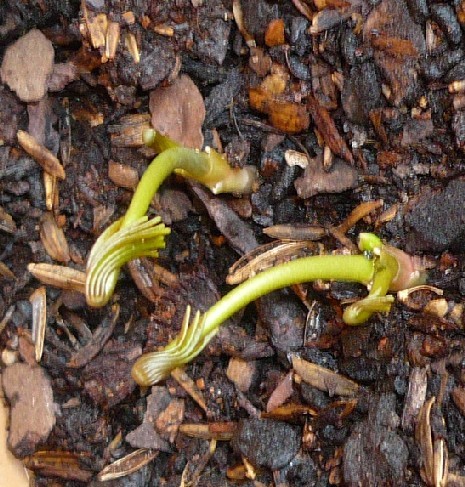
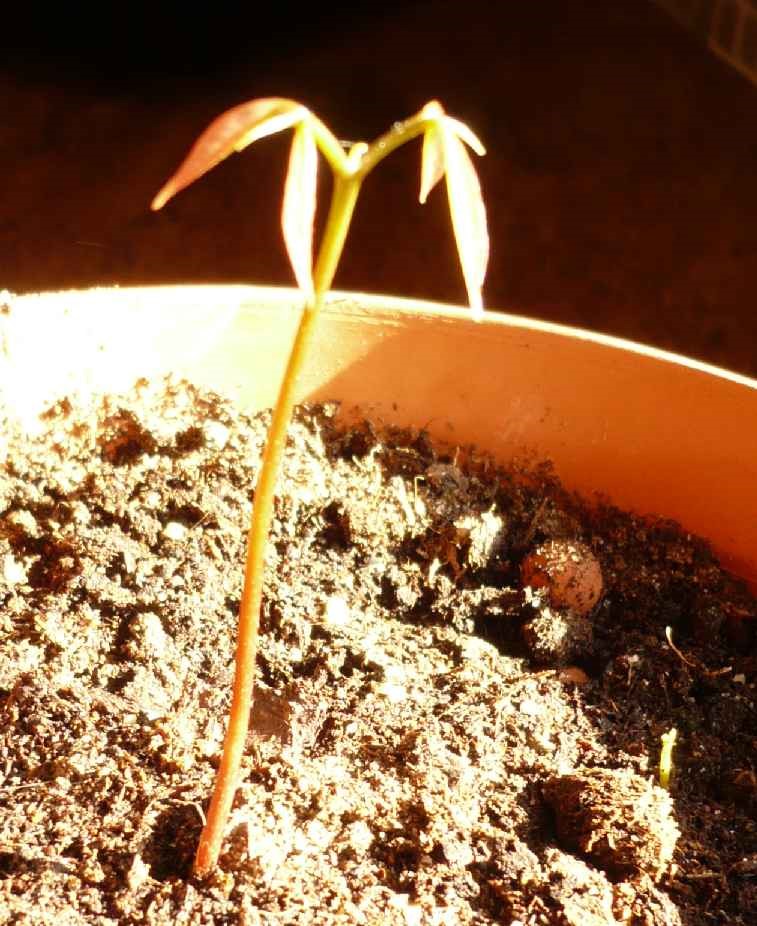
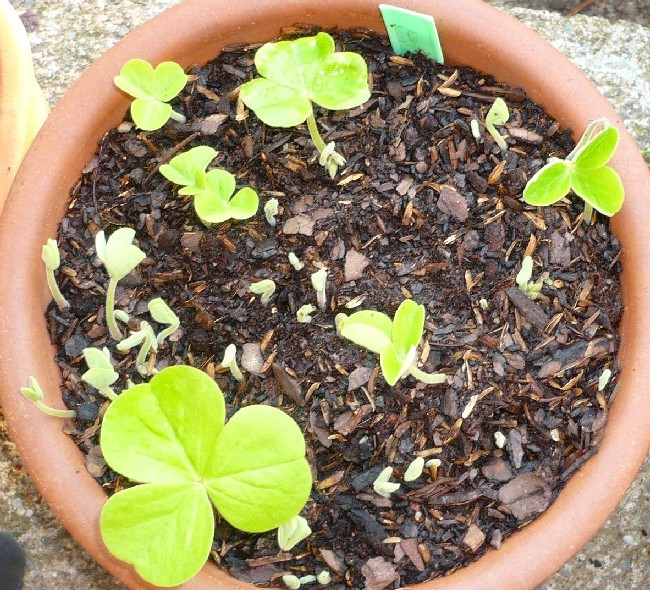
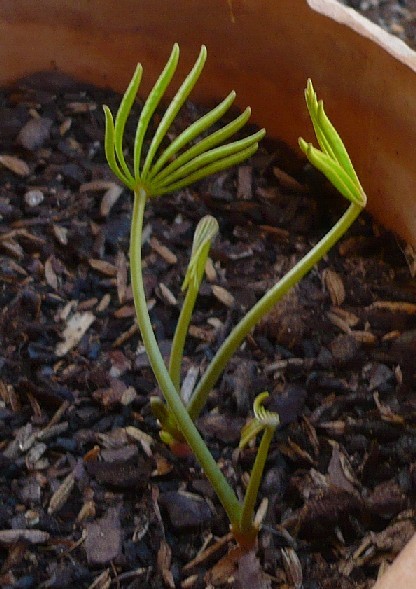
| In Holland I had put a few seeds of lychee
in a pot wondering if anything would happen. I was quite surprised
to see a very thin sprout one day. You would expect two big fat
'cotyledons', like in beans. (? This was a word I looked up in a
dictionary. I have never seen it before!) A second one is just
appearing on the right. A sound, German website gives information
on how to grow this plant. It will grow slowly and will eventually
be a 30 meter high tree. I won't be there to witness the fact!!! Poor
acid soil, little water, as warm as possible. No fertilizer for the
first few years? months?
Plant in a large pot at once: they don't like removals!
If anything good comes out of it I shall give it or them to Daniel,
my gardener, who is besotted by fruit trees and has over 65
different species of figs in his special gestapo fig garden.
Moreover he is at least 10 years my junior!
|
|
|
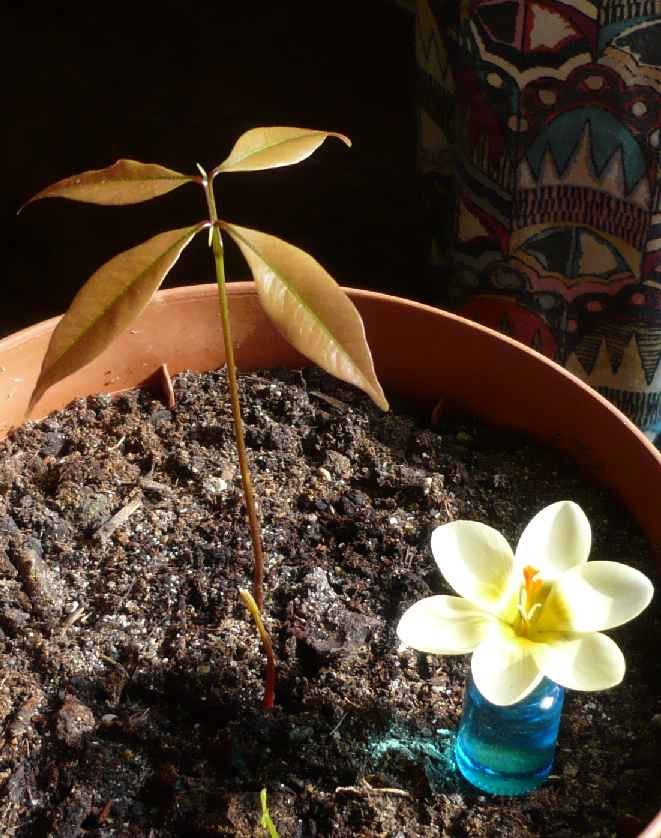 |
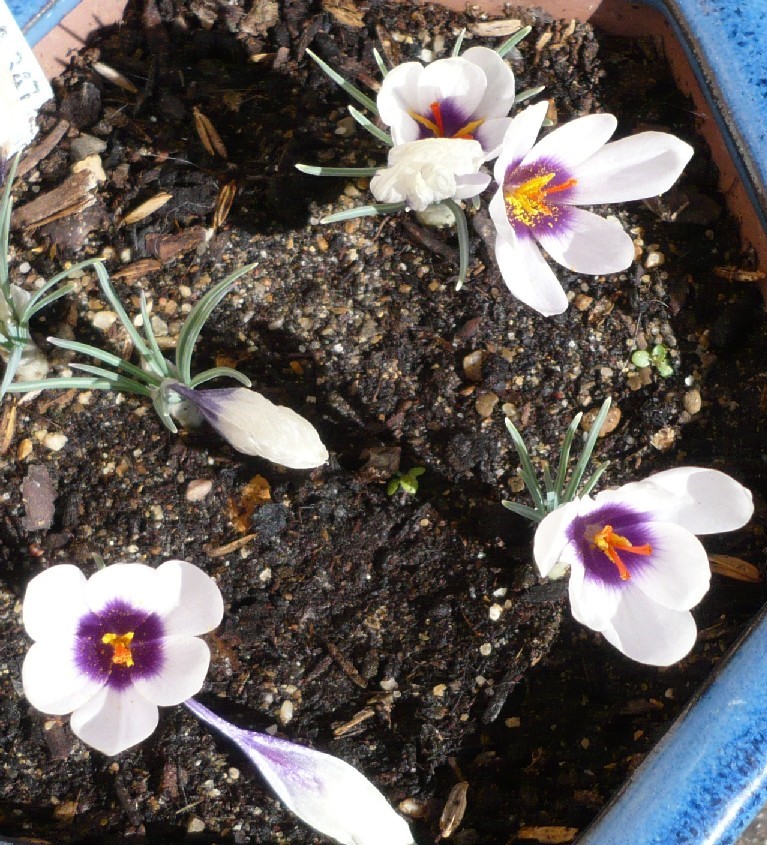
1st February 2008. Contrary
to the German website the lychee is growing fast. On the photo with
a crocus
'Cream Beauty' which had been broken or gnawed off. It is about 10
cms now. It is quite cold. The almond tree does not flower yet, but I have
seen some in flower along the roads. There is one scilla, one
crocus 'Ruby Giant', one blue hyacinth. The pink helleborus
the one with freckles is in flowering and the yellow one is
starting to. But muscari 'Golden
Fragrance' has not started yet.
|
|
13rd February There
are some balmy days and you might think spring has come but then
suddenly it is cold again. Like today: 10 degrees, wind.
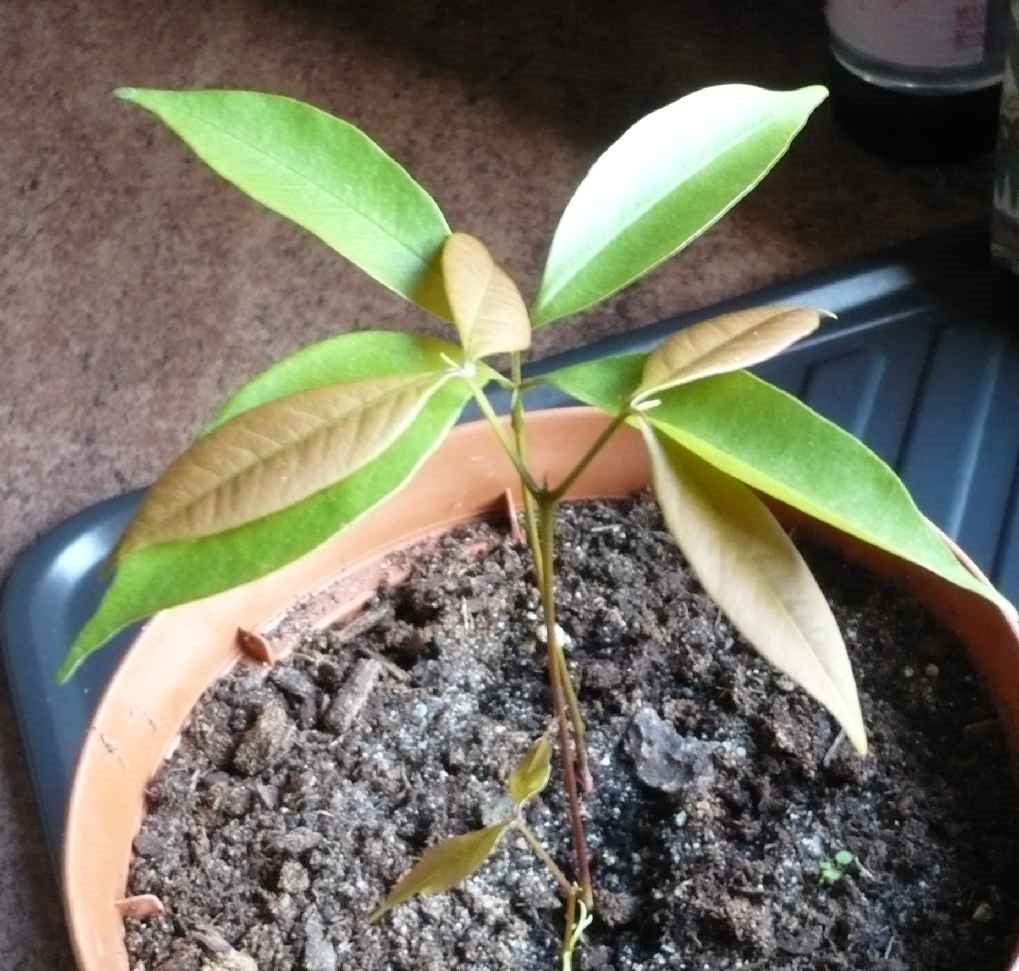
The lychee is growing well, its first leaves are green now and
rather large, app. 6 cms.
Nothing special for the rest. Helleborus orientalis is
flowering. Rosa mutabilis is full of buds (though not yet
flowering a month later! and not even 6 weeks later!) |
|
|
 |
22nd February We
had a nice bit of rain lately though it probably seems more than it
actually was: 3 cms?
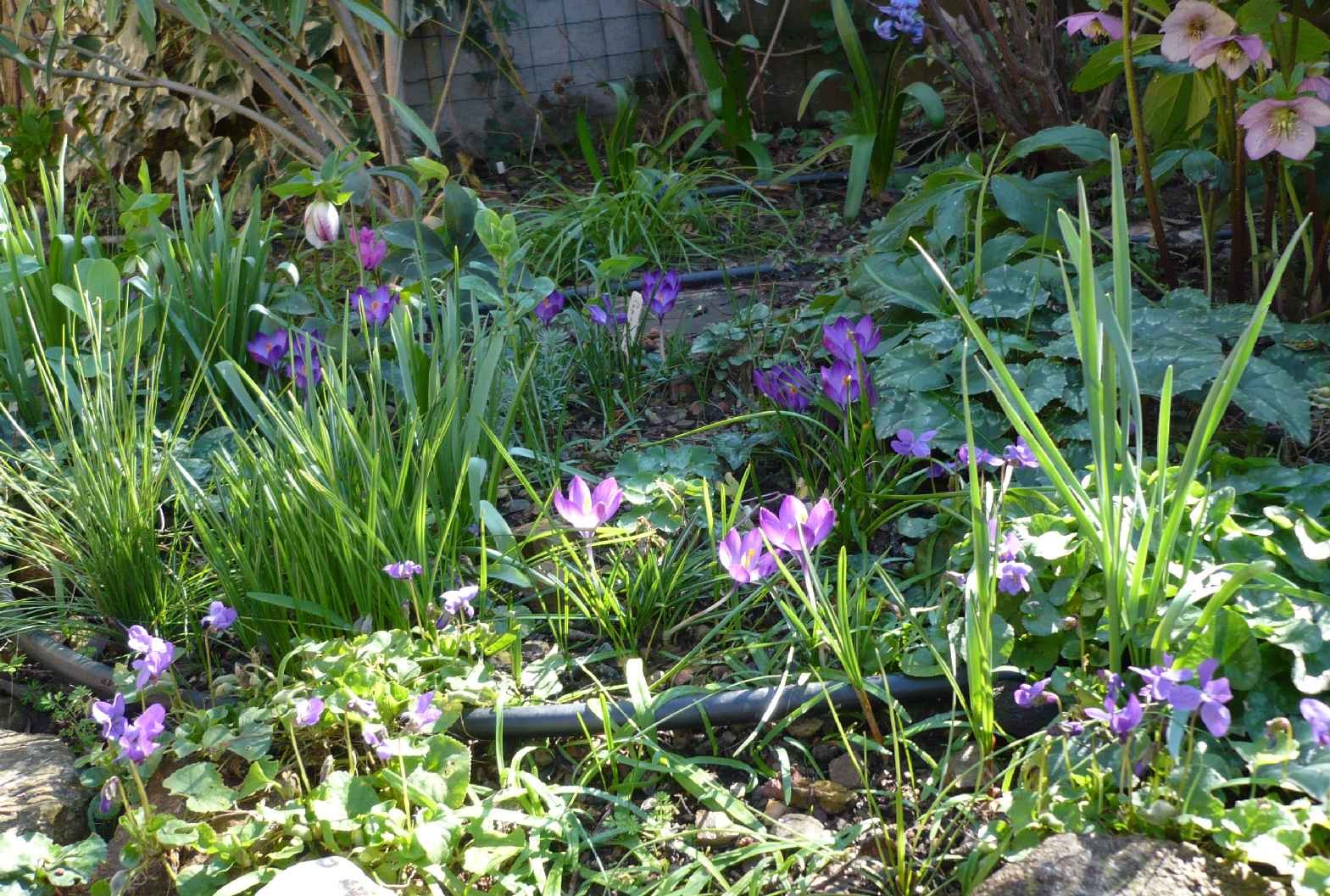
Anyway, good for a few things to get started. Crocus tomm. 'Ruby Giant'
and wild violets, on the left behind my favourite hell.
orientalis one with purple veins. The one in the background on the
right is always the first to flower and is gorgeous as well: pink
with a darker edge (picotee) and dark freckles. Ranunculus
ficaria 'Salmon's White' has opened its first blooms. |
|
|
|
 |
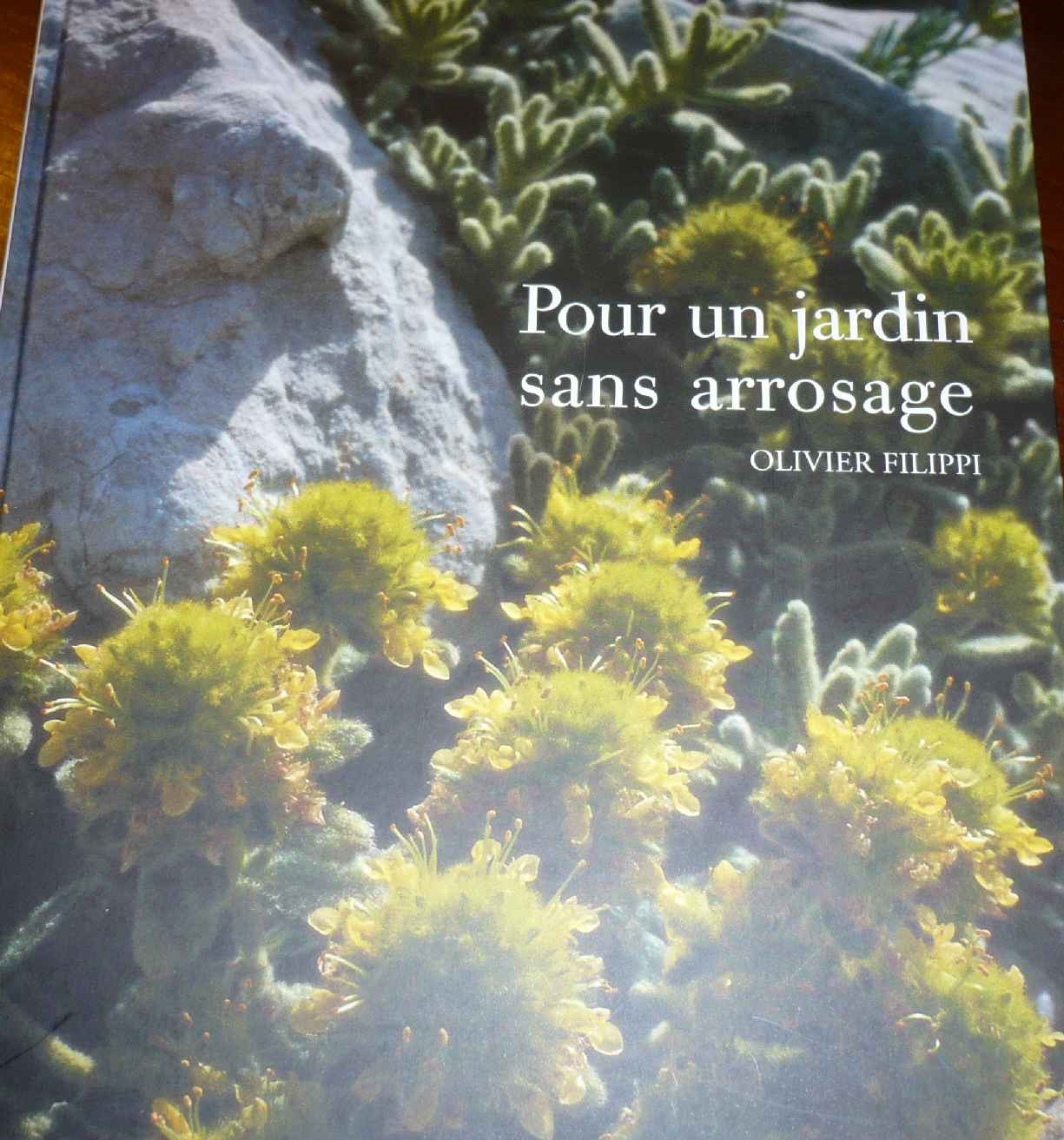
February 2008 Filippi,
of the great nursery in Mèze, has published a book on gardening
without watering. You may order it by printing the order form
on their website, 45 euros including package and posting.
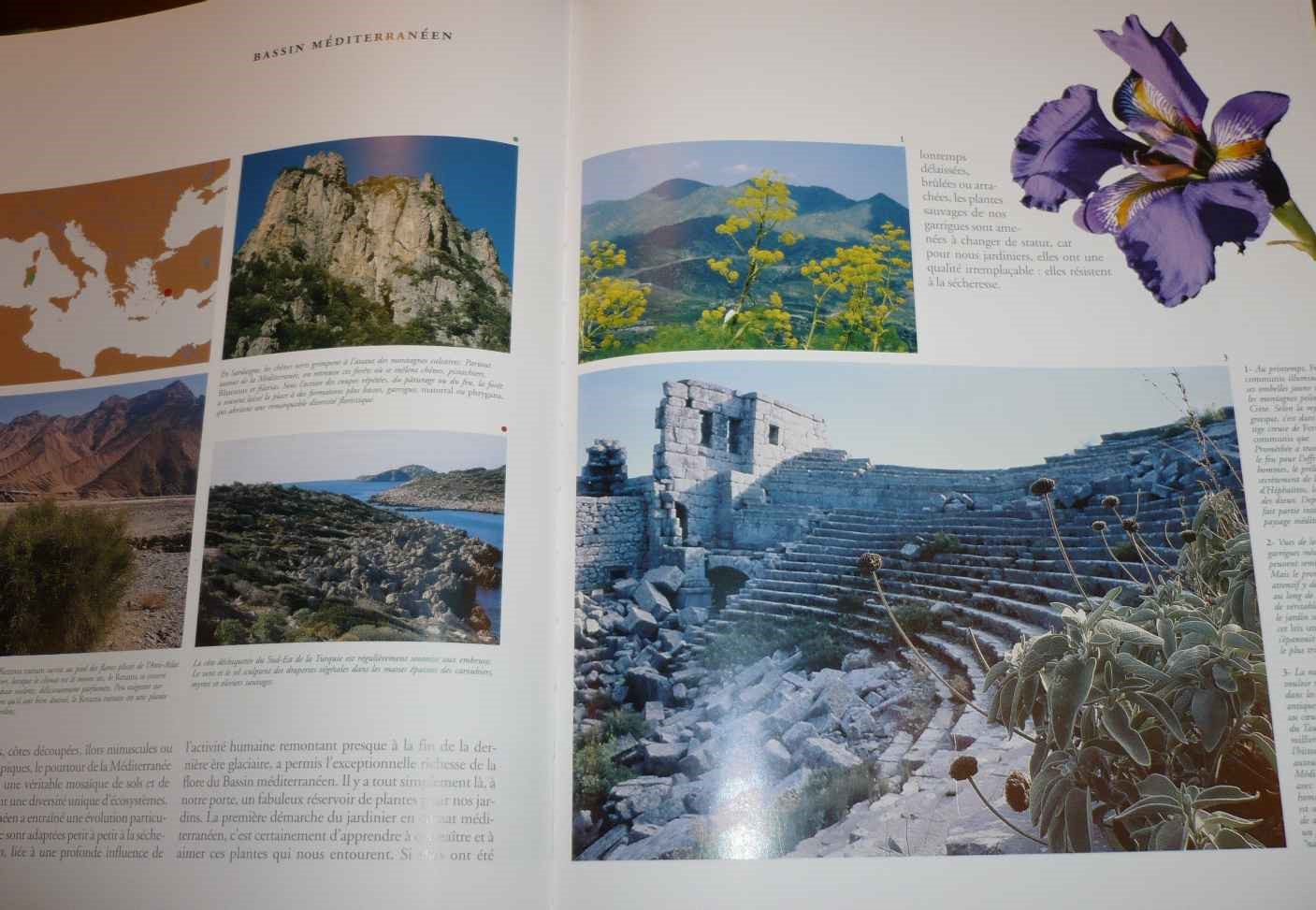
First he covers the regions where the most useful plants for such a
garden may be found. Then there is a part on how to set about
preparing the soil and the actual planting with a most interesting
bit on plant roots inside a pot! Finally, of course, a great many
plants are discussed. Let's hope we can buy all of them in his
nursery ...
I missed aphyllanthes monspeliensis, one of the
easiest plants you can imagine once you have it settled!!!
And so lovely! But there was no mention of it nor of our
lemon
coloured local dandelion with its black centre, such a beauty and
worth a spot in your garden or verbascum sinuatum, a
kind of 'torch' (mullein?) with lovely wavy leaves. But it is an
altogether enjoyable book and very useful. So is their catalogue ... |
|
2nd March Today
the weather is delightful, 22 degrees at lunch time,
sun, no wind. On our small table on the balcony I
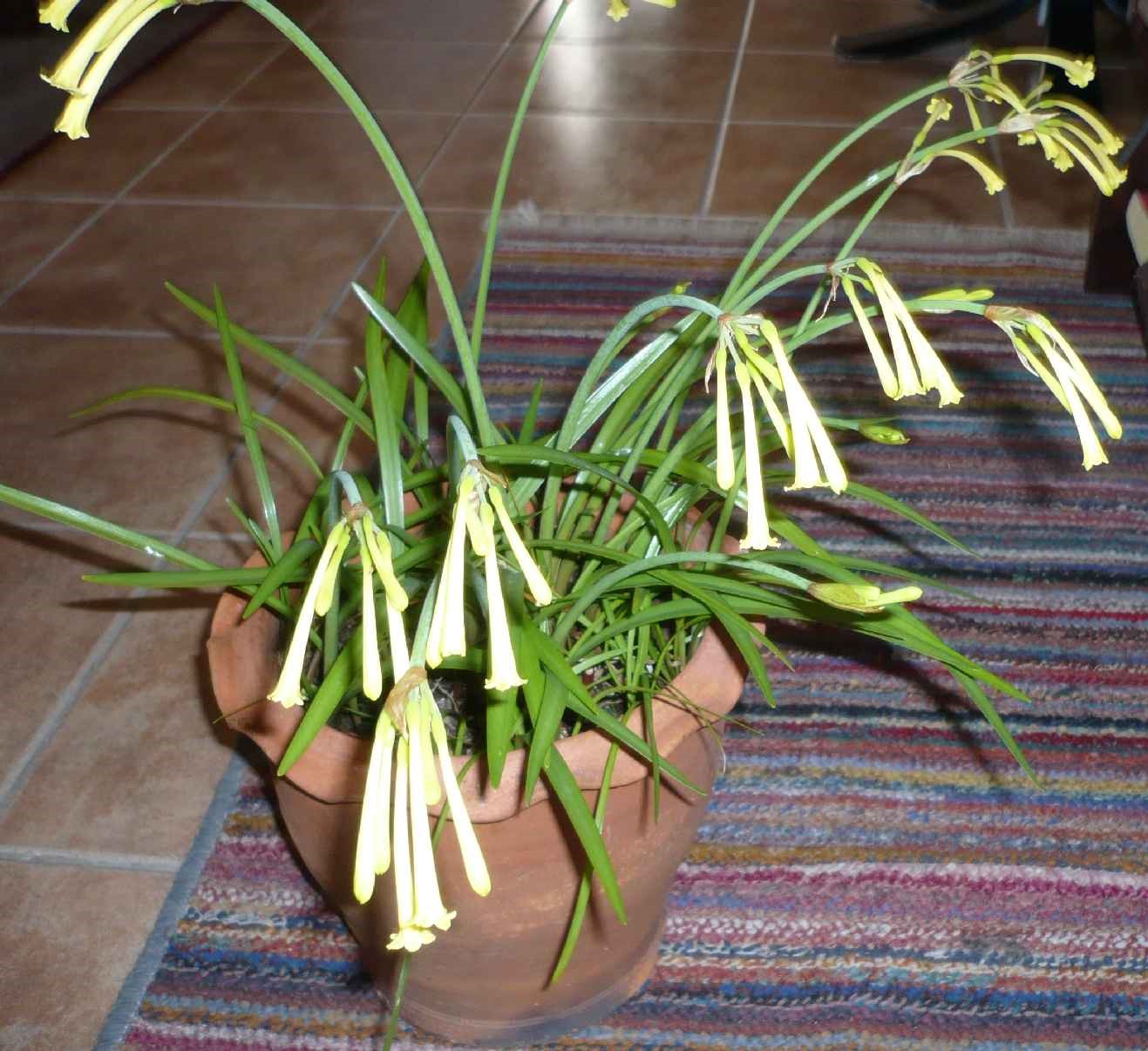
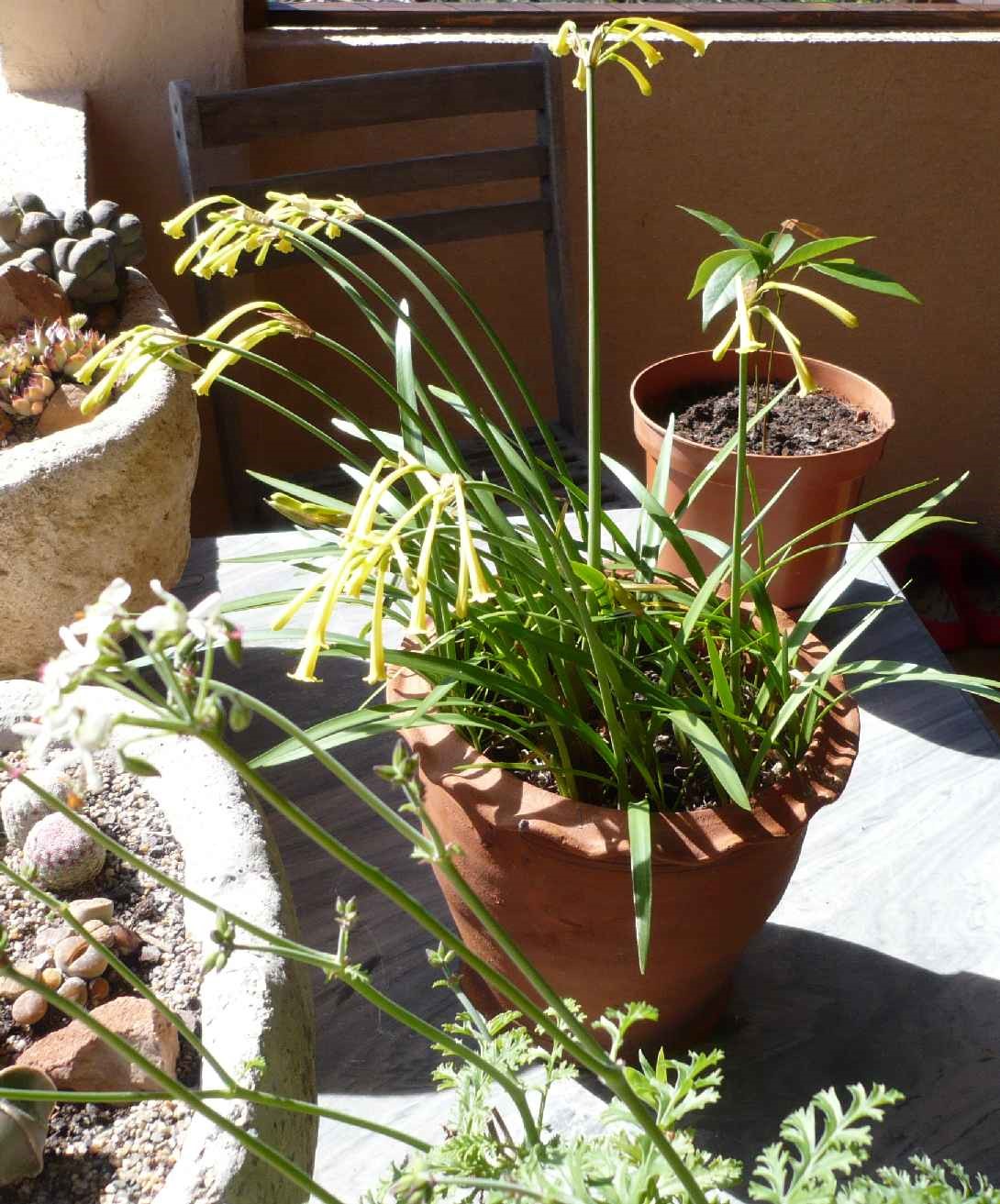
replaced narcissus by a pot of cyrtanthus mackenii. On
the right and below. Buy, if you ever come across these
bulbs. They are very easy to grow, they flower early in
the year and copiously, and you need not do anything
about them but water them (modestly) and repot once in a
while.*) In front of the cyrtanthus is pelargonium laxum,
an unexpected species with a sturdy stem and pale yellow,
perfumed flowers. I put it outside hoping that a few
flowers will result in seed. Last year yielded three
plantlets!
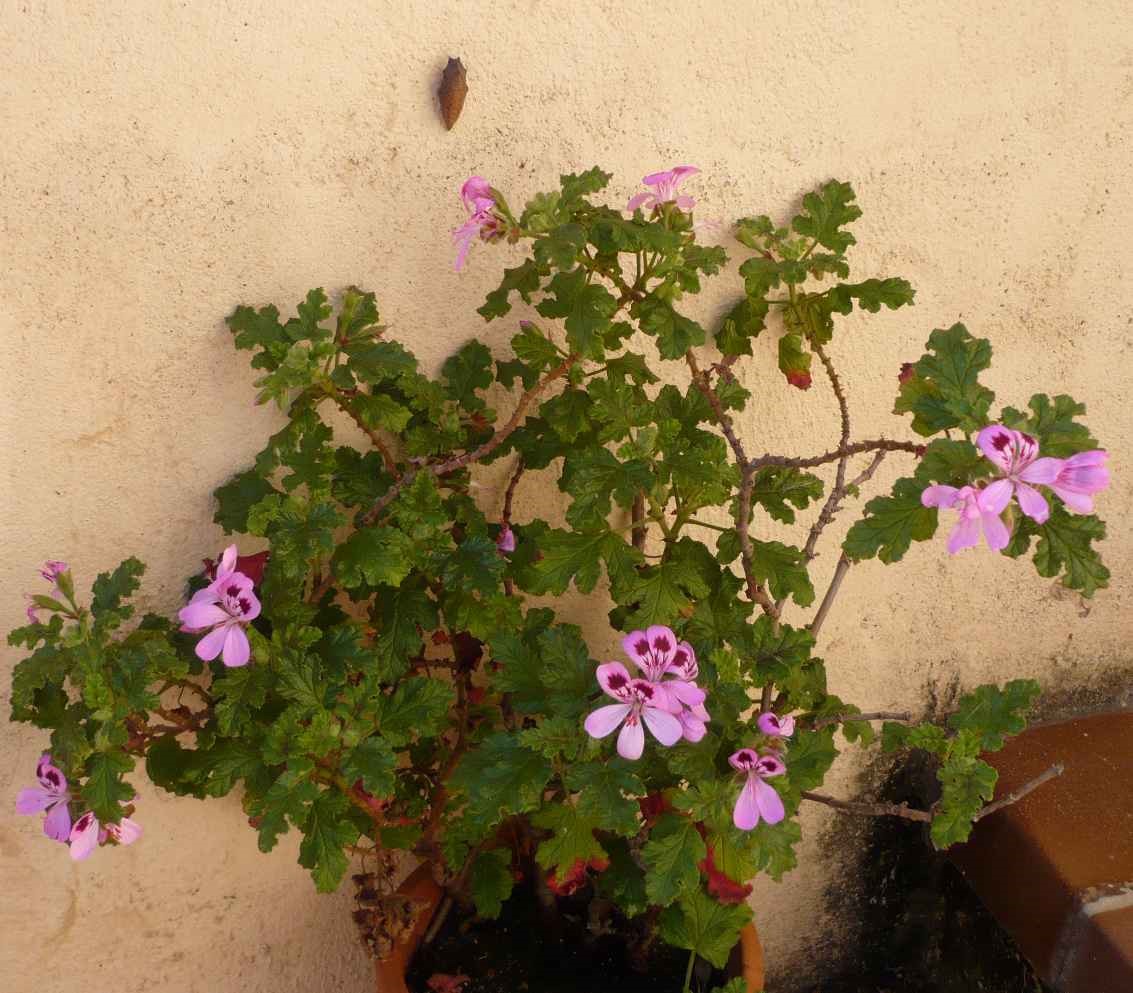
On the stairs is another pelargonium, nameless, oak
shaped leaves which smell nicely and pretty flowers. It
has been there all through last winter to protect the
chrysalis on the wall from predatory birds. So far with
good results. There was another chrysalis well hidden in
a black crate containing pots with seedlings and such,
but that one has been spotted and eaten ...
*) I did this two years ago and found eleven 6cm long, 1
cm thick grubs in the pot. See at the end of VERMIN. |
|
|
|
|
| 7th March Unpleasant
fact: this year's winter starts in March. It is nasty,
tramontane blowing; o, that hateful tramontane! As there was warm weather in January and February things
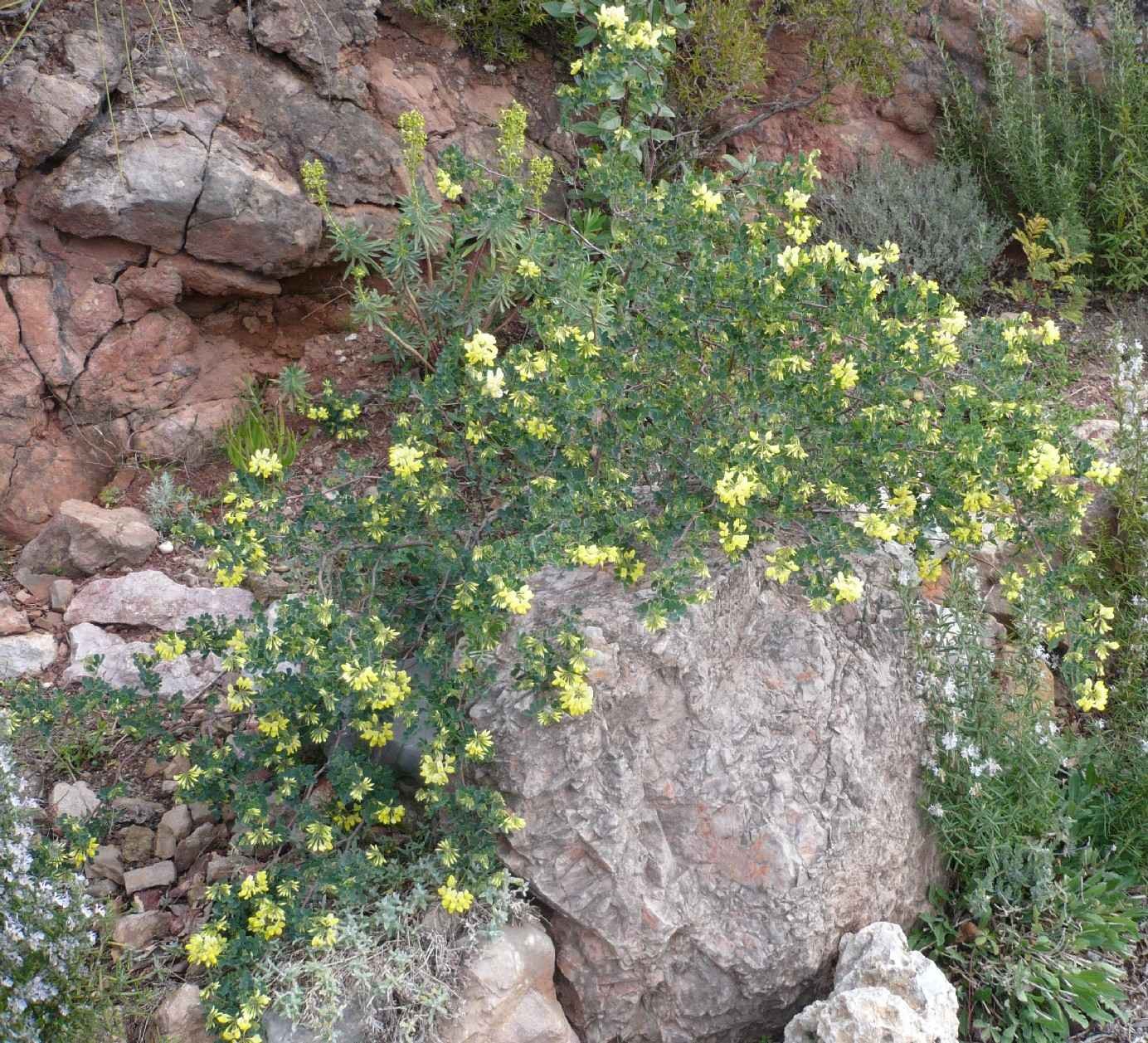
are flowering a month early like coronilla glauca 'Citrina'
. This has become a full grown bush by now: what
a beauty it is and what a great position just behind that
boulder. Coronilla is one of those things you should
have: lovely shape, lovely leaves, nice flowers with a subtle
perfume, very drought resistance, hardly needs attention, self
seeds. Young plants can be transplanted easily, what more can
you wish for.
Pelargonium laxum has been returned to the
conservatory
|
 |
|
|
|
In this time of year when there is yet so much
green in the garden you have to look out for snails, slugs and
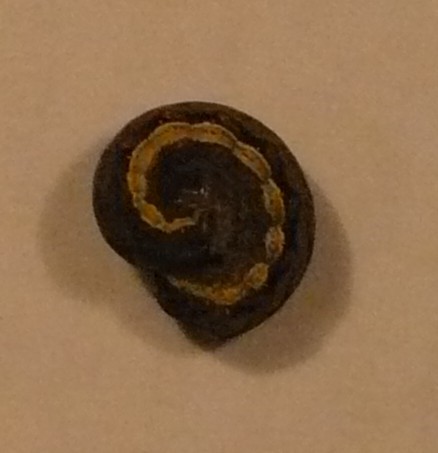
caterpillars. This one - green at first, brown when larger -
eats about everything. I don't know its name or what moth will
eventually grow from it. I just hate the thing! It is not easy
to find as it stretches along the branch it is currently using
for dinner, but curls up when disturbed. Nearly every night I
catch one or two of them nasty buggers on gladiolus tristis
which has just started flowering. It prefers flowers rather to
leaves. |
|
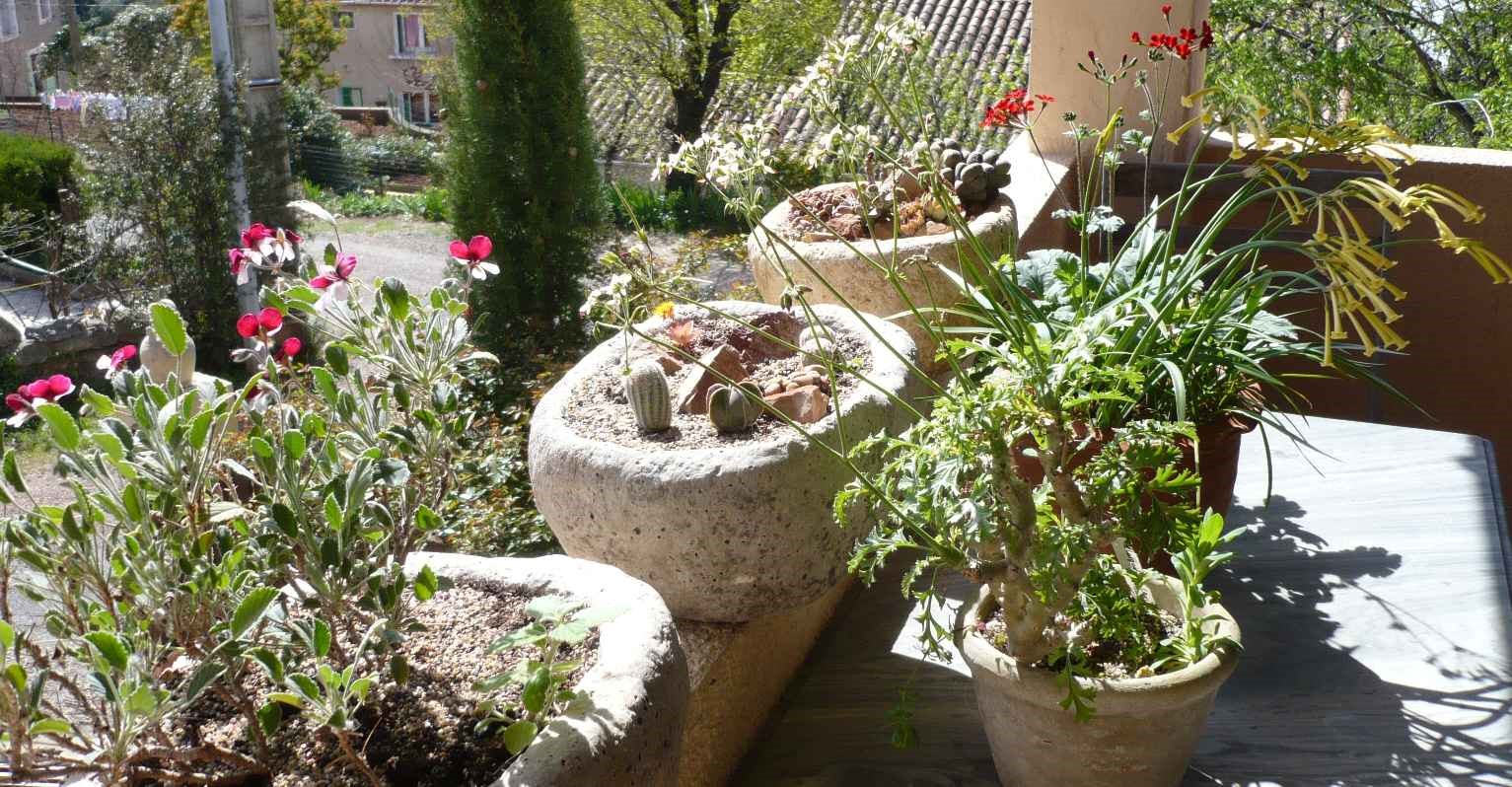
| Today, 13rd March,
the weather is great so I put a few pots from the
conservatory to our front balcony. Cyrtanthus mackenii was
already
there, pelargonium
laxum was inside again, but now again outside, so
is pelargonium
ardens on the right with lovely, velvety, deep red
flowers and pelargonium
'Splendide' (left), already flowering again. The first
cutting I succeeded making of the last one
shows a bud! Quite nice, it is said to be difficult. |
 |
|
 |
Lovely again today. Something like 22C and
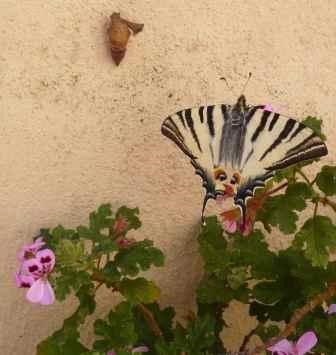
only one o'clock. I have seen the first swallowtail
butterfly, the one with stripes, which is always earlier
than the familiar type which will show up in May and
again in September. As they are quite 'tame' you
can usually have a good look at them. Oxalis rosea
is full of flowers and the little 'red tail?' (small
dark bird, red tail) is to be heard everywhere. Sounds
like two pebbles being rubbed together.
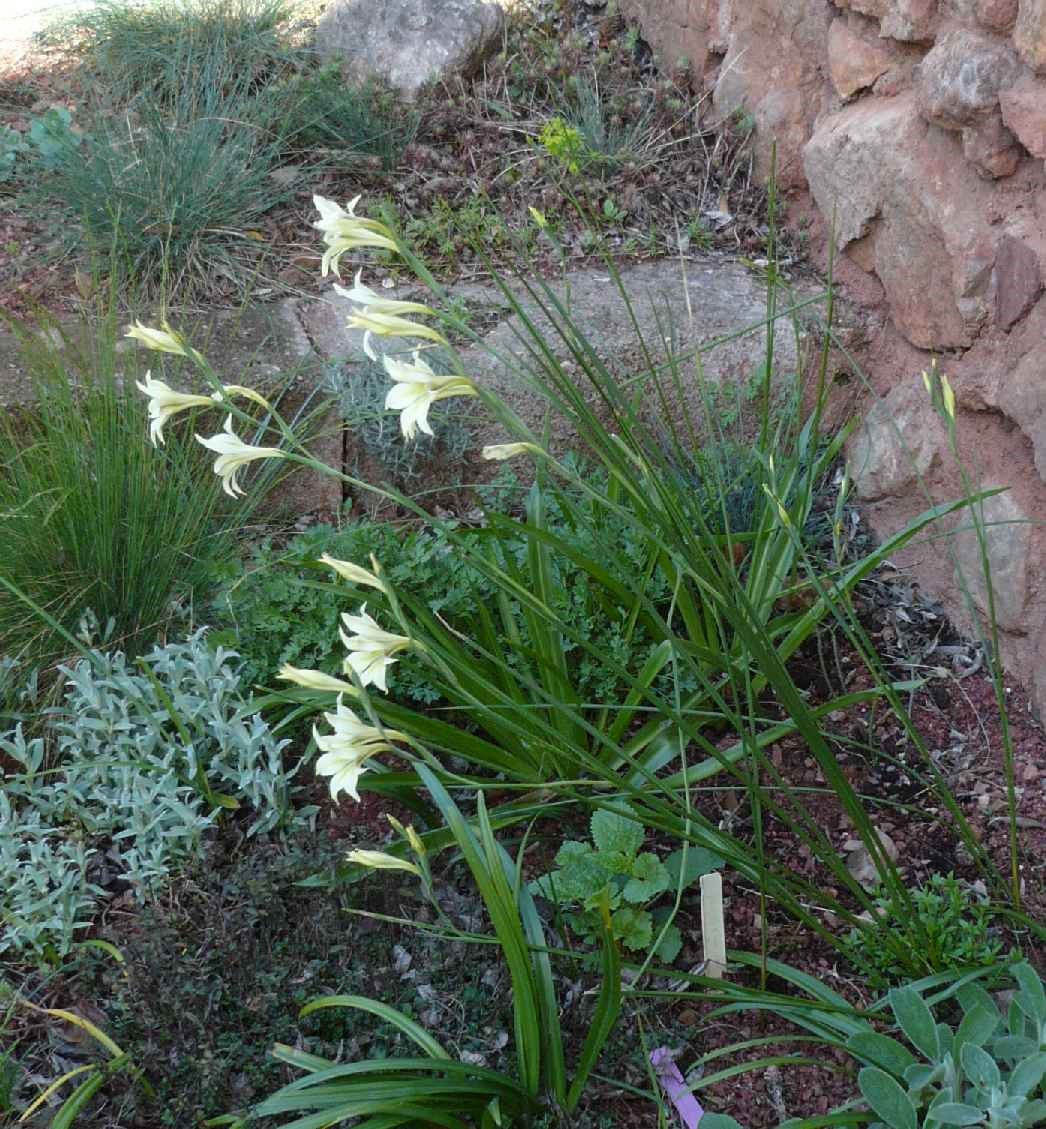
Gladiolus tristis is in full flower now. It
is gradually spreading. The first year I had only two
miserable shoots from 5 bulbs, now I have some 12, the
youngest - from seed - being miserable though! Now I have to
think of something to keep those horrible caterpillars away.
Every night I go out with a lamp and, like a witch, I collect
nasty beasties ... |
|
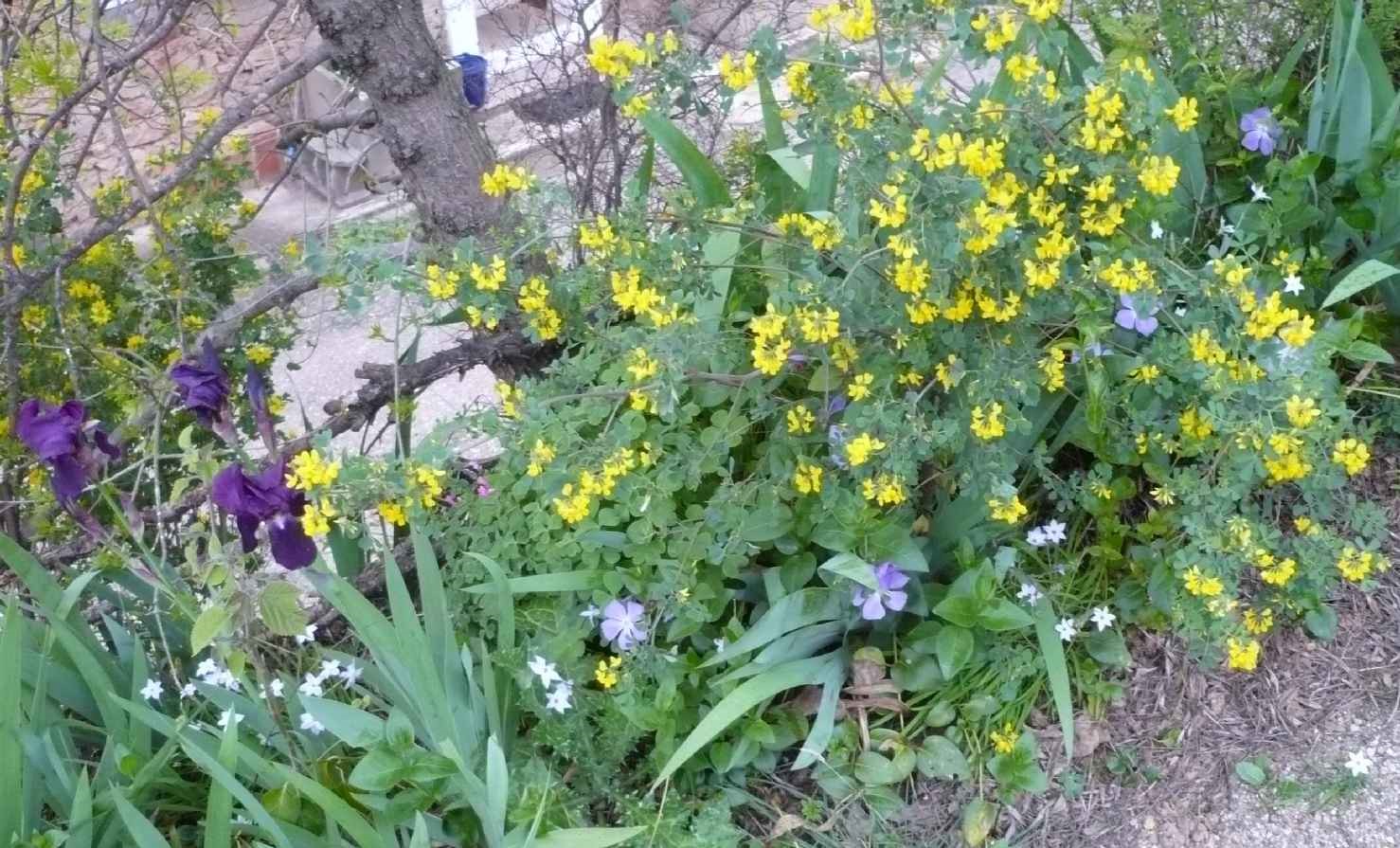
It is
only March and so many
things are already in full bloom: coronilla glauca, irises,
vinca major and ipheion (little old ladies in Dutch). The
picture has been taken just along the road.
Even crazier: there was a poppy on the roundabout at Ecomarché, our supermarket. Poppies are associated with June
in my mind!
Daniel, my gardener, came today. He has taken out a big part
of the old almond tree and pruned the olive trees rather
severely. I don't like olive trees in my garden, but adore one
hundred year old ones in an orchard. Or one very thick one
standing solitary in a prominent place. But not thinnish ones
in a garden full of bushes and stuff. That part of the garden
looks better after the job. There is more light now. |
 |
|
Somewhere in our village somebody has viola
odorata in her or his garden. Nothing special, but these are a
lovely pale blue. Last year I did my utmost to collect some
seed. When you know them violets you understand the problem:
seed ready to go? Off they are! So I visited this garden quite
a few times - the violets were growing in the gutter outside
on the road - to try and get some seed and finally I collected
nine or so. I put them in a pot and left them outside: nothing
happened. Until suddenly last week they started germinating.
Wow! My friend Hieke told me later that they will only
germinate after what we call 'frost has passed over them'! We
had very little of that, but fortunately just enough. It is
now 20th March and the
car is frozen each morning: winter at last ... The days are
cold as well, tramontane blowing.
Yesterday we had to play a competition near Perpignan, closer
to the sea where we saw a roadside red with poppies! |
|
|
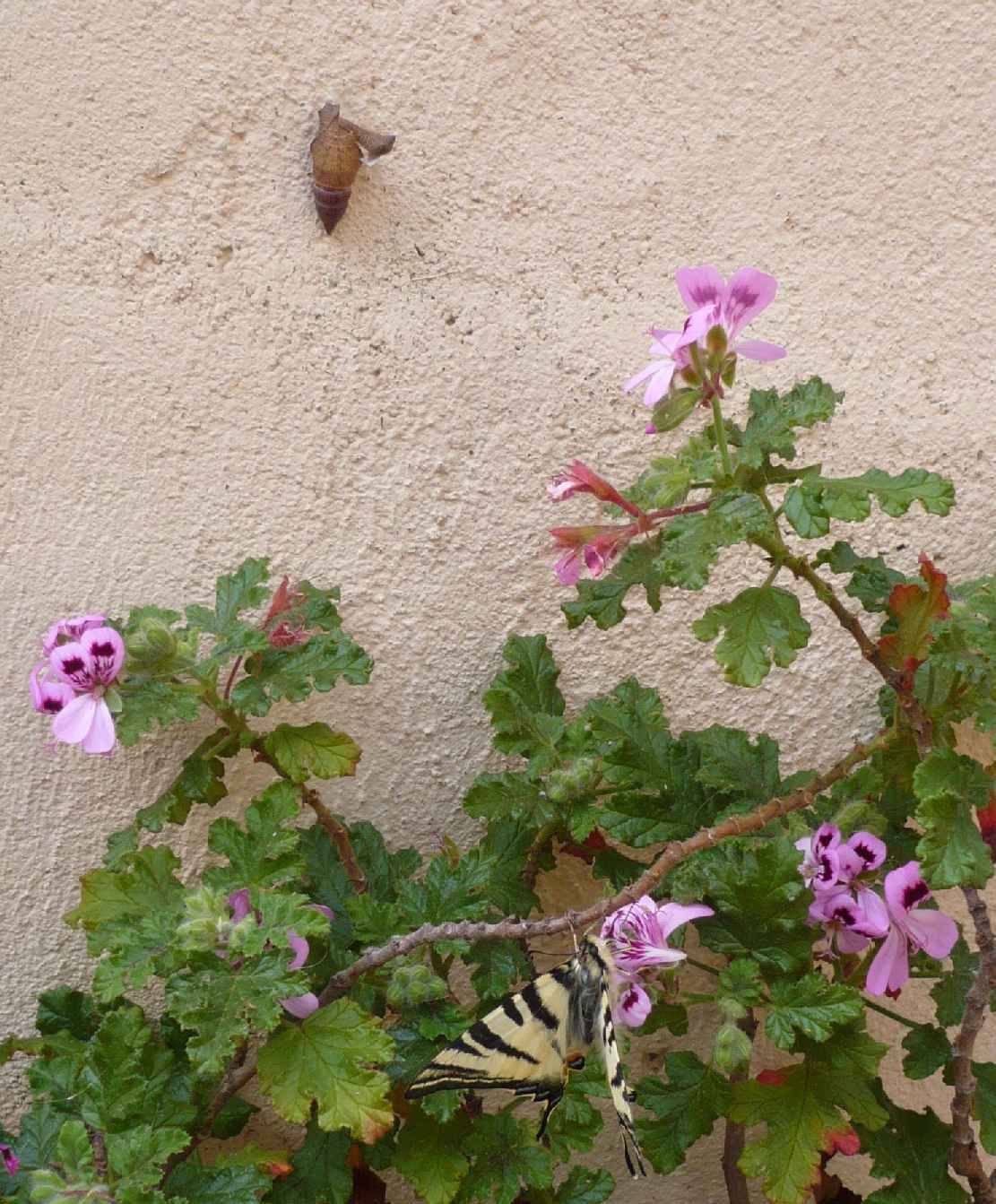
25th March Today
the chrysalis that was on the wall of the staircase to the entrance
of our home gave birth to a lovely swallowtail. This is the earlier
flying 'flambée'. I would have recognized the caterpillar of the
common swallowtail, but this one was a funny light brown/orange
colour and I had no idea what it was at the time.
The poor thing will have a hard time as it is still quite cold. It
was not quite finished pumping up its wings yet just now, so I'll
see if I can take another picture.
|
I have seen that orthrosanthus
laxus has a bud ... I have sown them 2 years ago,
transplanted a few into the garden last year and kept one in a pot,
just in case. One in the garden is now full of promise. It is
belongs to the iris family and will have lovely blue flowers.
Moreover it stems from the Perth area. I have spent four great days
in Perth in 2000. The moment that has always stayed with me was when
we went for a walk in a woody area and I looked around and saw
ABSOLUTELY NOTHING that looked more or less familiar.
December 2008: the orthrosanthus was a little disappointing, wishy
wahsy, but lots of seed. It may do well in the wilder areas of our
garden. |
|
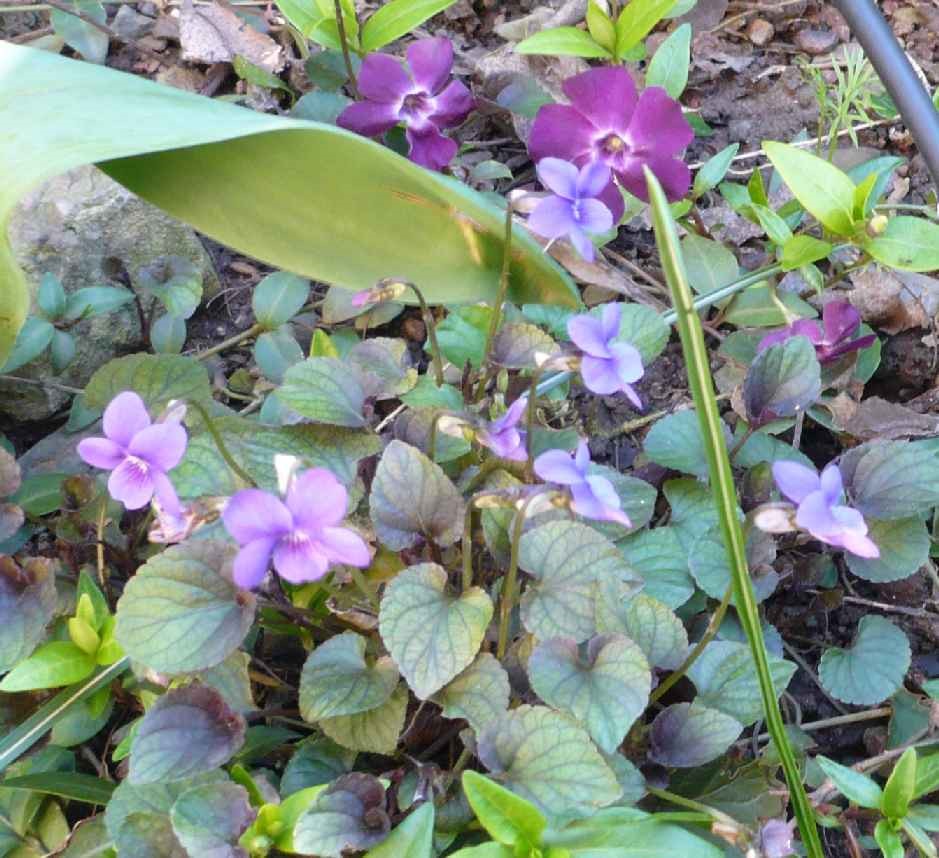 |
In the Netherlands viola laboradorica
grows all over your garden if you don't do anything about it.
Here it grows really slowly. The one in the picture is in a
part of the garden where I water quite often. (I always throw
the water used when cleaning vegetables over the balcony over
this area ...) Yet it has not reached an impressive size
over a period of five years... There is one other one in
a bit with more sun and less water and it is even smaller.
Lovely colours even when not in flower and matching the vinca
minor atropurpurea beautifully. Atropurpurea comes to
my mind spontaneously, but I am pretty sure that must be its
name. The leaf belongs to a tulip which should bear a purple
flower on an purple stem, but is more or less a thing of the
past now. 'Recreado', is its name, a great
tulip. |
|
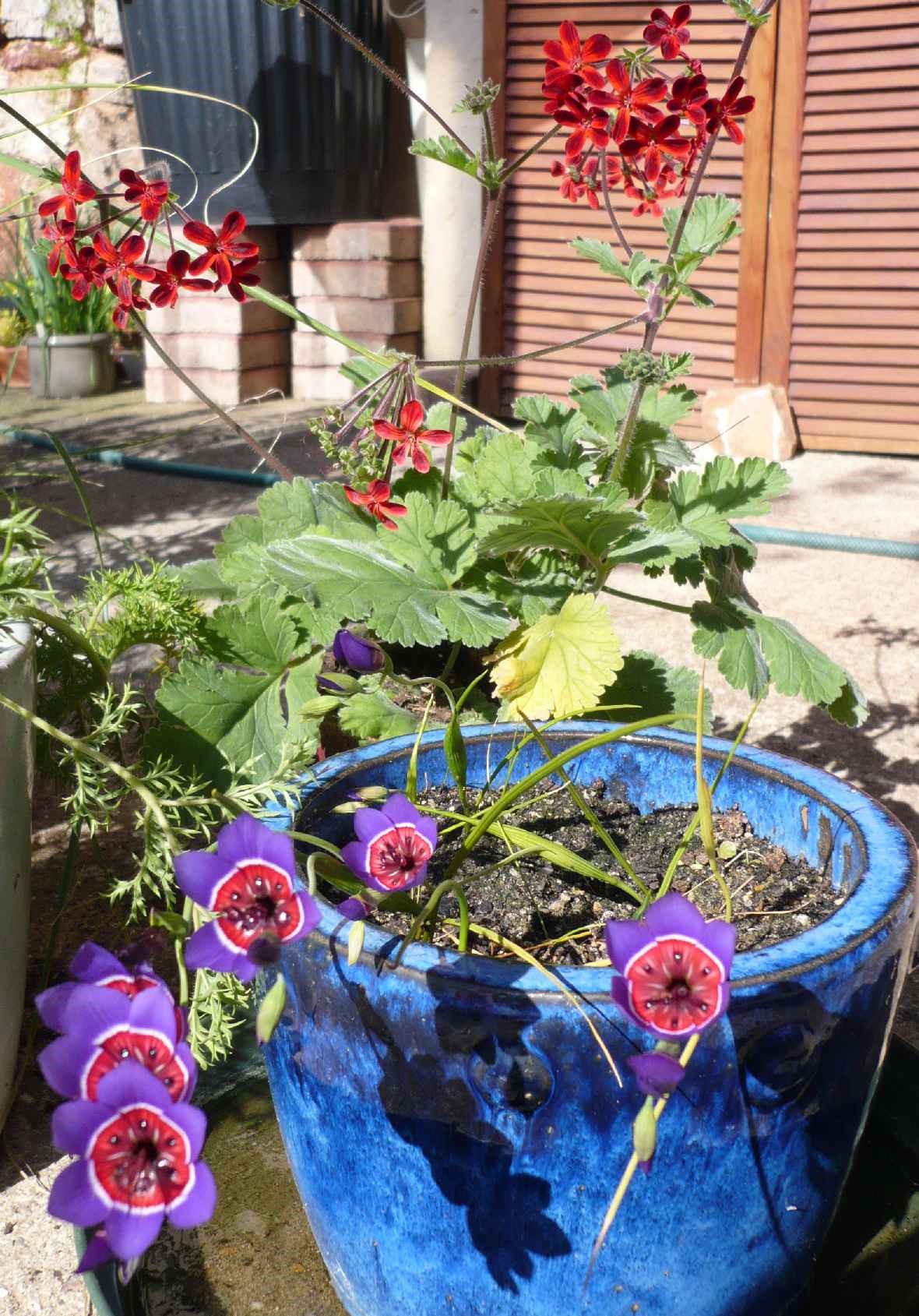
| Geissorrhiza radians, possibly
this spelling is not correct. A South African beauty
which enraptures all visitors. This year she bears more
flowers than in 2007. I strictly keep to the rules: feet in
water during growth and flowering time. After that allow to
dry out and stay dormant in the hot months. Behind: another
beauty: pelargonium x ardens. The geranium is so
compact that I can't make any cuttings. There is no seed
either, sorry.
There is quite a demand for the geissorhiza, so I tried to
get some more from Jim/Capeseed. He informed me though that
mice had eaten all his corms so that he would have to sow to
acquire new ones. Fortunately that seems to be easy and better
even: they will flower in the same year. |
|
|
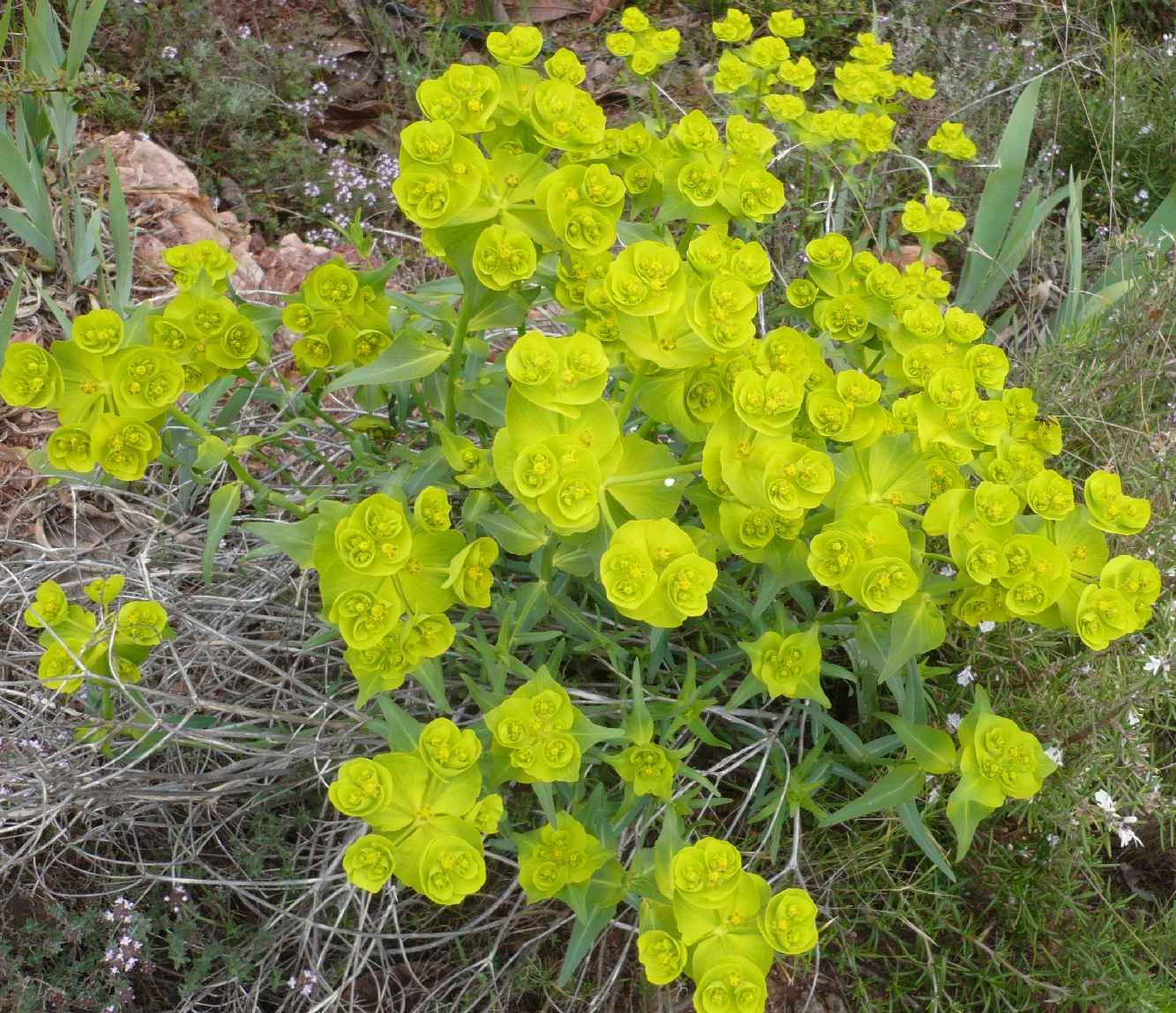 |
This is one of the loveliest euphorbias I have met.
You come across it everywhere along the roadside. Of course I have
already tried to transplant one but failed. I don't know its name
either: might be euphorbia serrata but its leaves are
not toothed, or euphorbia biumbellata if it grew
closer to the seaside. The plant in the photo is in my neighbour
Gisèle's garden. The house, the garden and sadly this gorgeous
plant are up for sale...
'Serrata' it is, very finely toothed. I have to take off my
glasses to see that ... Filippi sells them! |
|
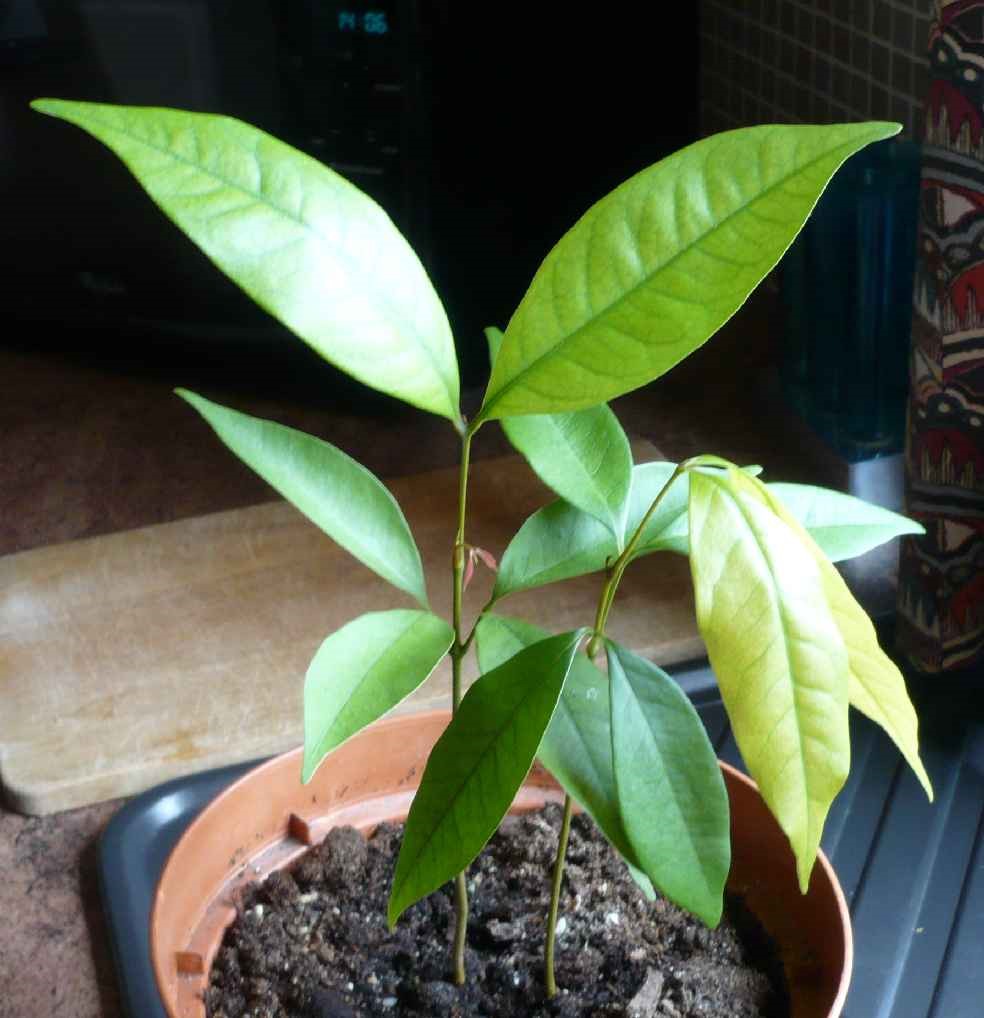
| For those who have wondered how my lychees are doing
... Well, it is growing steadily, nearly 20 cms high by now. New
leaves are reddish in colour and for some reason when they start
turning green begin to hang and look wilted. Not to worry, it seems
to be a habit with this one. The two top leaves of the bigger one
are app. 11 cms long and quite leathery.
Both plants had two sets of double leaves to start with but new
ones grow in two parts. (there must be a word for that, the
dictionary says 'bipartite' but so far I have never seen that word
...) |
|
|
|
|
|
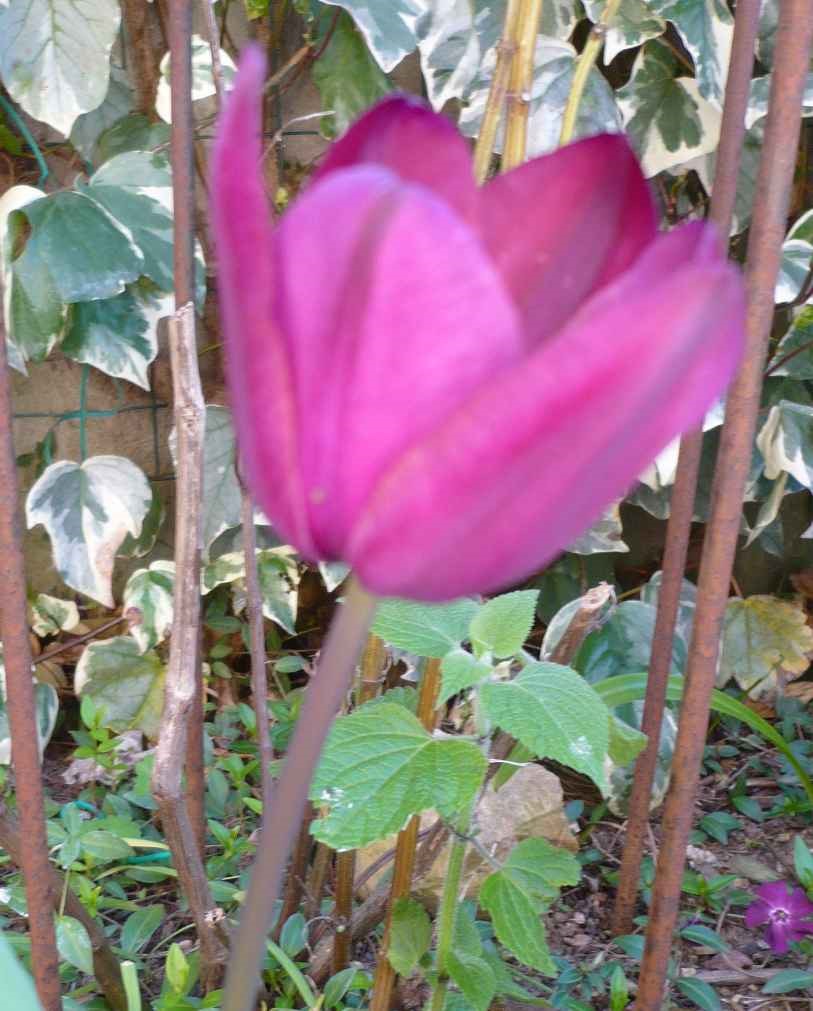
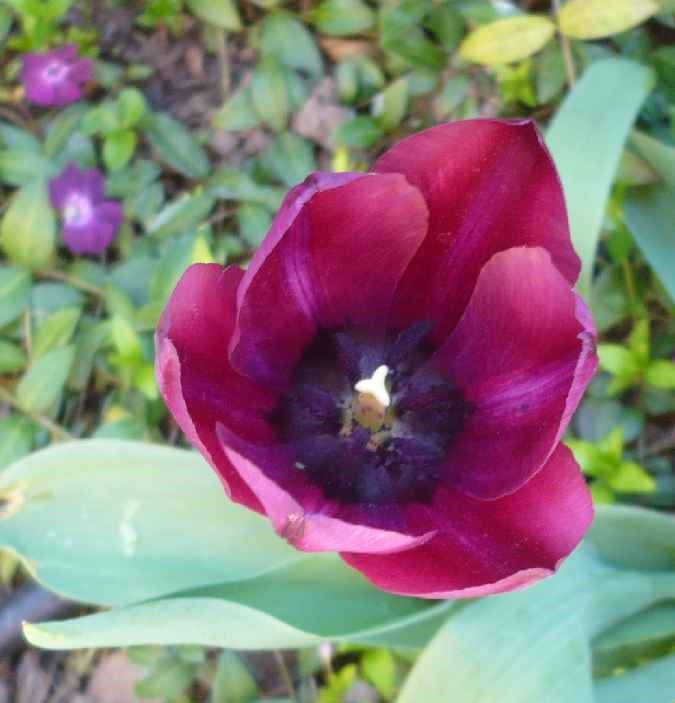
4th April 2008. This
is tulip 'Recreado'. But this is the last one that is going to
flower, the other have dwindled. |
|
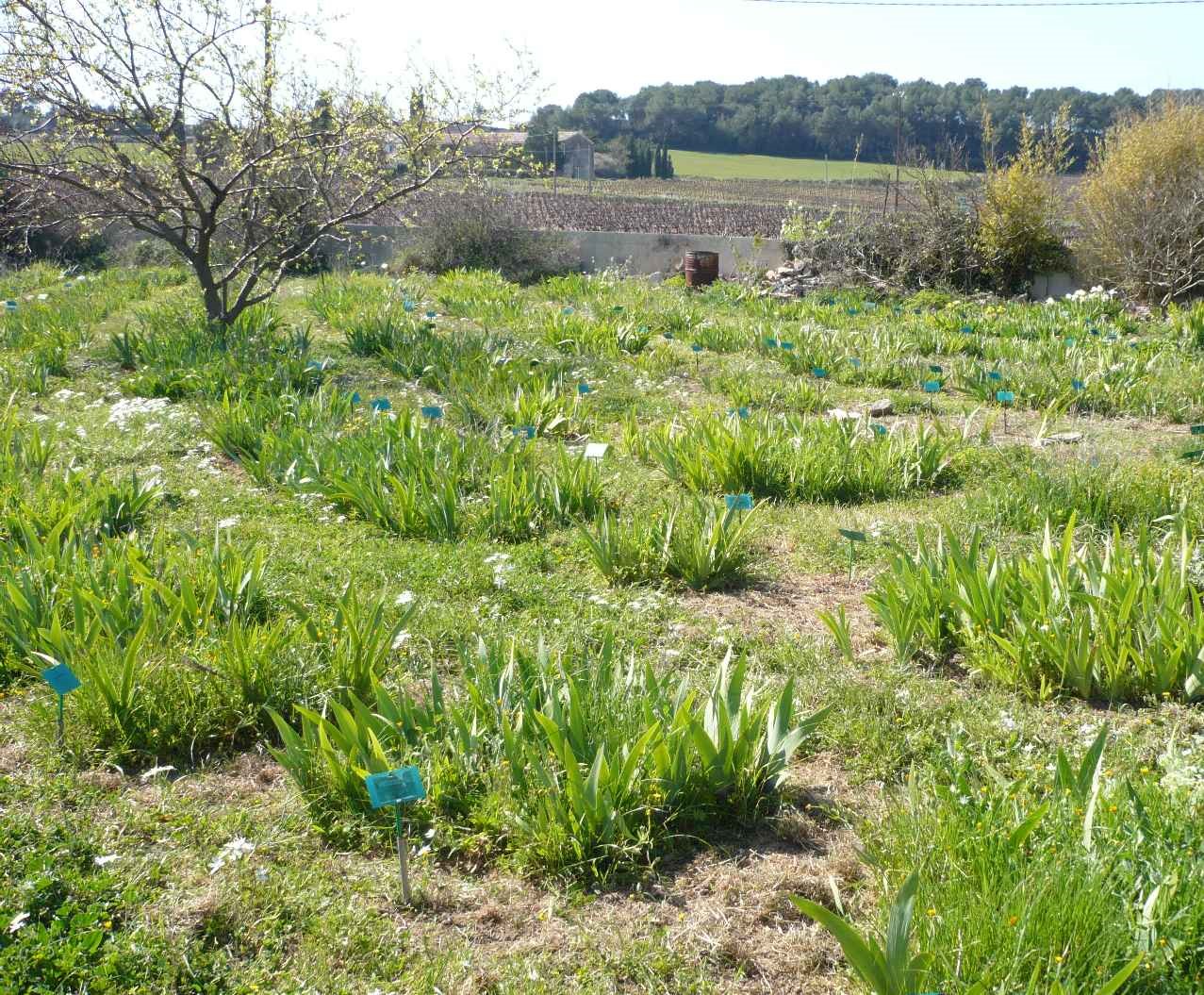
| Today I went to Iris du Thau with my friend
Hieke. Unfortunately there were hardly any flowers yet.
Too early! But there were plants for sale and I had been
afraid that they could only be ordered.
Afterwards of course a quick visit to Filippi's: Not much
in stock either but there is always something. I bought e.g.
cistus Natacha, lovely pink tending towards apricot,
spreading.
Filippi's is in Mèze, Iris de Thau on the road to
Villeveyrac, no more than 10 kms away. |
 |
|
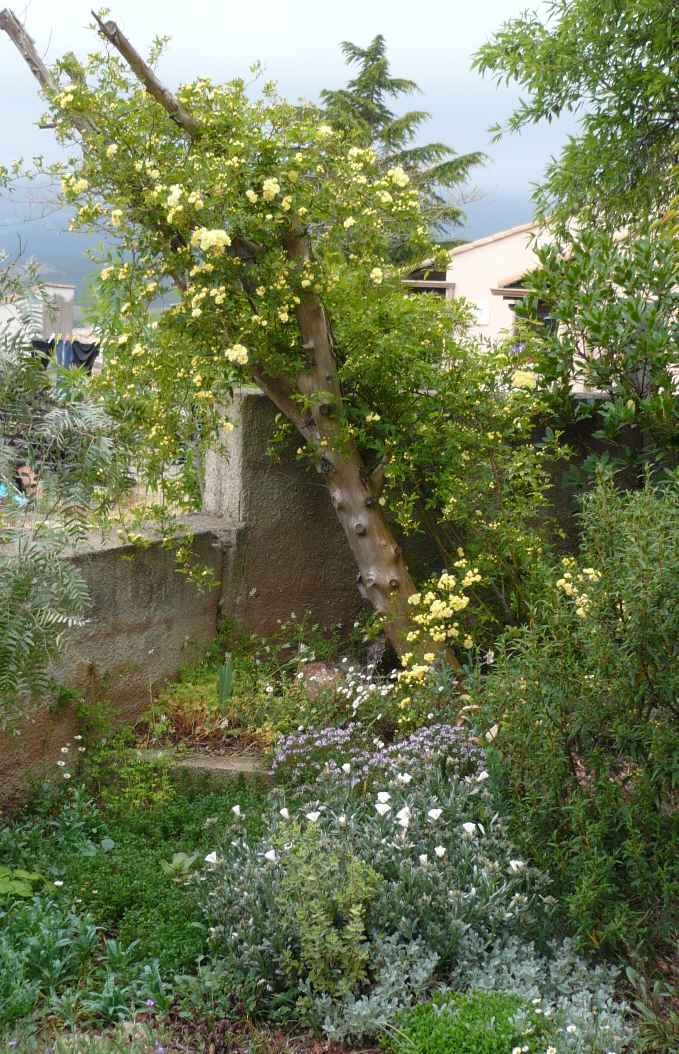 |
9th April The
yellow, double rosa banksia is flowering
ever so great. It is five years old now, quite a large
bush and very reliable. Lots of flowers. My only problem
is that it will be a lot larger in the long run ...
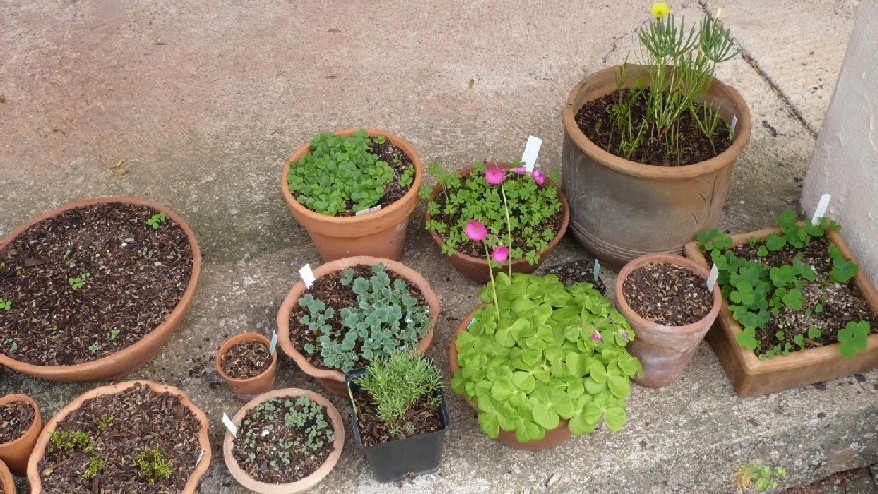
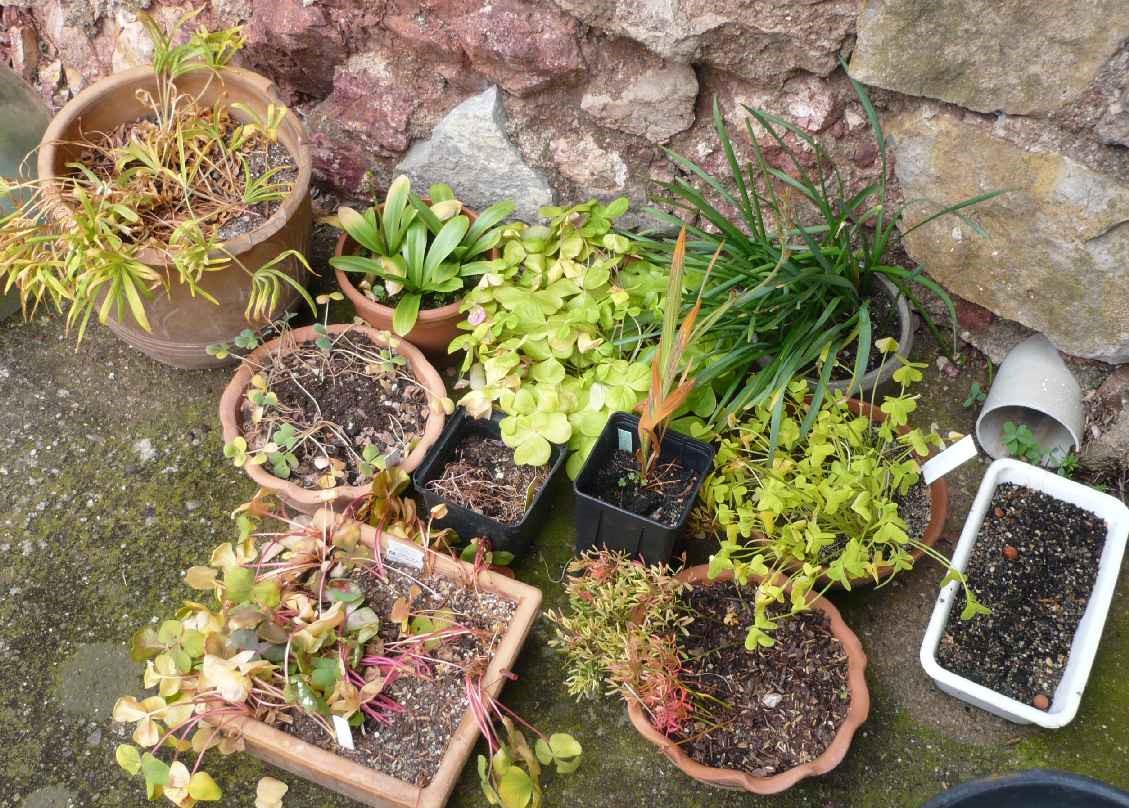
Below a sad picture: finished bulbs dying! Most of them are oxalis,
then some daffodils and a small pot containing a scilla ... ? (senior
citizen moment). Only one flowered, quite nicely
though. Last row, second left. I leave these pots as they are
all during the summer and will replant end of
August. Then they will be watered again as well. They
will grow (and flower) in winter or in spring.
|
 |
|
| May 2008 Everything
is in flower, but I discussed al of those somewhere on this site
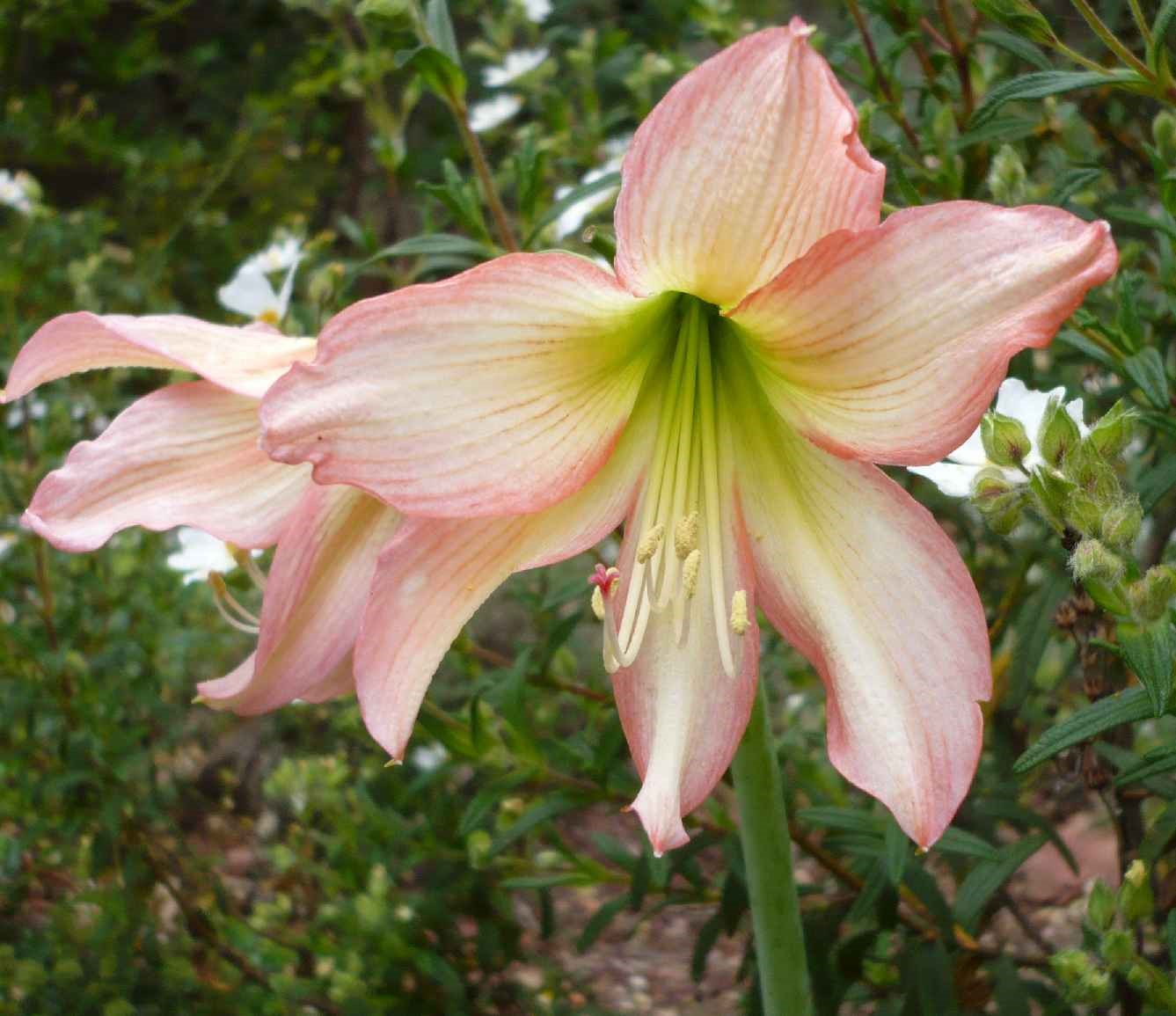
before. New is this small flowered amaryllis, hipp.
sonatina 'Veneto', which flowered once before in 2003 ...
Lovely, isn't she? In the backyard there is another one with red
flowers, but those are well known. Amaryllis is not such a
reliable thing as concerns flowering, but they do not disappear. I
have no idea what will happen in case of unhoped for severe frost.
Once in a while then there is a flower, nice! One in the garden
below the house sports a large bunch of leaves, good sign. |
|
|
 |
|
In the background something I do not know the
name of. I think it belongs in the carnation family. There are
always plenty of them in pots where they come uninvited.
Usually none in the garden. |
 |
It must have come in something from the Netherlands. |
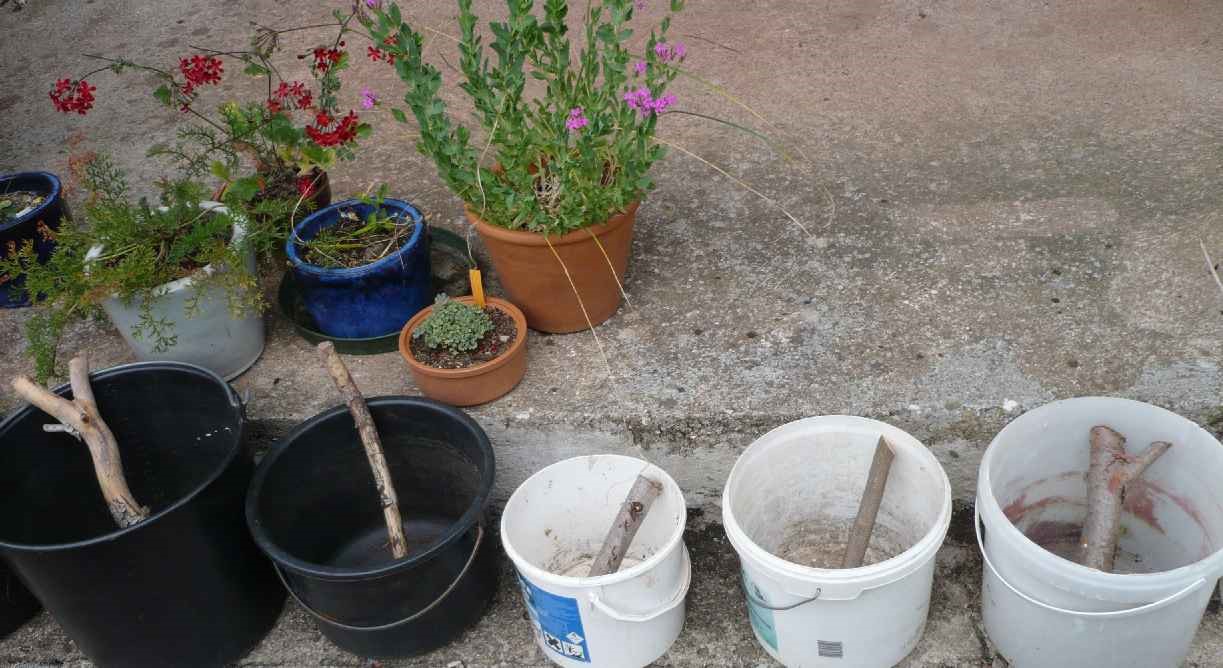
| Expecting rain a row of buckets is ready to catch the
water. In each bucket a stick so that I won't find lizards drowned
in them. |
|
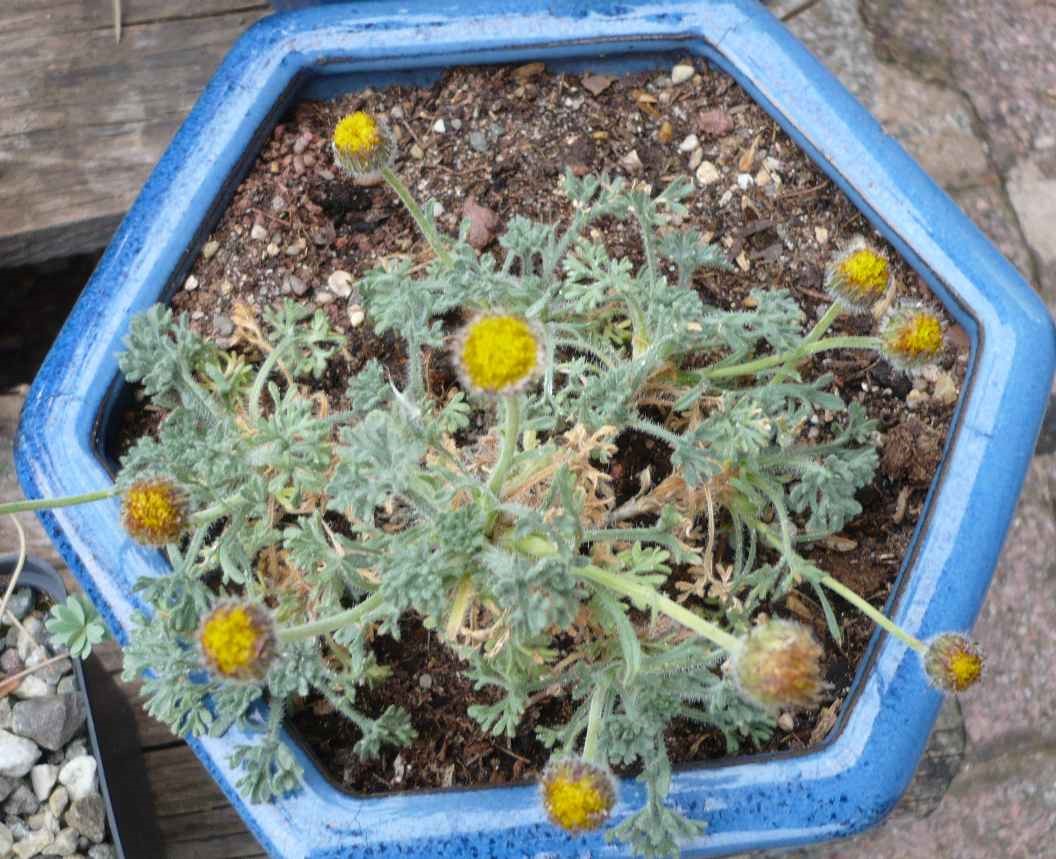
| When We came back from the Netherlands I found the
afore mentioned little 'unknown' flowering. Quite disappointing! I'll
put it somewhere in the garden and wish it the best of luck, but the
pot deserves a nicer inhabitant. |
|
|
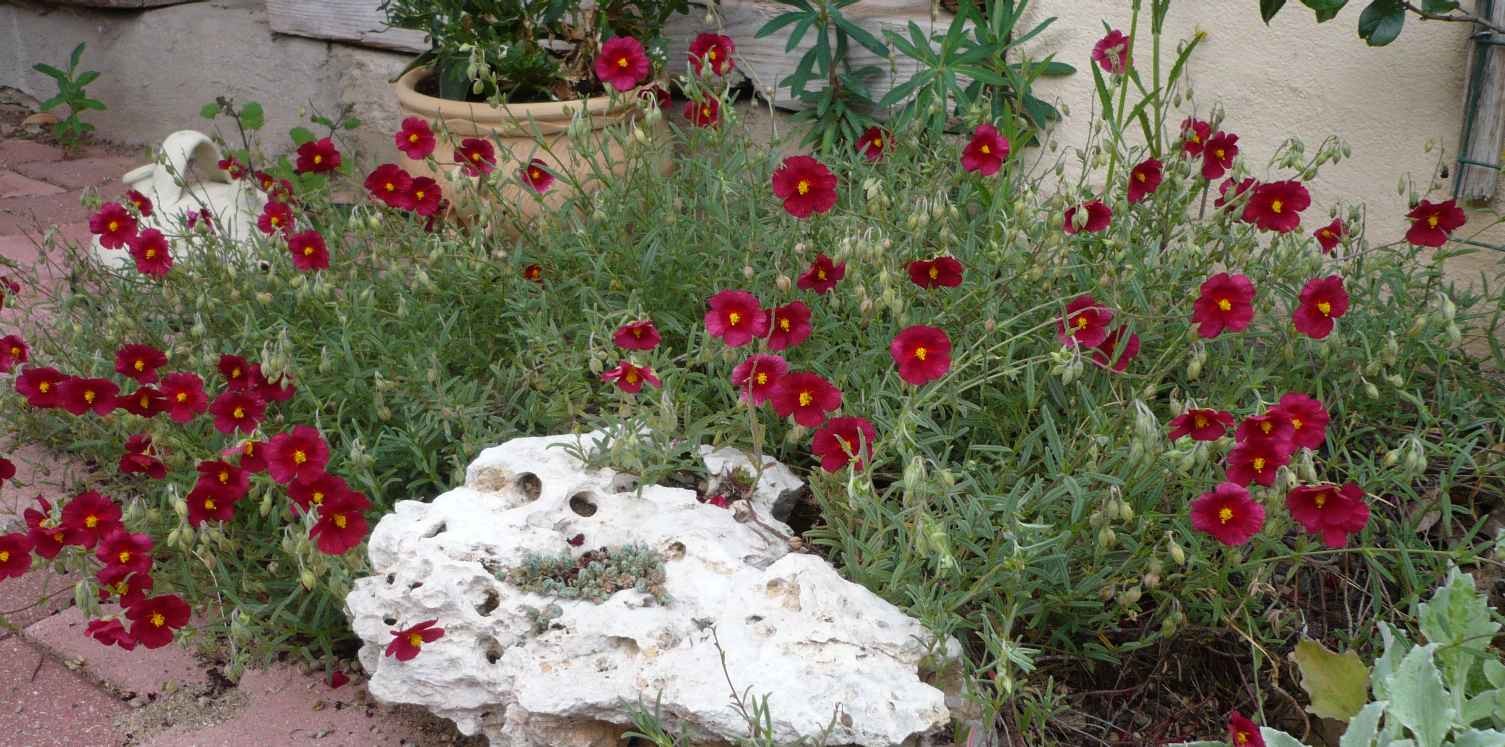
| One that loves it here is a ? (English name?) helianthemum...?
, second name not known either. Its feet are somewhere under
the paving of the terrace, but most of the plant itself lies on top
of the often hot stones and seems to love it. |
|
|
|
|
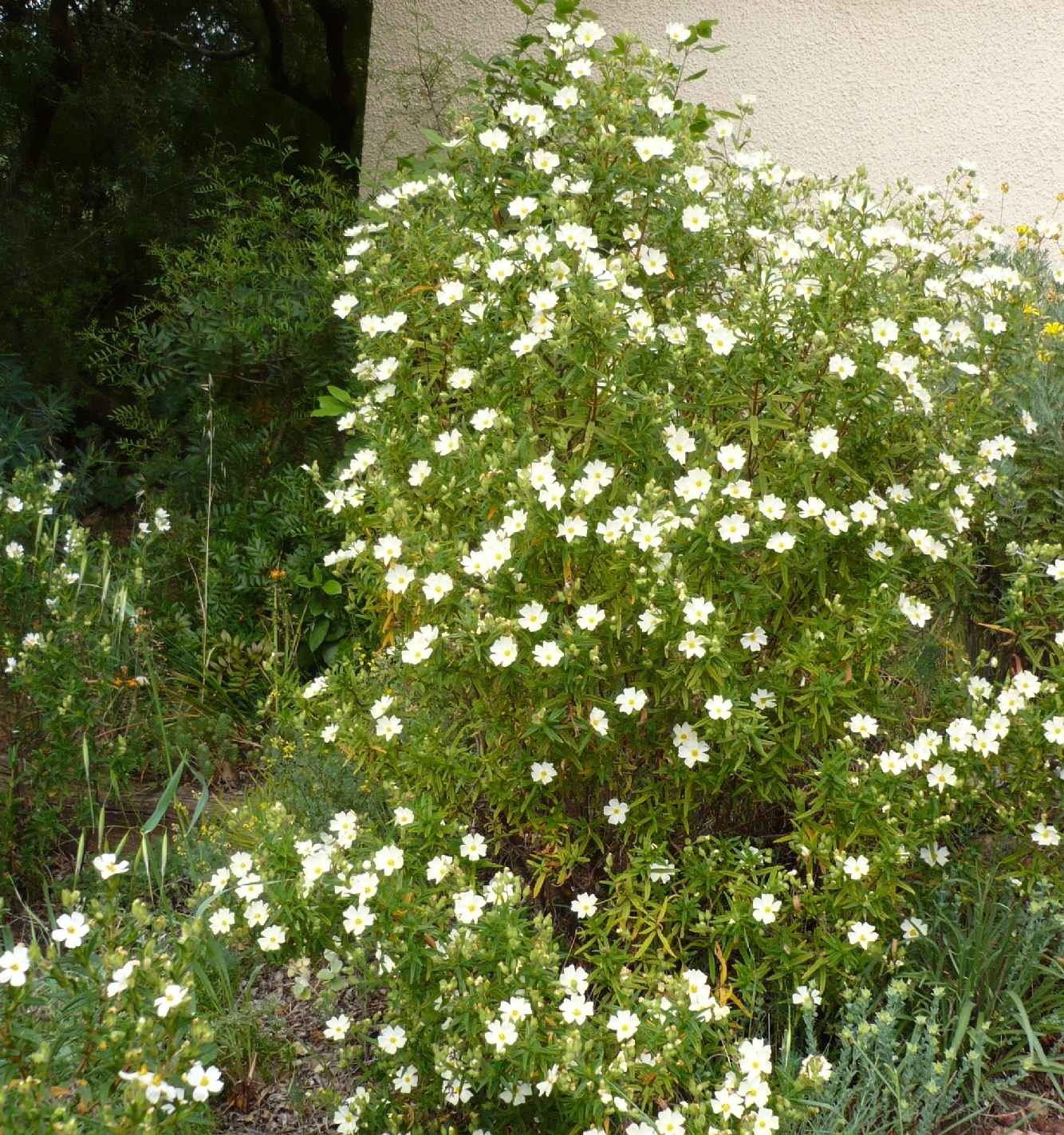 |
This cistus is somewhat more yellow but resembles in
all respects monspeliensis. Its name is cistus monspeliensis
'Vicar's Mead' and I love it, nice subtle colouring. I have
had it for only three or four years and its has become quite a bush,
covered in flowers. May is one, large cistus party! Unfortunately it
does not last more than a month. Cistus is a very easy thing to
grow, but they do not live very long. Contrary to what I was made to
think they do not mind pruning. Rain today, 12th
May.
|
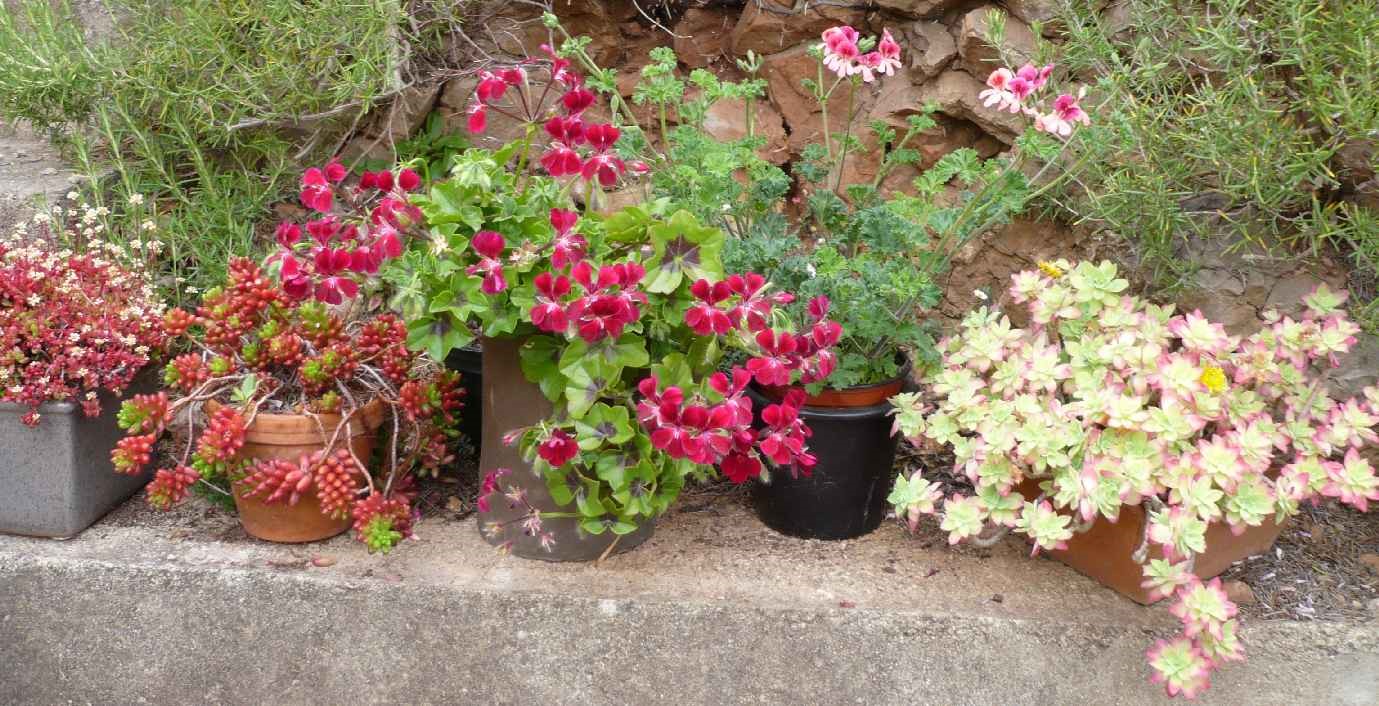 |
| The first geranium, the rosy red, comes from la
Jonquera in Spain where we had to collect Gita and Tini who came to visit.
The second is from the garden center at Carrefour Narbonne. They are
splendid together and form a lovely dressing of the wall at the entrance
of our house. |
|
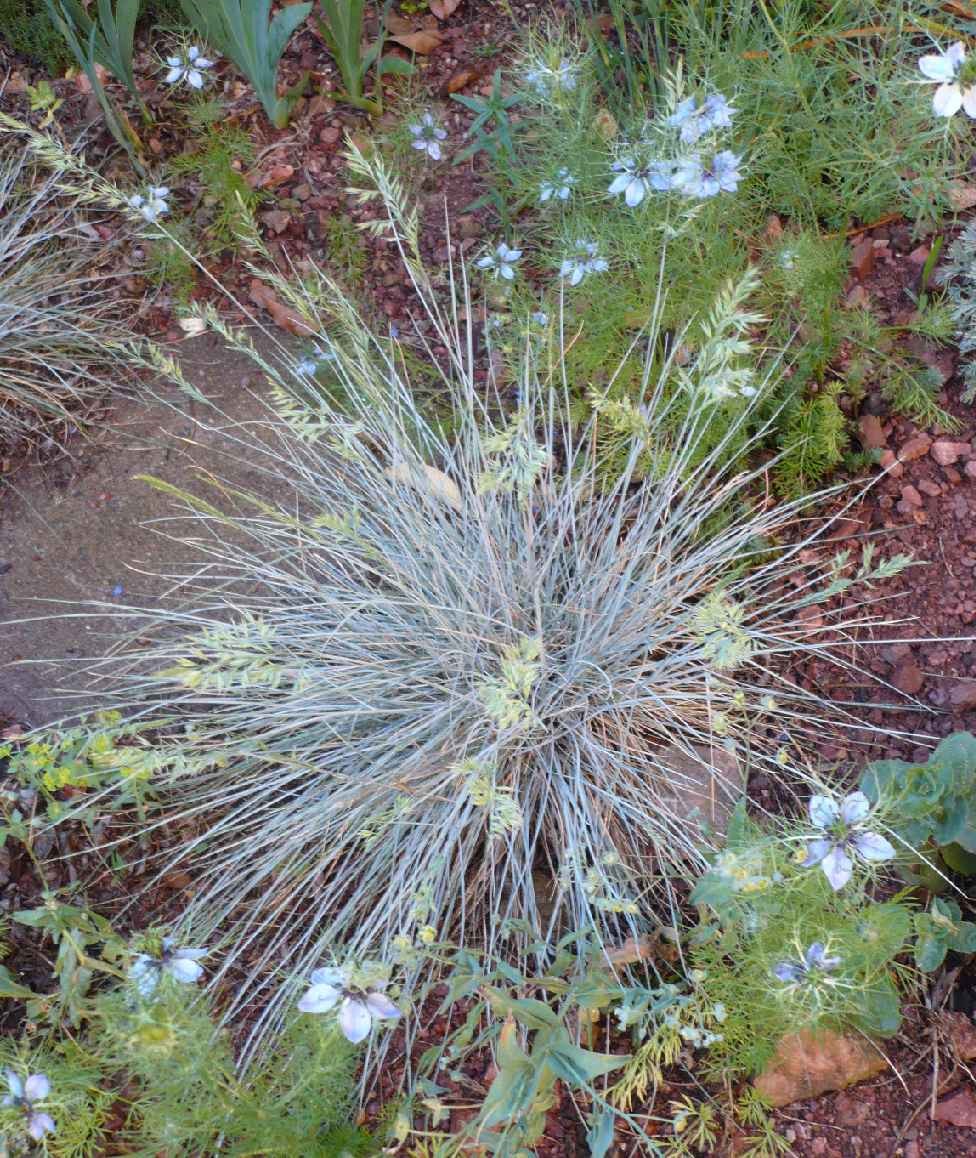
| Flowering festuca
glauca and nigella. They are great together, but
when the sun is shining it is difficult to take a good picture. I
found a seedling of lavender stoechas this morning, a
purple one. Nice! Now that the sun has gone I could take another
picture, but they are more beautiful in real life! |
|
|
|
|
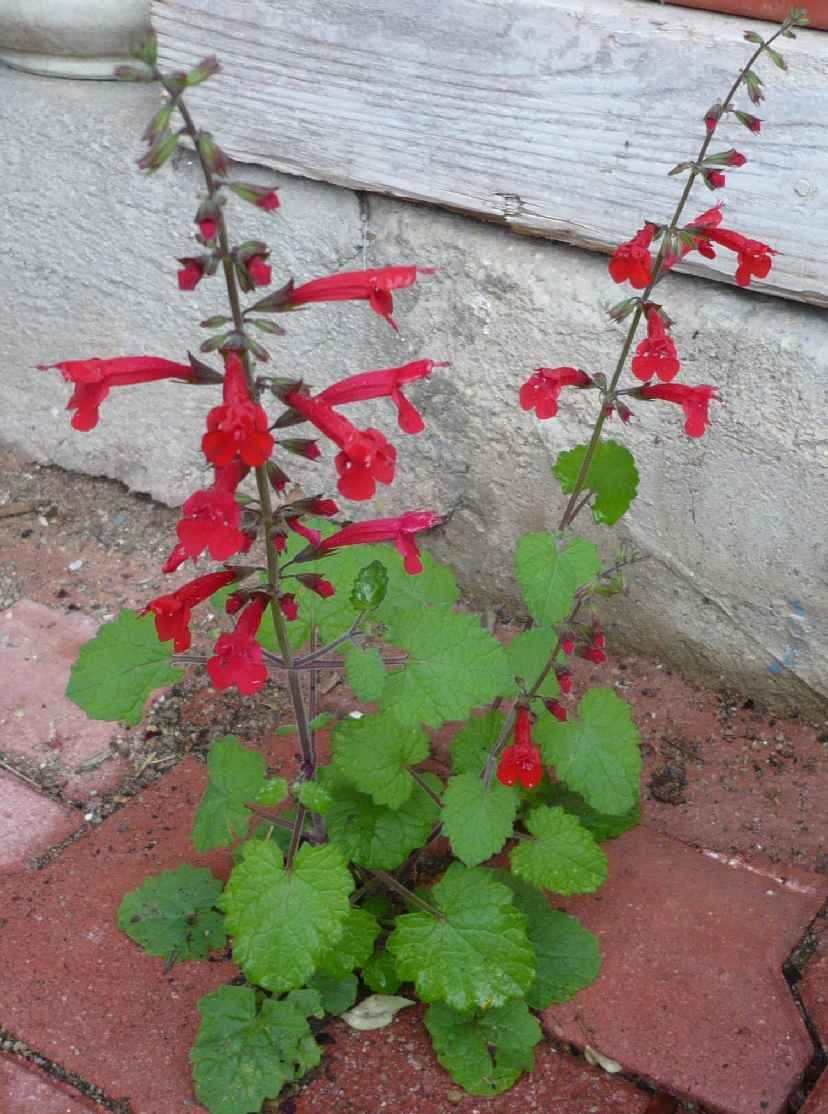
Salvia roemeriana is in Sutton's book on
salvias page 44, a picture to fall in love with. When I had found
the plant at Filippi's I started searching for the right pot and
after a while i found the correct one. But the salvia hated it and
never wanted to grow, did not flower well, got seeds without having
proper flowers ( cleistogamy) and after a while I gave up. I planted
it in the garden where it happily died. Gill Pound considers it an
annual!
One year later I found a baby among the stones of the terrace in
front of the garage. That where it loves to be!! More information on
this weird plant in 'perennials'. |
|
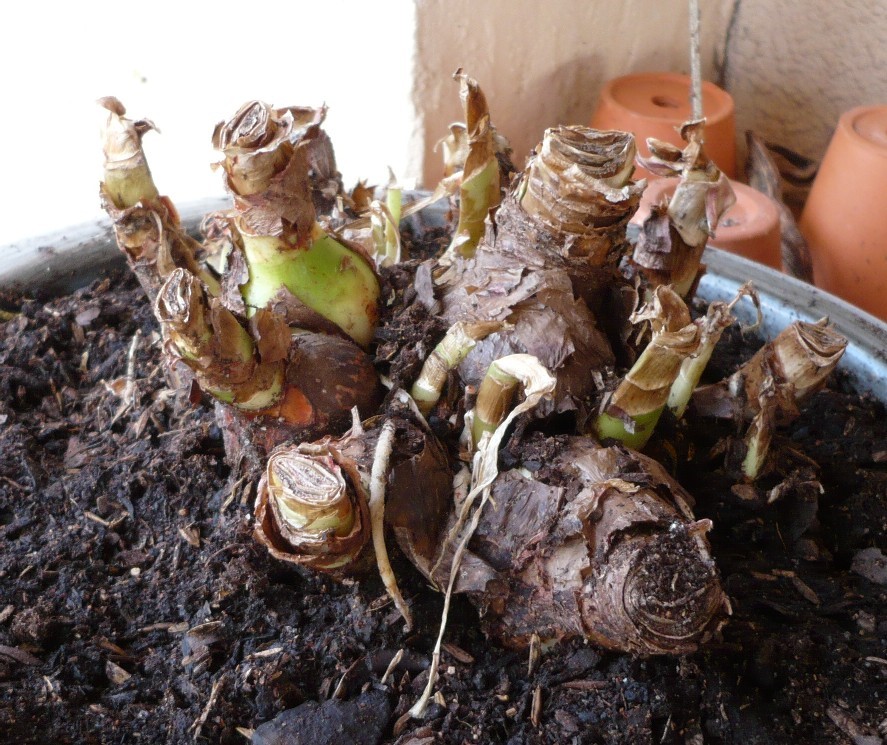
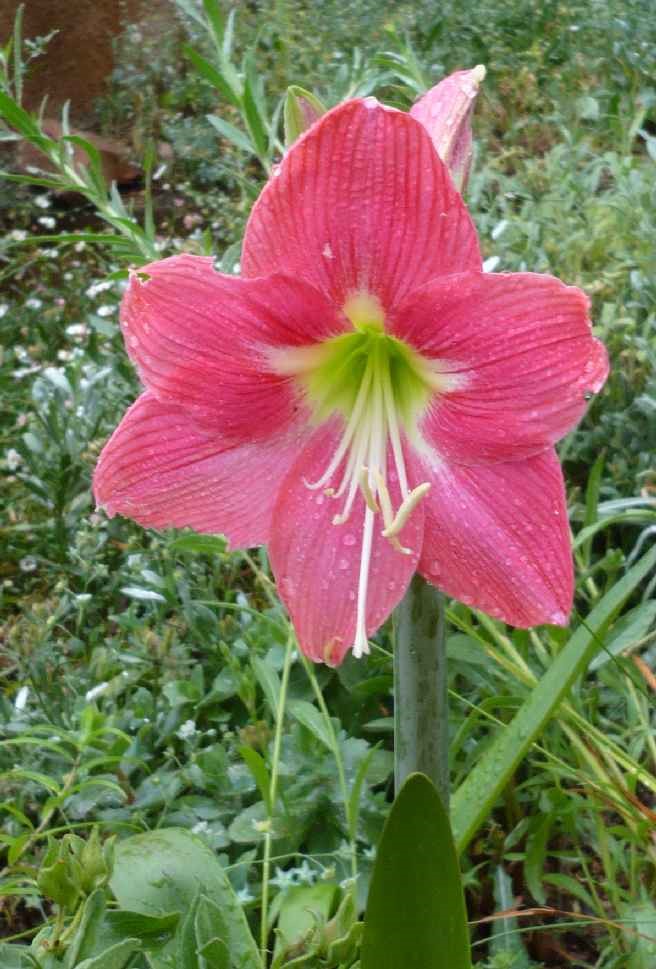
| Always loved amaryllis. Or hippeastrum, whatever. This
one is flowering in the garden and its name is 'Amalfi'. Not my
taste in amaryllis, too large, too much colour. It is difficult to
choose plants from a catalogue and order by mail. I am pleased with
the fact that it flowers in the garden, but I am going to have it
out and put it in a pot. |
|
|
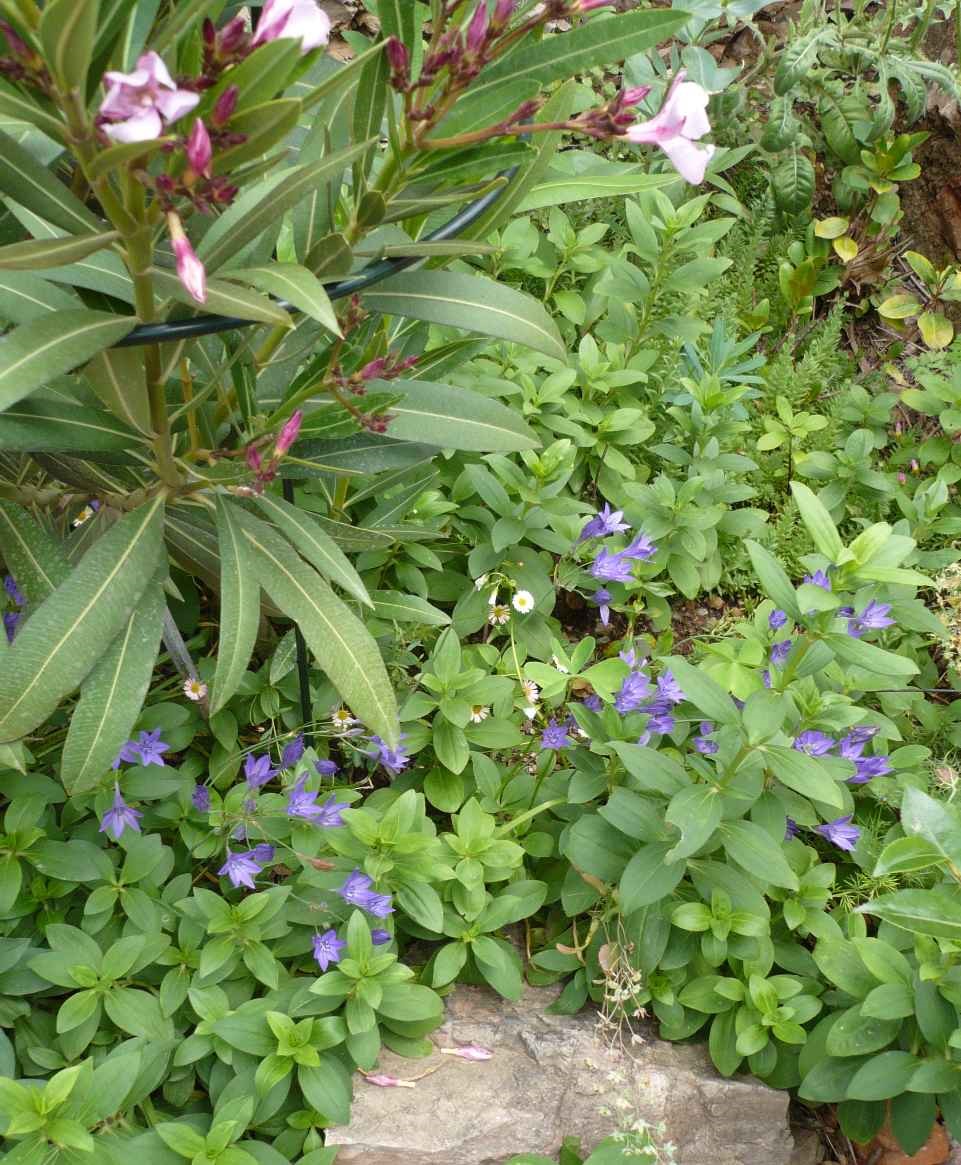
| 3rd June The
weather has been poorly of late with quite a lot of rain. Which in itself
was really necessary, but does not invite to working in the garden. I have
been trying to form a small field at the top of the place, near the gate
for the guests. I have taken out the rosemaries and pricklies and will try
to get a greater variety of wild flowers. Maybe some wild orchids?. News:
the large privet is going to flower. It has taken a while: it is the sixth
year it is here! It is quite a large tree by now. I love the smell, the
essence of summer!*) Also the small dianthus which I sowed two years
ago look promising: dianthus
amurensis a bluish species with a darker ring in its center. *)
it did not smell half as nice as ordinary privet hedge ... |
|
|
|
|
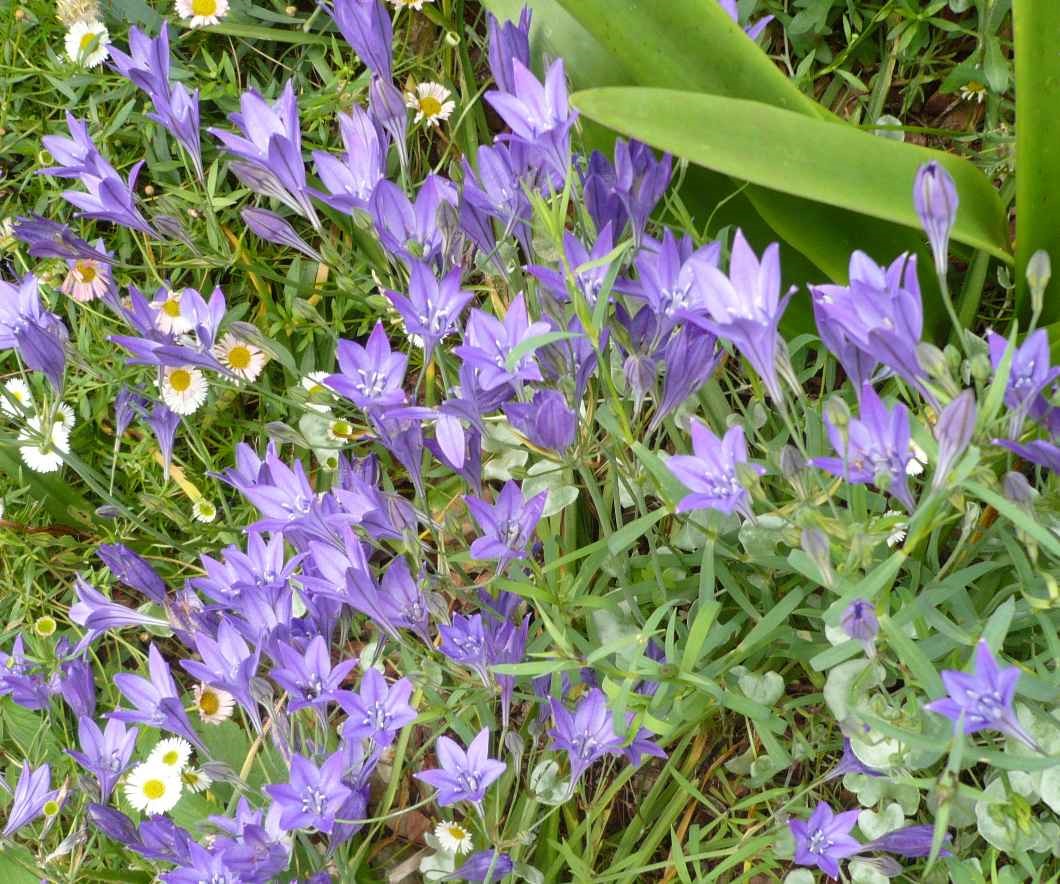
I have quite a lot of triteleia 'Corinna'
I am never sure of the name, it may be called broddeia. They
perform quite well and are spreading rather fast by self sowing. They are
great as cut flowers. In the picture on the left side they are in a shady
position, on the right they get more sun. |
|
|
|
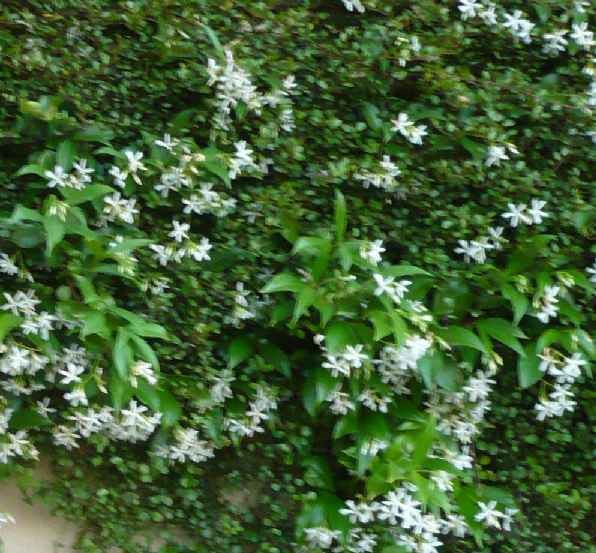
The wall at the front of our house seen from the
outside. The idea came from Daniel, our gardener. His
suggestion: plant on the inside and make the climbers droop on the
other side. Originally we had flowering solanum which died, a
variegated ivy, mühlenbeckia and trachelospermum jasminoides.
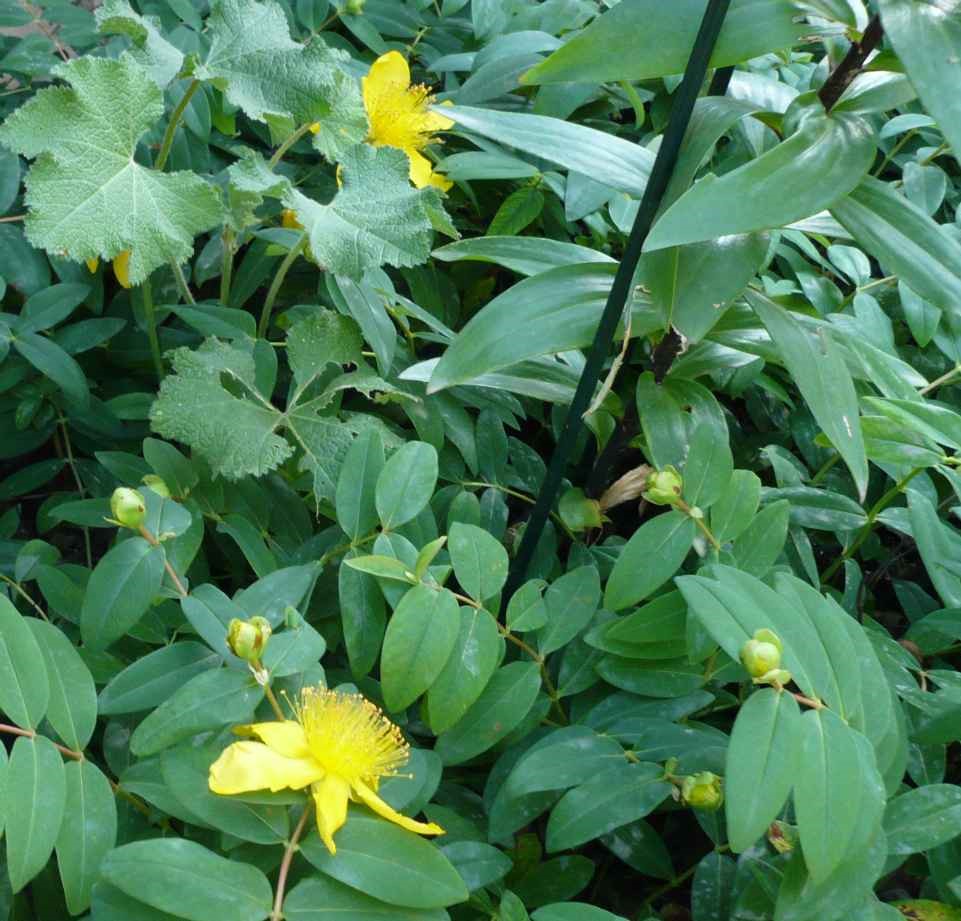
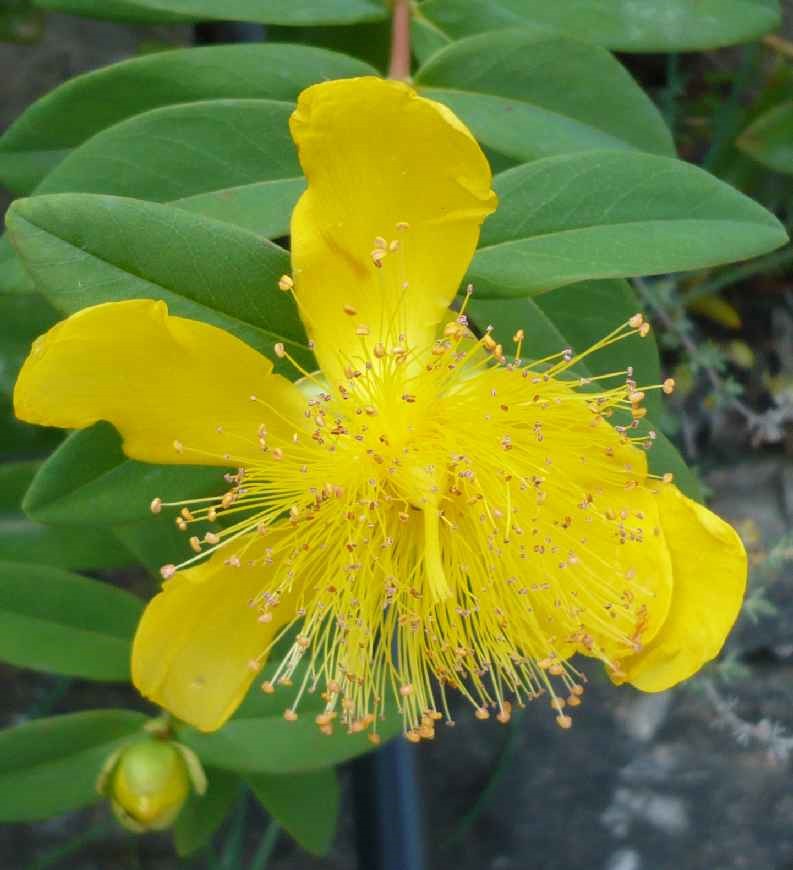
The last one is now (June) in flower and its smell is heavenly. Pictures
below: this hypericum was present when we came here, a spread of
uninteresting dark green leaves, showing a flower now and then. I
cut it off in spring because I was looking for something and because
it was such a mess. Here is my reward: lots of flowers! It is quite
an ordinary plant: hypericum calycinum. |
|
|
|
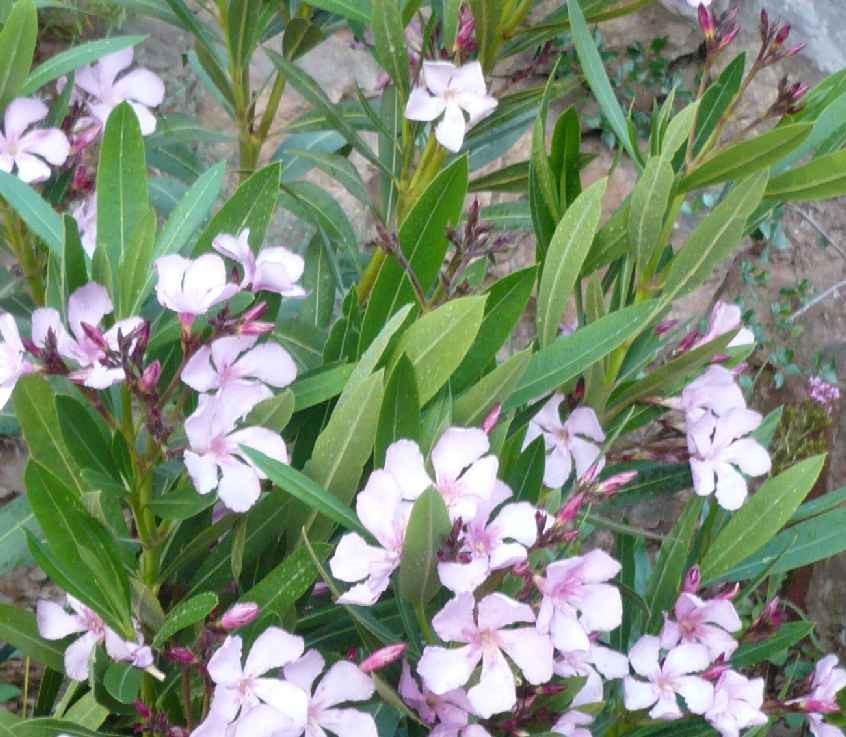
| In June they are
at their best, the oleanders. Not all have started yet, but
today e.g. there was a first flower on a small yellow one. This
yellow species is a cutting that I took a few years ago, but its
position is not the best it could wish for so it has not grown any
larger than some 40 cms. Oleander 'Barcelona'
in this picture has more or less the best spot ever, at the bottom
of the stairs where it is watered daily. It has grown fast and I
keep loving its special colour. Now I am waiting for the saponaria
underneath, which is almost the same colour and the same shape.
Lovely together! |
 |
|
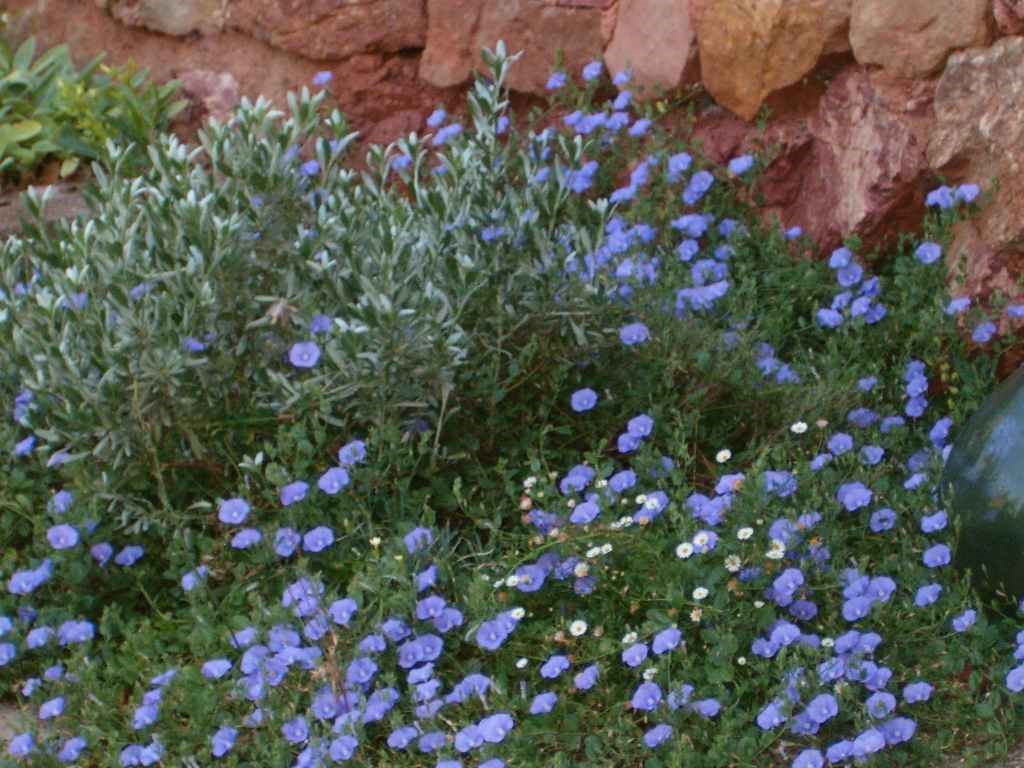 |
22nd June 2008. Suddenly
plain summer 30+ degrees. Quite late! In the garden at the
bottom convulvulus sabatius continues flowering,
two square meters by now and sometimes awkward because of its sheer
size, but wow!
My own camera, Panasonic Lumix FX12, does not produce the right
blue, it is too pale; Ko's somewhat older one HP (?) photosmart
makes the colour a little too much. Blue is a difficult colour to do
photographs of, only in the shade to start with! |
|
| 18th June Leucojum
autumnale is already in flower. What a great small performer (if you like
tiny/dainty). It will continue flowering up to November. |
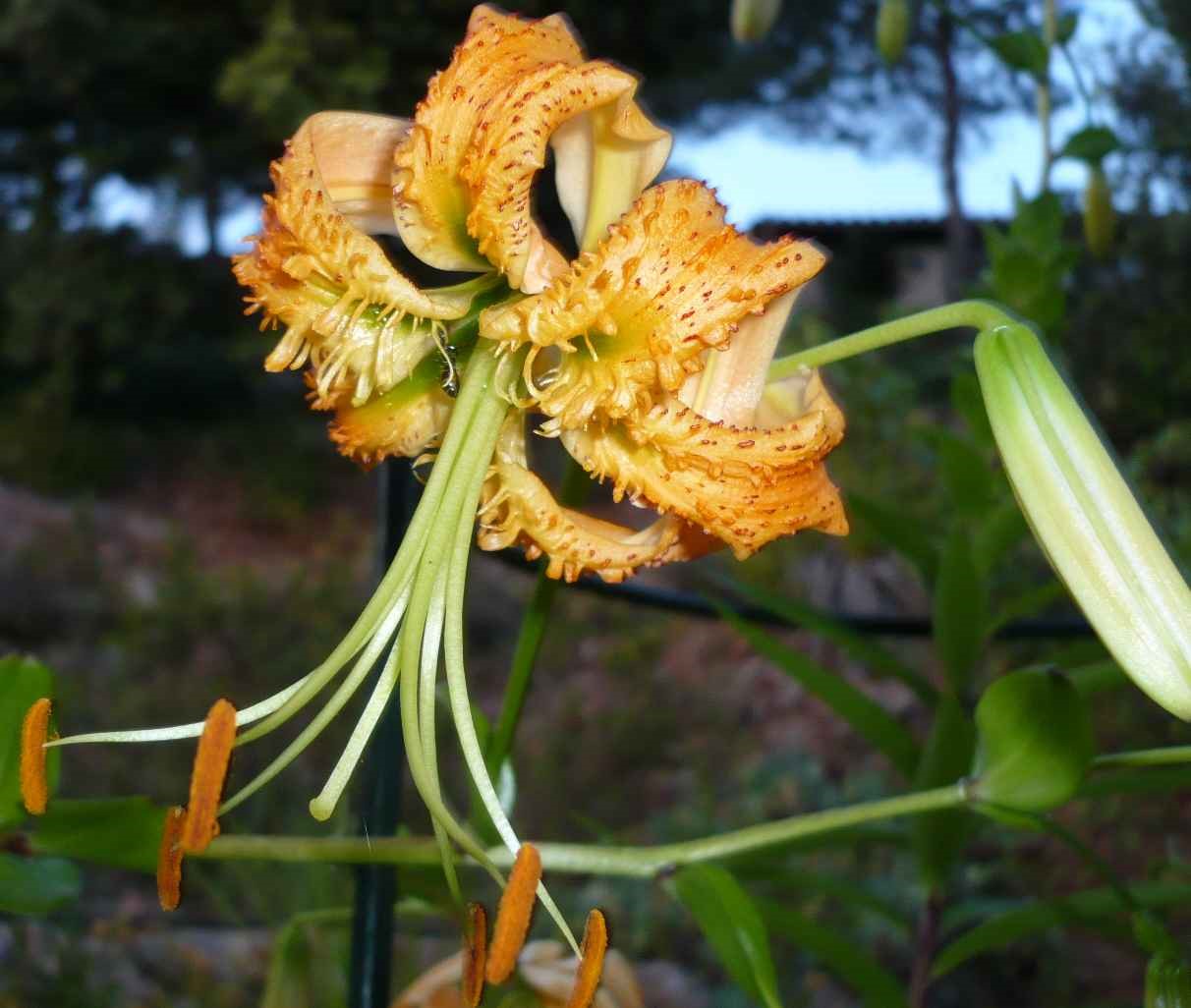
30th June Usually
we are not here at this time of the year. It is really hot, but
there are a few nice things flowering: lilium
henryi - see
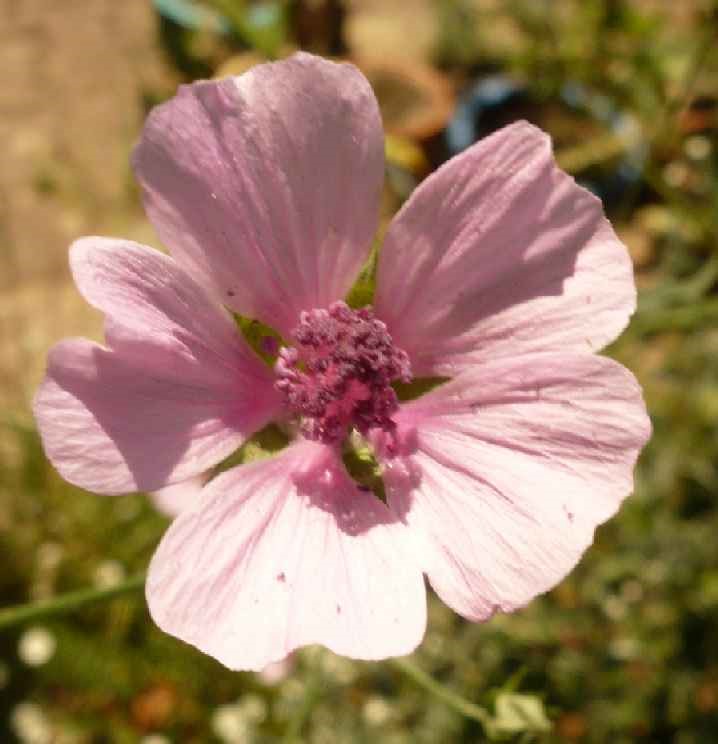
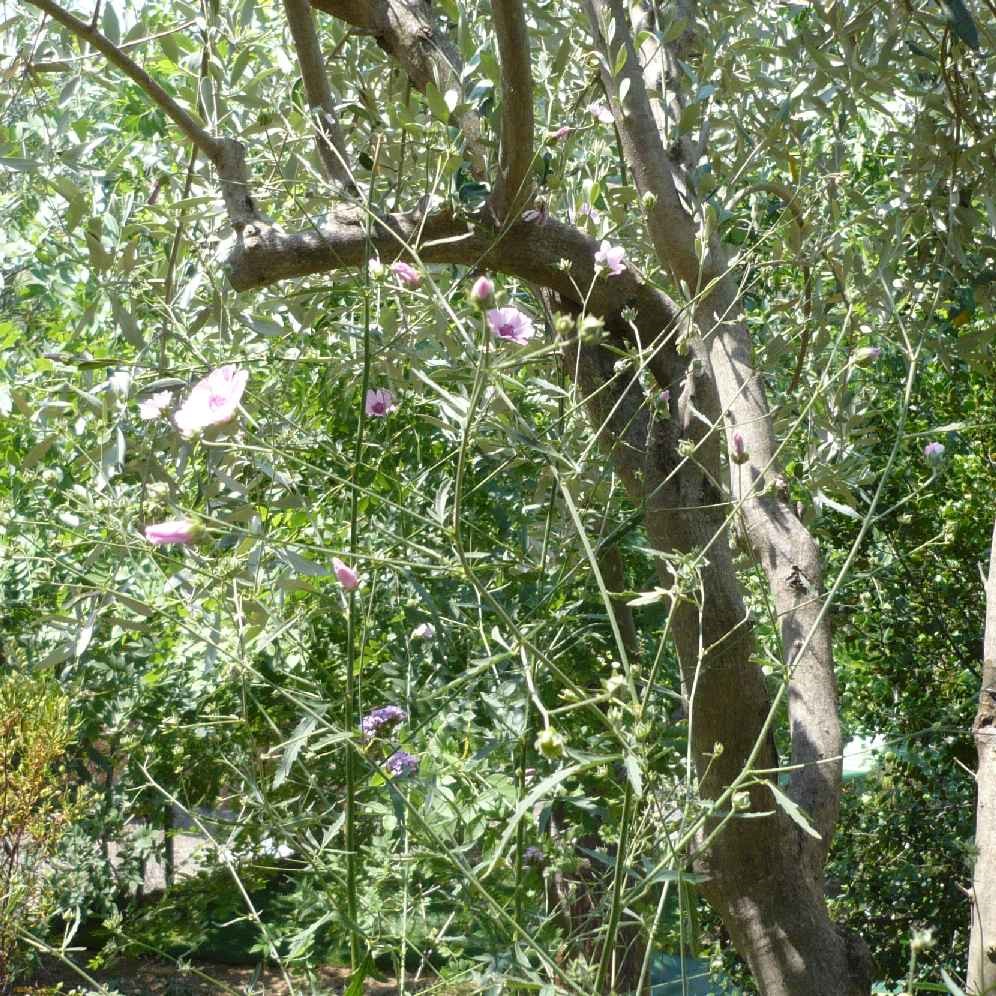
bulbs - and a nice bush? or perennial? a very tall perennial, 2
meters: althea cannabina.
I was given one by
Anne van Beusekom and did not know much about it so I was really
disappointed when it disappeared in autumn. What a relief when it
showed up in spring! It grows too tall, which is a pity, so I intend
to do the before-1st-June-trick on it: cut the plants to two thirds
of their height before June 1st. An awful thing to do for a plant
looks its best at that time! The trick works very well for phlox,
sedum, campanula lactiflora and the like.
The flower of this althea is quite small, to 4 cm in diameter
smaller than in the picture. Its center is darker than it shows
here. Lovely flower. The leaves resemble cannabis, whence its name. |
|
|
|
|
| *) On phloxes: phlox paniculata
species. I never tried them here, but in Holland they were excellent
plants. My favourite is the original pale blue one, phlox paniculata
without any extra name. Those may be cut before June starts. The
pieces that you cut off may well be used to make cuttings. They will be
some 10 cms. Take off the bottom leaves, dip in water, shake off surplus,
dip in fresh rooting powder, shake off surplus. Dig (a) small
hole(s) where you want your plant(s) to be. Fill with special medium for
cuttings. Plant your cuttings in this hole/ these holes, press the soil around them and water well. When it does not rain you
will have to water again, otherwise leave them to their fate. The good
thing about the procedure is that the original plants become sturdier
(don't cut all the stems) and flowers over a long period, but the cuttings
will flower as well, just a little later. Low growing phloxes are
just as easy to make cuttings from! |
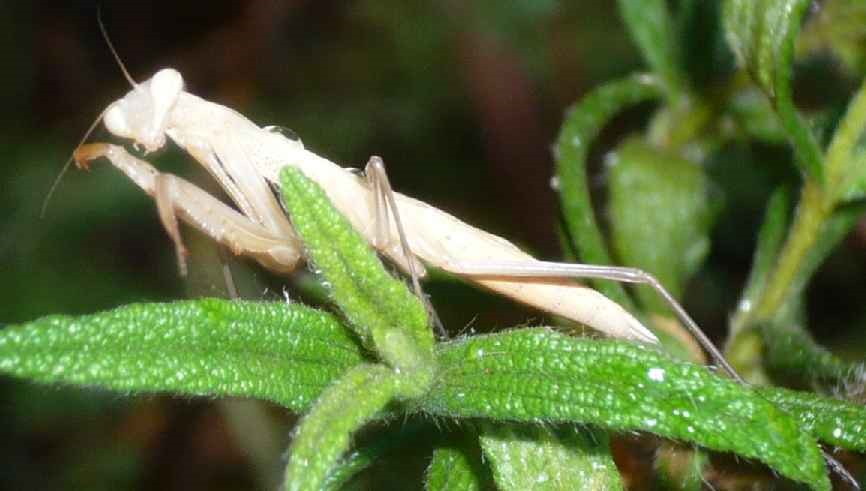
6th July The first mantis of the year. No more
than 4 cms and nearly albino! She showed up when I was watering and
is cleaning herself in the picture.
I saw something really nice today: in our neighbour's garden was
a mama- or daddy hoopoe with a baby. I was only three meters
away and froze on the spot so that I could watch them for a while.
Fantastic! |
|
|
|
|
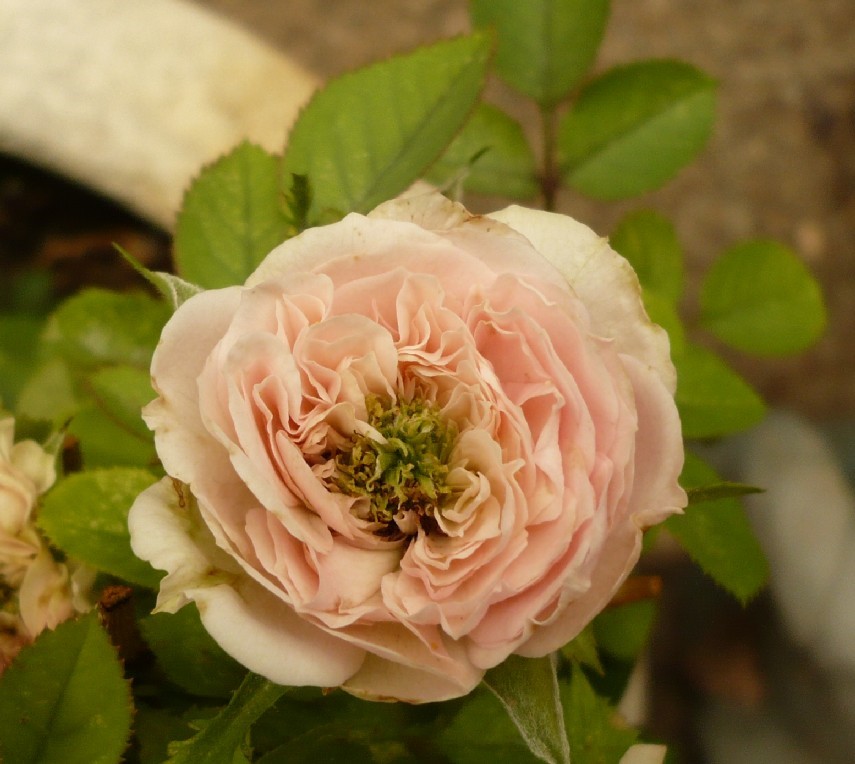
7th August You can
see we are in the nothing happening summer period! This though, is
weird: I bought a sweet small rose when still in the Netherlands. It
had small well proportioned flowers with some perfume, rather
lovely. This year the still small bush suddenly had a whole bunch of
flowers and now there are flowers of a completely different shape
with a green center. Strange! |
|
| 16th September We
are back from a short stay in the Netherlands. Rather late this time. High
time to start on the pots containing autumn flowering oxalis. Waking the
pots! I call it. Some will be done all over, new earth and so on, some
will just have a fresh layer of soil. Depends on how long the bulbs or
corms have been in it. One has already started growing (oxalis bowiei) and
I don't want to interfere. |
|
|
|
|
|
Once the work is done you need to water more than
usual as the pots themselves are completely dried out. In one sack
of potting soil I found some twenty larvae of the maybug. Last year
I saw maybugs for the first time in something like 50 years!! But I
found their larvae in a pot containing cyrtanthus mackenii a while
ago, also like twenty. I throw them in the compost container as I
think they do a useful job there: changing waste into manure ...
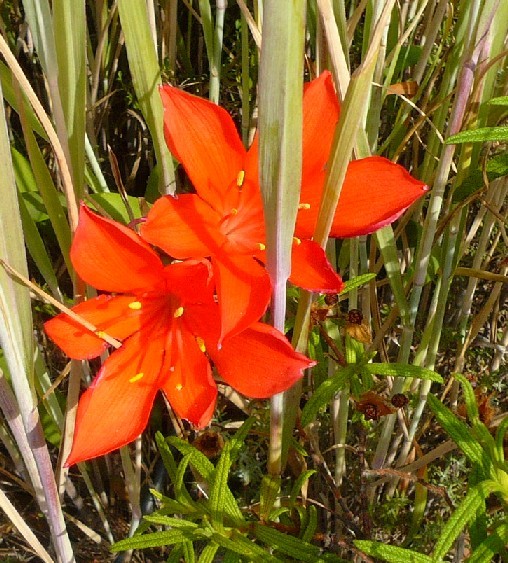
In the back yard vallota (speciosa) is flowering.
the one which is called Scarborough lily by the English. It should
have been white, but I was sent a red one. Now red is a very good
colour for these parts, but I was curious to see its white
counterpart. Never mind! They work in the same mysterious ways
as the amaryllises do: you never know when they are going to
flower.
Though I got a replacement for the red one which was said to be
white it never worked out and till this day I have not seen a white
one.
|
|
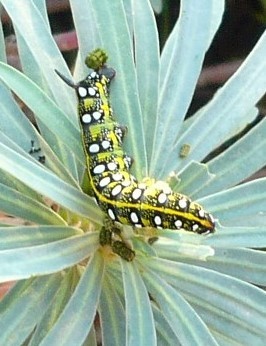
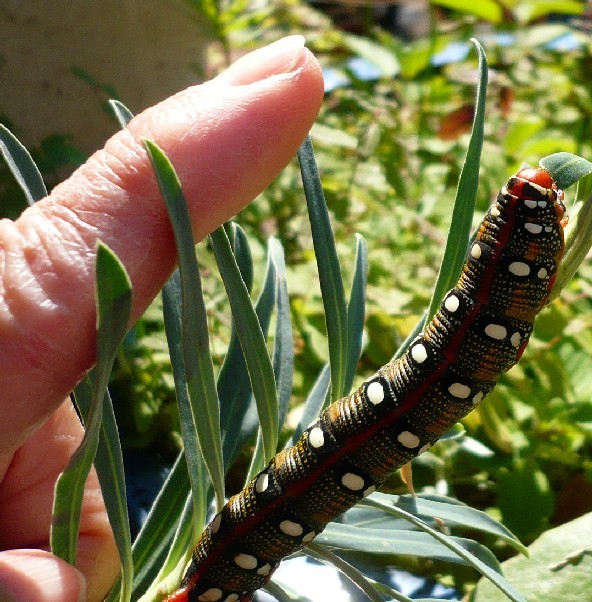
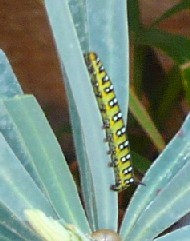
| Many people won't be able to understand that I was
really pleased to see quite a number of the caterpillar of a hawk moth
on the euphorbias. Too many for one plant so I transported a few to
other plants which were big enough to cope with them. The
caterpillar will grow into a 8 or 9 cms long thing as thick as a
man's finger. Later on in life it will become blacker with red
spots, quite beautiful
It changes into the pupa in the soil, after having gone walkabout
for days. To find a good spot? To empty its bowels? Do caterpillars
have bowels? Eventually the moth will appear, in April or so.
Another beauty, olive green and dusty rosy pink. The whole process
is an absolute miracle. I did not see a single caterpillar last
year. Which was a poor year in many respects: hardly any
mantises, those I saw were mostly damaged, no toads, no
caterpillars, no snakes.
|
|
|
18th September Today
I put labels in the pots when necessary. The first growth is visible.
Nice.
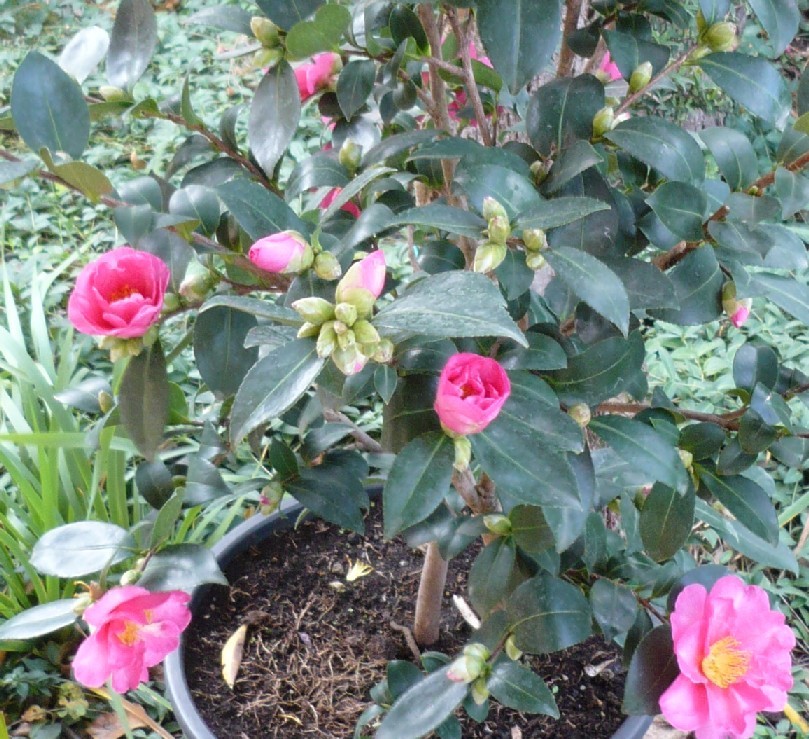
Last year I repotted camellia sansagua as it did not flower. Now it has a
larger home and I found a good spot for it in the shade of an olive tree
it has developed plenty of buds. Soon the will be flowers as it is an
early one, October/November.
I dug up amarylis 'Amalfi' and put up three bulbs in one big pot. The
flowers are too big and too colourful to my liking...
The garden downstairs is full of leucojum autumnalis, these days
called acis as far as I know. If anyone wants seed ...
|
|
|
|
|
|
21st September 5
days after their wake up call things are happening in the oxalis
department. The one sporting one leaf is now full of leaves and
showing flower buds. Oxalis flava, top right, shows weird
beginnings.
The caterpillars have either disappeared of
have become twice as big.
|
|
22nd September I must have written
it down before: I love this part of the year. The only thing that spoils
the fun is the knowledge that winter follows beyond doubt. And I do HATE
winter.
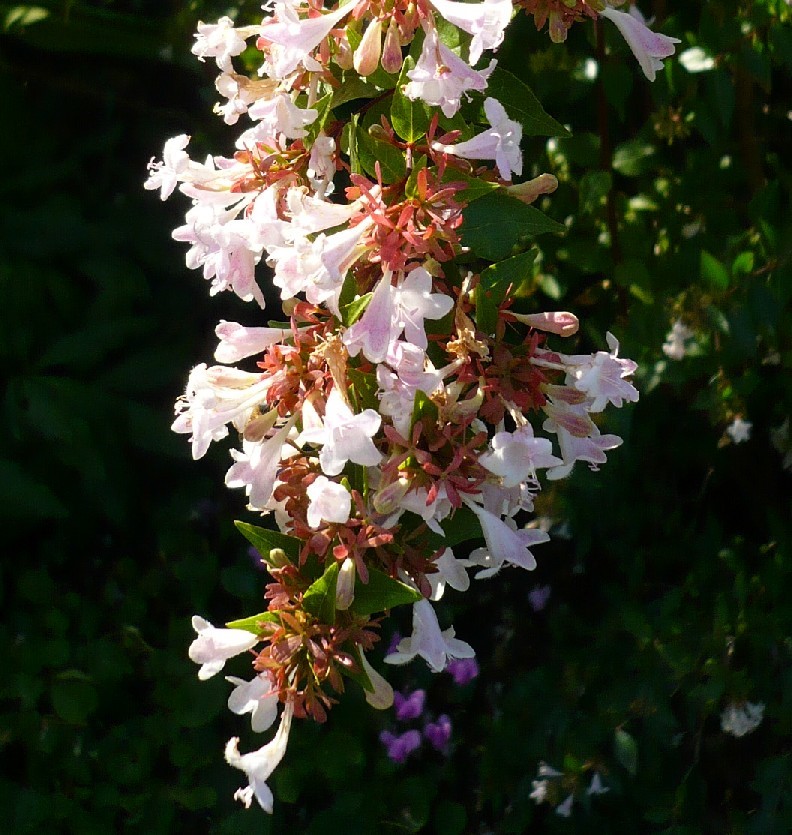
Abelia x grandiflora begins in August and goes on and
on. A graceful, very strong bush with bending branches gleaming leaves
which is bronze coloured in spring. It will flower forever from August
onward into December. Mine is under the almond tree and does not get so
much sun and is watered on a daily basis. I do not know for sure, but I
believe it also performs quite well in poorer circumstances. Photo bottom,
left.
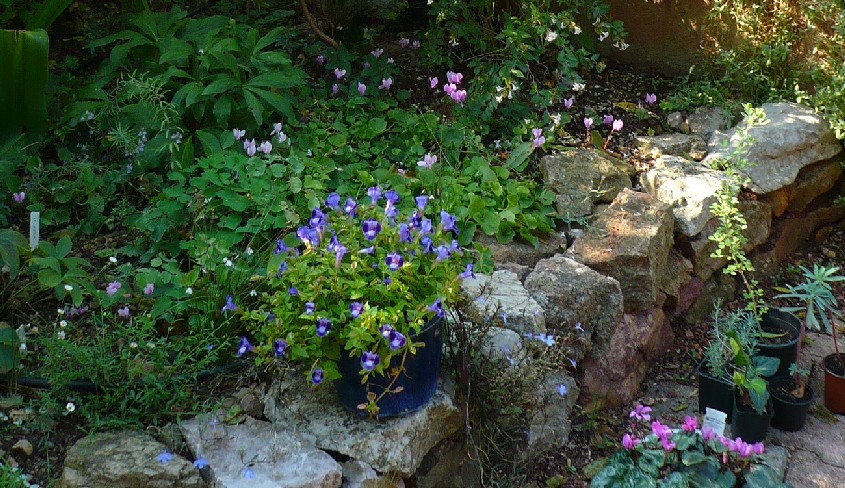
In front of it masses of small cyclamen. They self seed. An annual torenia in
a pot and cyclamen purpurascens in a gorgeous, low, grey
pot, brought from Holland. This cyclamen has a lovely perfume. I hope to
be able to keep it in good health.
Here and there a few zephyranthes alba. Its first seedlings begin
to flower. Seed germinates in two days! and takes three years to
flower.
Cyclamen graecum flowered in two spots, but I only saw one as I
was not here at the time. I will grow among the rocks in full sun! I
hope it will spread.
|
|
|
|
|
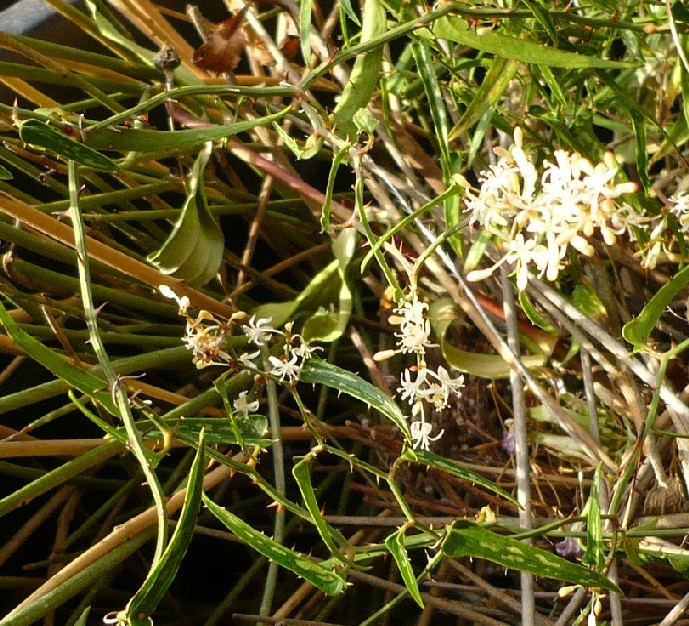
| 23rd September When
feeding the feral cats this morning I spotted something white: salsapareille
in flower. It looked rather nice, but I do hate the plant which is
a horrible weed full of thorns. Very difficult to get rid of. A new
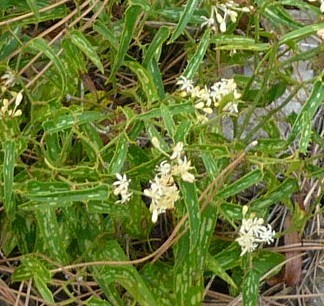
seedling looks lovely with shiny dark green leaves with white spots. When
it is not pulled out in time it will become a very long creeper that is
really difficult to remove. |
|
|
|
A week after waking oxalis
bowieii it shows flower buds. What growing power! I was very
late this year, i usually do this at the end of August, but we were
in Holland at the time. The pot had no water whatsoever on the
cupboard under the balcony.
Oxalis brasiliensis is also sprouting. |
|
|
|
|
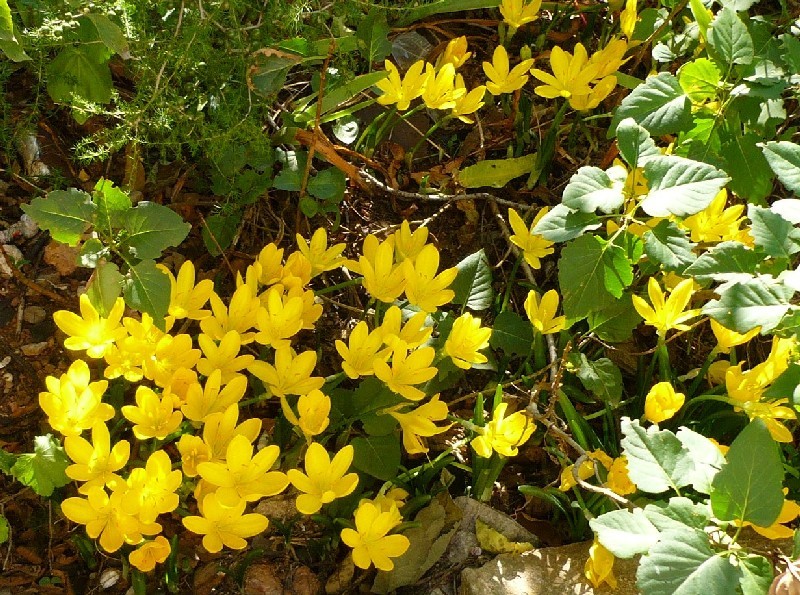
Such a cheerful picture is due in this part of the
year. They grow in the neighbours' garden and as far as I know they
hardly know they are there. Shame! Sternbergia lutea a
native species. The bad thing about them is that the fun only lasts
for a week or two. |
|
|
|
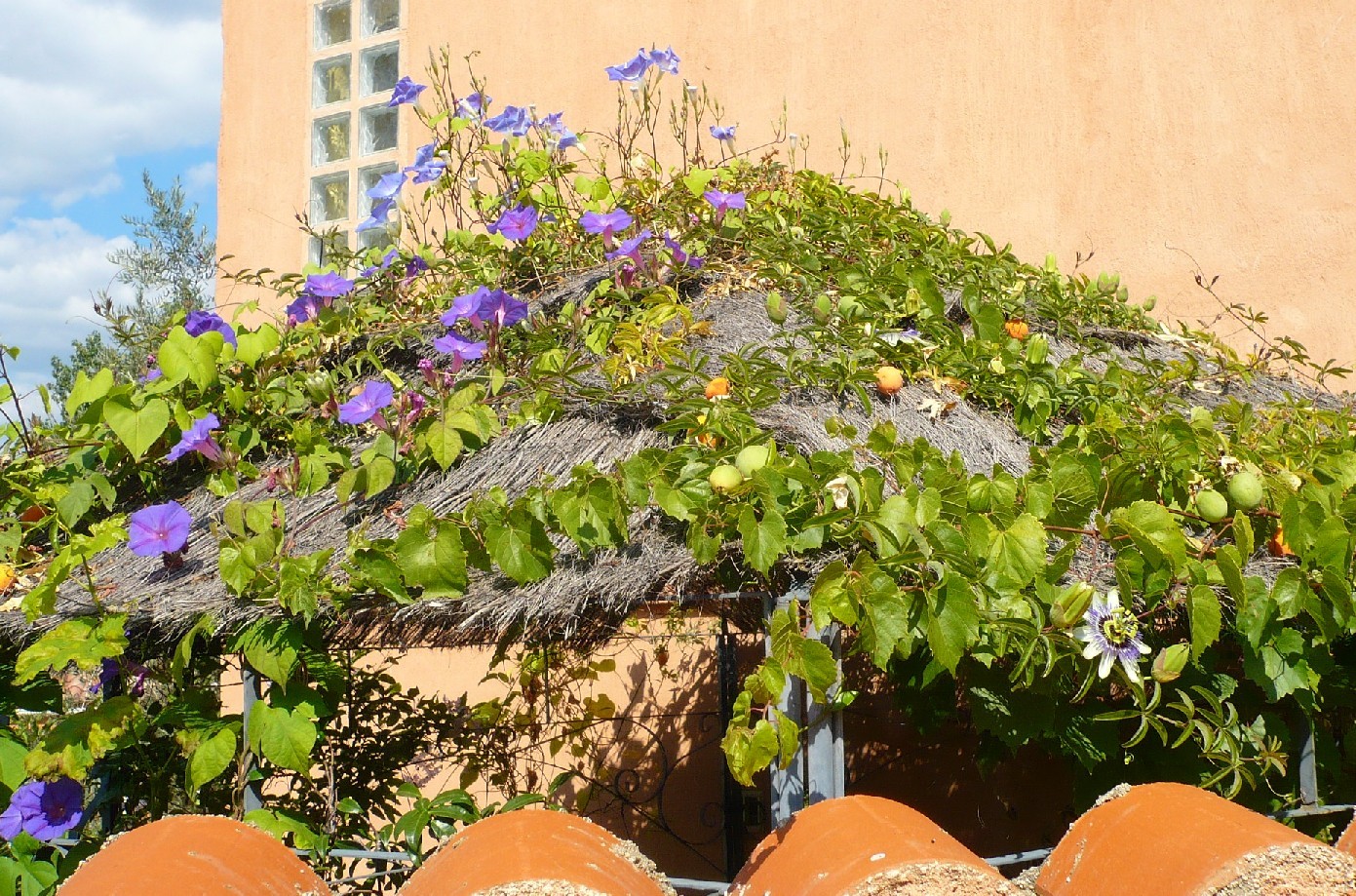
| Yesterday I came along when our car, in need of
repair, was loaded onto a truck to take some pictures for our home web. I
passed this lovely what do you call it? just behind a wall in the center
of our hamlet. Lots of things growing on top: 2 different kinds of an
annual ipomea/convulvulus, a grape and a passion flower with both flowers
and fruit. Wow. To keep in mind. |
|
|
|
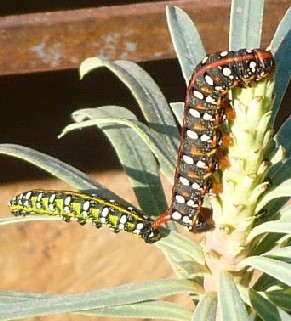
25th September One
of the caterpillars has become reddish. Isn't he a beauty? There are
some six, on several plants. The one behind is is still only black
and yellow and about 2 cms smaller. Another one is already 7 cms
long and as thick as your finger but lives in a difficult spot to
take pictures of. I think the birds don't like these caterpillars as
the food they eat is highly toxic. Some have disappeared though.
Oxalis flava has grown some more. The young leaves look like
graceful hands. |
|
|
|
|
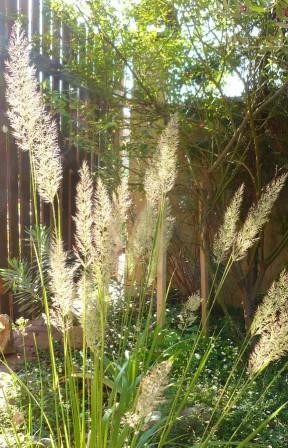
| This lovely grass - left - is called stipa
brachytricha. Its flowering plumes are pale pink and
look great when the light shines through. Modestly self
sowing. When I want to replant something and the weather is
not suitable (too dry) I water the plant I want to dig up
thoroughly, wait a bit and then do the job. This works quite
well for this grass. |
|
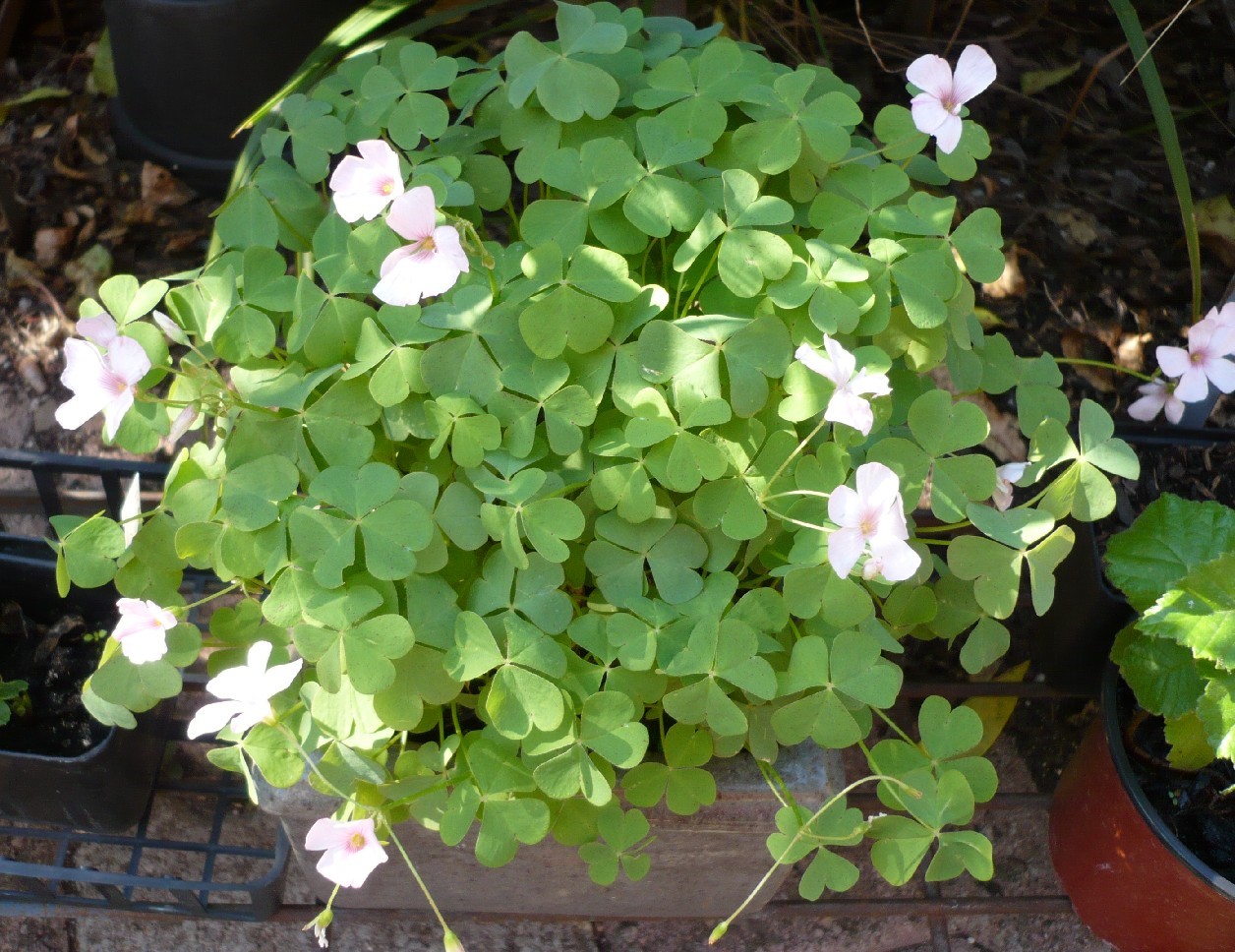
The oxalis below is dear to my heart.
Fresh green leaves and the palest pink flowers with a darker
center. I have written it down as oxalis triangularis
'Mijke' , but when searching the internet with this
name I find a dark leaved variety. This is a second flowering
period this year.
Marco Verschoor sends me a mail that it might be 'Birgit' is.
But on the internet again Birgit has a green center. |
|
|
|
|
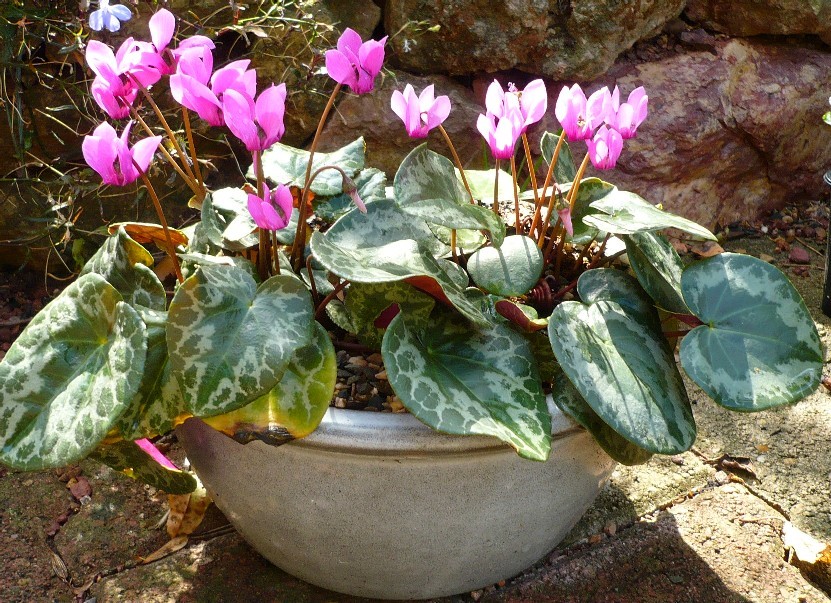
The above mentioned oxalis is in a square,
glazed grey pot. For some reason they are hard to find.
Priceless for any plant you want to put in a container. Everything
looks great in a grey pot!! Buy whenever you come across one!
I was lucky last summer when they had them in the sales in our local
garden center in
Voorthuizen: BINGO! 2,75 for this superior item, now filled with cyclamen purpurascens, not
an easy one though. The flowers have a subtle perfume like lily of
the valley.
The cyclamen is still in flower: 9th December! |
 |
|
|
|
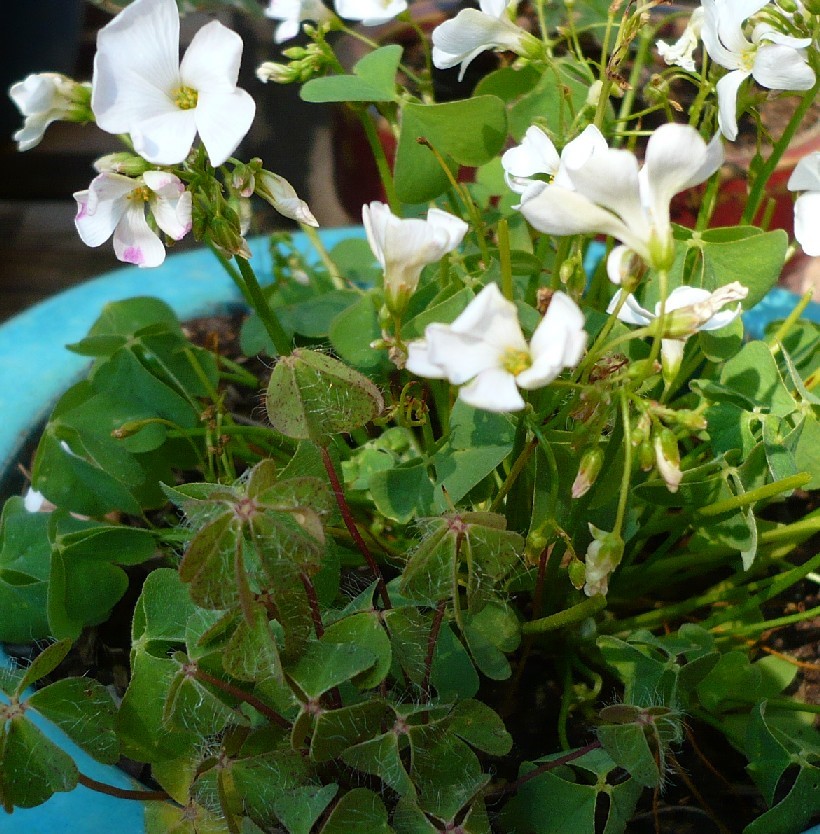
27th September This
morning I spotted a seedling growing with this white oxalis
whose name I don't know. Quite strange as it is another oxalis
and not e.g. erigeron which is about everywhere.
Secondly it is an exciting one as it looks just like oxalis lasiandra,
but the leaves consist of only four or five sections whereas
lasiandra has seven or more. I do hope it is a cross of some
kind.
Oxalis pes caprae, the invasive one showed a
bit of green early in the morning. Later, the same day, there
were 7! Some had already grown into leaves. It takes a long
time though before it will start flowering. (Not yet on 9th
December)
The caterpillars grow like mad as well. 11 days ago they were
2 cms, now they are the size of my index finger. They are neat
eaters, a leaf is completely finished before they start on the
next one. There won't be many flowers as the like the top
leaves best ...
And they like company. When you put one on one part of the
plant and another one on the same plant but quite far away,
they will probably be together the next day.
|
|
 |
30th September
Unfortunately nearly at the end.
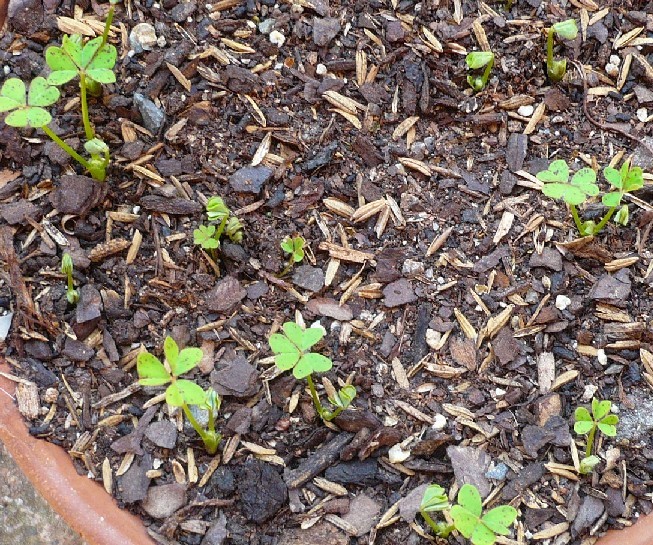
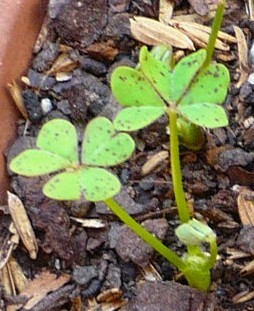
Oxalis pes-caprae germinated last Saturday,
small green dots, now as big as this in just 3 days. Lovely
leaves, yellow flowers later.
The first of the caterpillars has gone walk about. Gone. |
 |
|
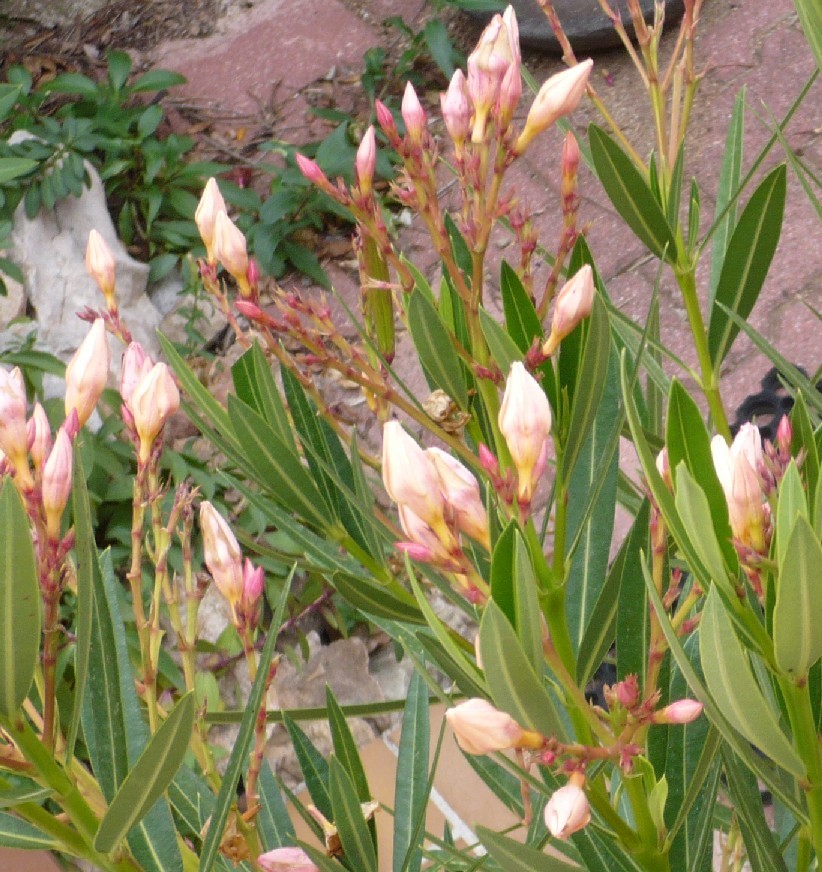 |
12th October 2008. We
had a short holiday. Before we went Angiolo Pucci was
full of buds, the same now. Just one flower opened. Why? Not
warm enough?
The oxalises, below left, have grown fast after their waking
up call four weeks ago. Bowieii is in flower and flava in its
big pot as well. The latter needs depth to make it flower, a
shallow pot does not do the trick. The other have all grown
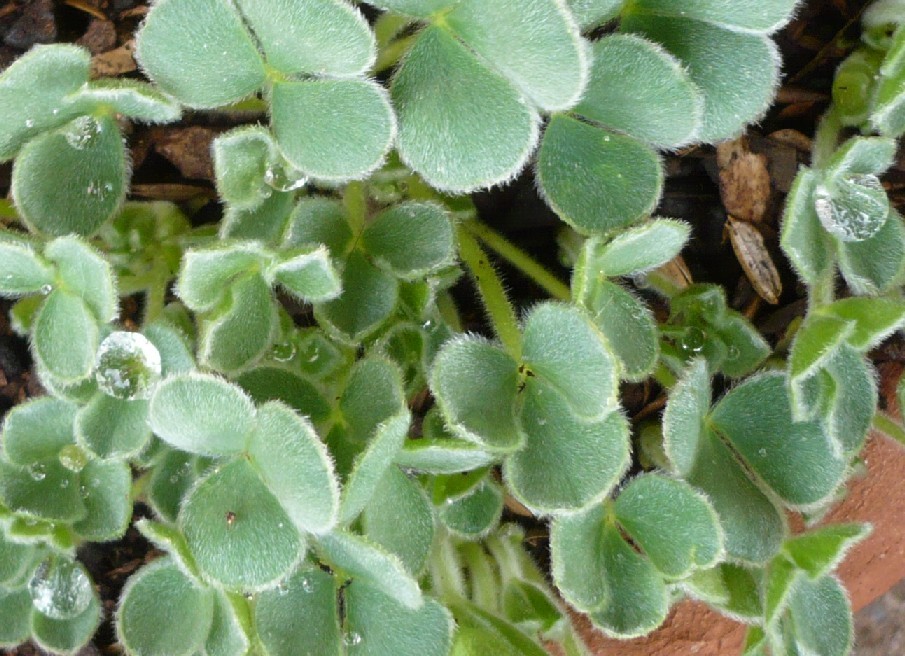
leaves, the loveliest being those of oxalis melanostica which
like alchemilla looks especially beautiful with a drop of dew
or rain. Flowers will be yellow and large. See bulbs and
oxalis page for more information and pictures. |
|
|
|
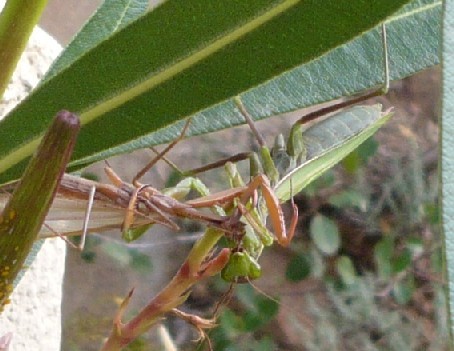 |
14th October I
have known the story forever but so far I had never seen the
awful event with my own eyes: a mantis eats her partner during
copulation. Today was the first time. Green Truus married a
small, brown guy and his fate was sealed. The head was
gone when my neighbour Anky discovered the couple. Everything
is eaten, even the wings (the males fly) and the weird thing
is that all parts keep moving, even without a head. He is food
for future offspring ...
The female has wings as well and can fly, but she hardly ever
does. I presume because she is relatively heavy. |
|
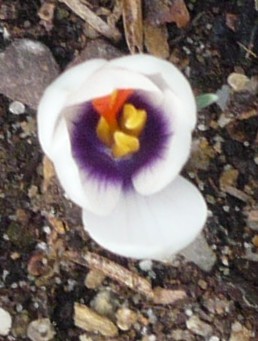
19th October What
excitement Crocus mathewii, named after the
famous crocus man Brian Mathew and recently discovered, in
Turkey 1994.
They are still tremendously expensive, but, to speak with
Rita, I do not drink and I do not smoke!
On the internet I had found a company in England which sold
bulbs and they told me to contact them in the beginning of August. Which I did at the end of July. At
that time they had
only two left! For me! When they arrived they appeared
to be five, three small ones. but they all flowered.
Camellia sansagua is in flower again, after
having refused to do so last year. It will perform over a long
time. |
|
|
|
|
| 22nd October I
got a nice e-mail today from a professional grower about names. He
said that the pale pink oxalis in a pot, see 25th September, might
be 'Birgit'. I bought this species once, so that is
quite possible. But when you look at pictures on the internet Birgit
has a green center. Lovely as well, but different. |
| 27th October I
saw no crocus oxonian at all this year. They should
have flowered quite some time ago and for some reason they must have
gone ... Crocus
goulymii is more faithful, a very good autumn species
which will flower in dry spots and will keep upright even in heavy
rain. Below left crocus mathewii in sun, goulymii
on the right. |
|
|
 |
2nd November Wow,
rain! And a lot. At least 10 cms and still pouring. That's
what we needed. It is still 17 °.
The bulbs which Hieke brought from Holland last week were out
on the balcony and got soaked, so I quickly went to Gau's
and bought a sack of proper potting soil and mixed it with the
poorer stuff I had in store.
One day I found gorgeous simple but very large grey pots in a
sale, bought all of them straight away, one for myself, one
for Anky, one for Hieke. I filled mine in layers: first
tulips 'New Design' and 'Recreado' and on top pink
pansies..
The grey one from the sale last summer with a large multy
bulbed, small flowered, orange red amaryllis and another
one with a new species of hippeastrum:
'Evergreen'. Photos later. The latter is supposed to get
small, green flowers... |
|
Tulipa 'New Design' has grey green
leaves edged in dream and pink flowers, really beautiful. Not easy
to find though. I bought mine at Verberghe's. 'Recreado'
is my all time favourite: dark purple with a dark stem as
well. Combines beautifully with almost everything but pure white _
according to my taste - pale yellow, pink, blue, whatever.
The multy bulbed type of amaryllis is called Hippeastrum 'Supreme
Garden' a cluster of some 12 bulbs. They showed clusters
like that on the IBS forum. So I planted it according to their
instructions: roots only! All the bulbs themselves on top of the
soil.
All seeds and stuff in downstairs have become soaked as well so I
sowed everything in despair. |
|
|
 |
7th November We
had lots of rain, nice! It is beautiful right now, with glowing
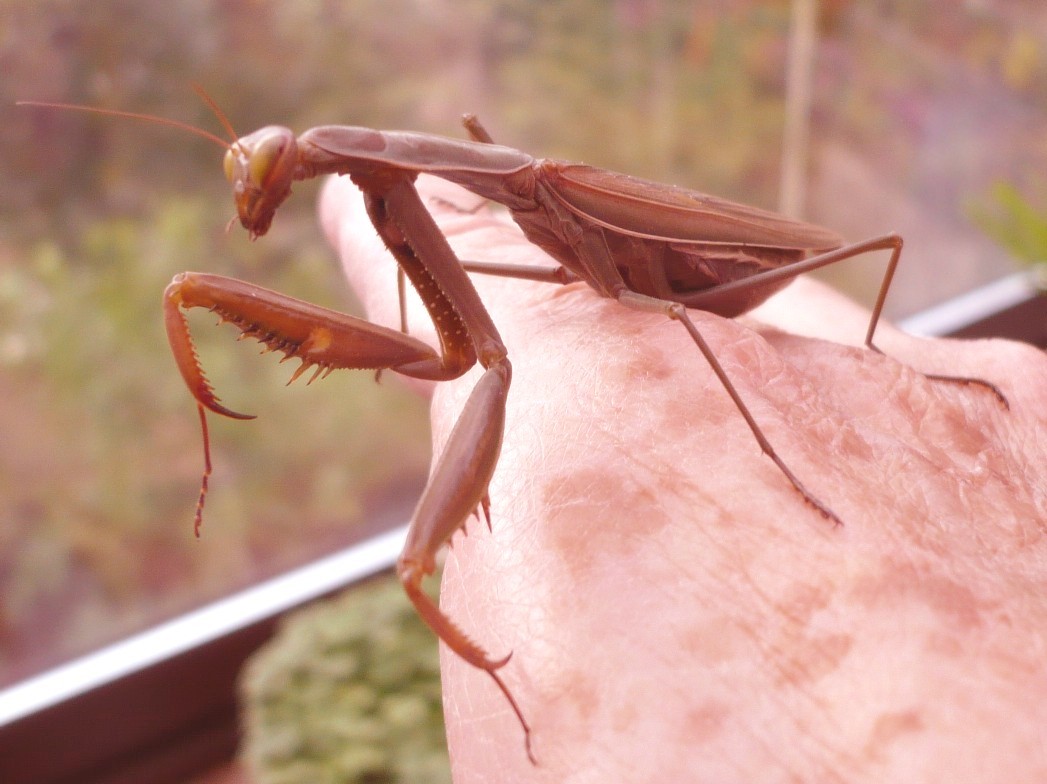
autumn colours. There are many mantises about, often on the middle
of the road. Nobody knows why. Something for 'Freaky Facts' on Animal Planet. This
specimen was a lovely shad of pale chocolate with delicately veined
wings on a less delicately spotted hand ... |
11th November Sometimes
there are unexpected bits of luck; the mantis in the rosemary, the
one I had seen eating her spouse, had not been flushed qway by the
rains. I found one seedling of a very pretty helianthemum,
that I bought 6 years ago and never saw again. This will please
Hieke! Crocus medius or ligusticus showed up after all, though quite
few, but they are still there. At this time of year the annuals start
germinating to flower in spring: hundreds of nigella
which does really well and omphalodes ...?
Amaryllis 'Evergreen' is already sporting a bud. |
|
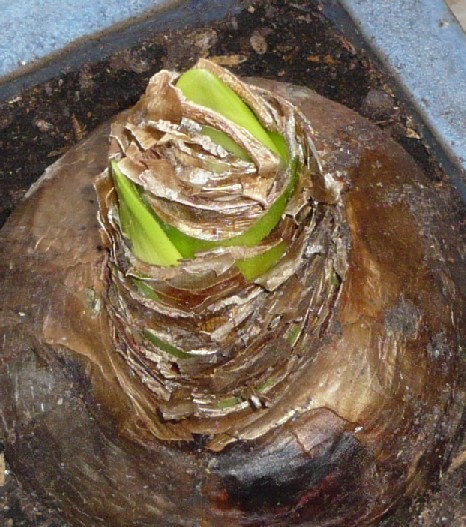
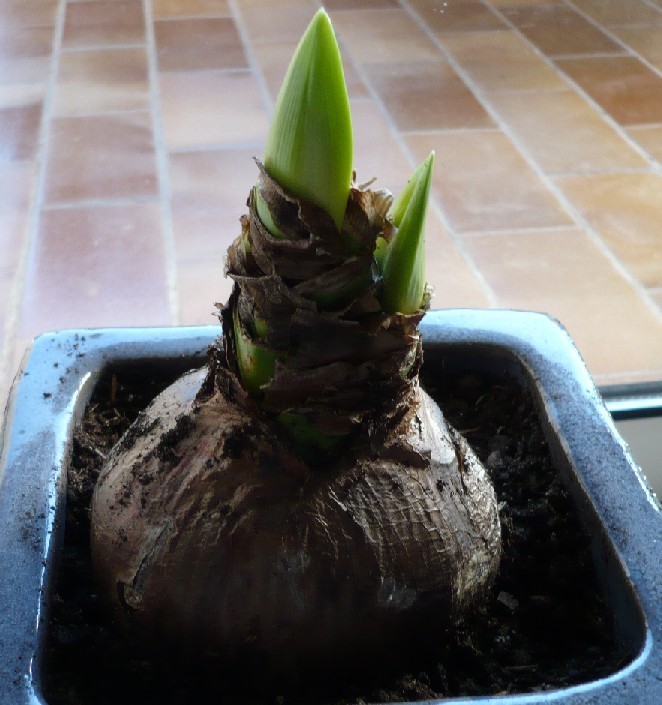
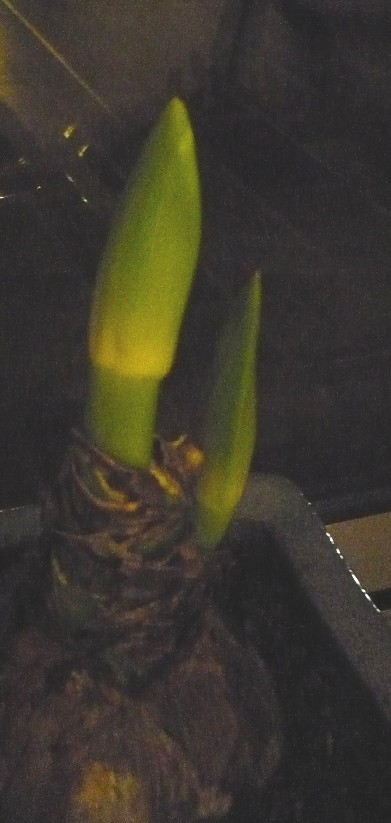
| 12th November From
Verberghe: hippeastrum Evergreen, supposed to
have small, green flowers. Yesterday I saw a bit of green in
the depths of the bulb - you can see at once whether a bit of
green will be a leaf or a flower - today that bit has grown
into a 2cm bud and another one has appeared at its side. The
bulb itself is very large, surprisingly so as it is to have small
flowers.
Left below: 3 days after the first growth. On the right one
more day. Really amazing! Now I'll stop until the flowers
appear.
|
 |
 |
|
|
| 18th November The
weather is not very good for this time of year. It is often
still lovely in November, but it is coldish and there is a
nasty cold wind. In spite of that our neighbour's plumbago is
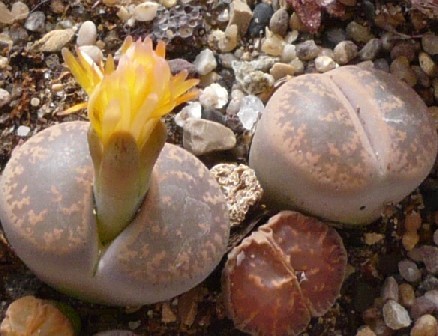
still covered in flowers and I discovered a flower on one of
the succulents in a trough . On a tiny, tiny 'living stone': lithops.
There are many different varieties, from South Africa.
They support some cold, I always leave them outside, but
sheltered from our nasty Tamontane. Rain often comes in from
the other side so once in a while they get plenty of water.
When there is no rain I water once a month and not too much
either. There is another one in the same trough: a fat - 10
cms - clump of grey 'stones'. This one flowers every year in
spring. |
 |
|
|
|
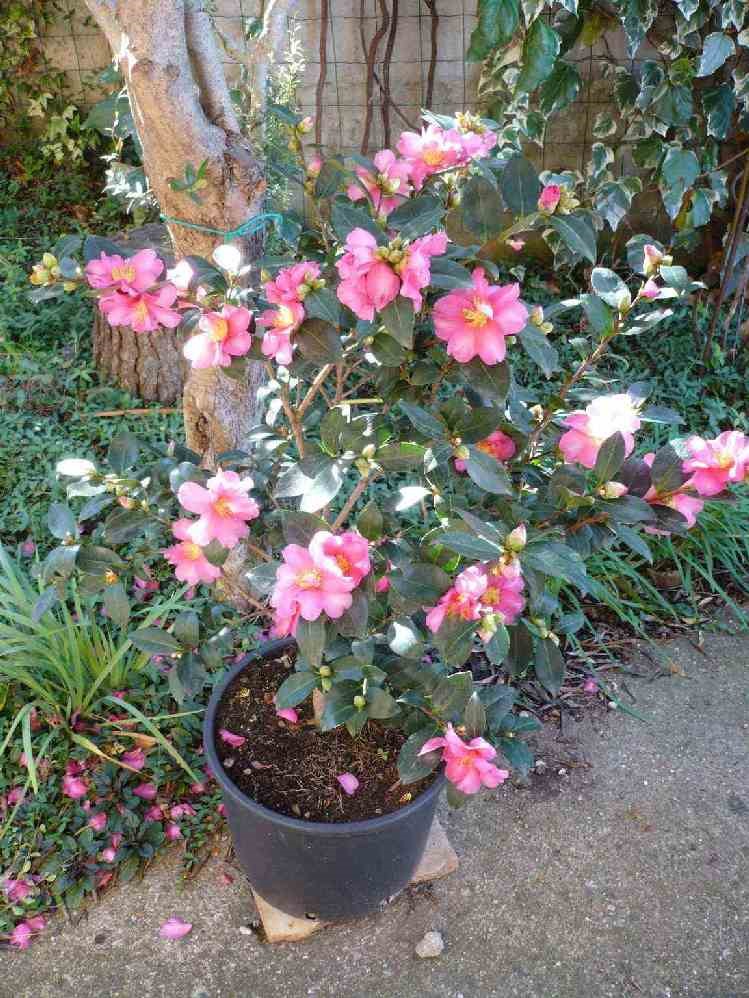
Camellia sansagua (3 other
names/spellings) maybe 'Shi Shi Gashira', is in a pot. I plan
to have the olive tree behind it removed as well as the trunk
of a pine that we took out in our first year, prepare the hole
of the trunk with nice peaty terre de bruyère and
plant the camellia in it. It will be out of the morning sun
and in the shade most of the summer and we will be able to
build our dreamed of balcony. After having saved some
more money ... Contrary to what the books tell you this
species supports frost and as the flowering period is from the
end of October up to December or even later the buds hardly
ever freeze to become that unpleasant brown shade. I had a
white one in Holland, in a sheltered position, yes, but it
flowered faithfully and never showed any signs of frost
damage. |
|
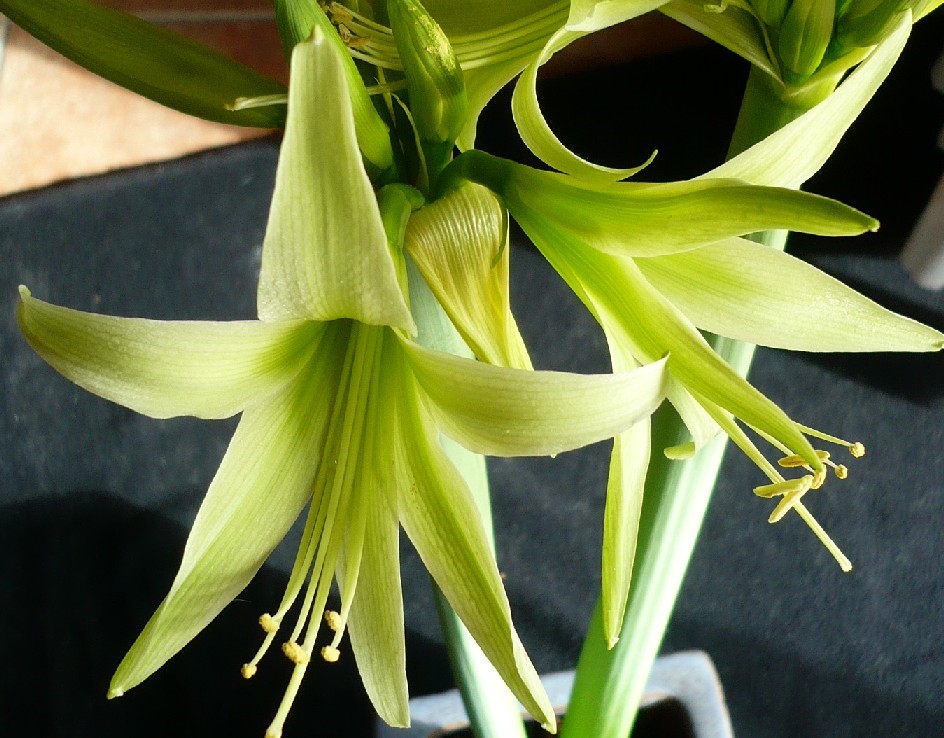
| 28th November Here
hippeastrum
'Evergreen' indeed small green flowers. A
drawback is its lack of balance by the absence of any leaves.
It took 17 days from the first green bit to the first open
flower. There are fifteen flowers in all. As the bulb lost its
firmness and I do not know if it will survive I pollinated a
few flowers with a thing to clean your ears with, cotton wool
on a small stick. Photo:1/12. Another
amaryllis shows a flower to be on the outside of the bulb at
the bottom. It does not seem right, H. 'Amputo'
and the complex of bulbs so far only grew leaves H. 'Supreme
Garden'. I'll keep you posted. |
|
|
| 1st December Today
a first bud is visible in 'Supreme Garden'.
4th December Jan Bravenboer, cyclamen man
(Ede) informed me of the name of the
variegated, cream flowered alstroemeria: it is 'Fabiana'
. I am always pleased when I have an answer to a
question. Thank you, Jan!
7th December 2008. Today is slightly
less cold so I did some work that was to be done. I removed lots of
seedlings of caryopteris from a pot with muscari, and other
things, but not intended to contain caryopteris. You can do a nice
little hedge with them. They are very strong, so I was not very
careful, knowing that they will grow anyway. They are in small pots
and whoever wants one or two is welcome to them.
The garden is full of acer seeds, thousands of them. I
sweep away as many as I can as the will easily germinate in spring
and if you forget to pull them out or they grow unnoticed there will
be another small tree which is not all that easy to get rid of. I
have never seen that much seed!
Last year there was not much but this year the almond tree is full
of buds. Let's hope there won't be any severe frost in February.
There are buds in the helleborus, bulbs are sprouting. one of
these days the tiny daffodil, narcissus romieuxii will
flower. I often miss it as we are usually in Holland when it
happens. But it has been cold and I don't see any buds yet, who
knows.
|
| |
| |